The Night Watch by Rembrandt
Rembrandt’s iconic "The Night Watch," completed in 1642, is not a nocturnal scene as its famous title suggests, but a dynamic daylight portrayal of a civic militia company. The painting, a monumental oil on canvas, is a central masterpiece at the Rijksmuseum in Amsterdam, though it is owned by the Amsterdam Museum.
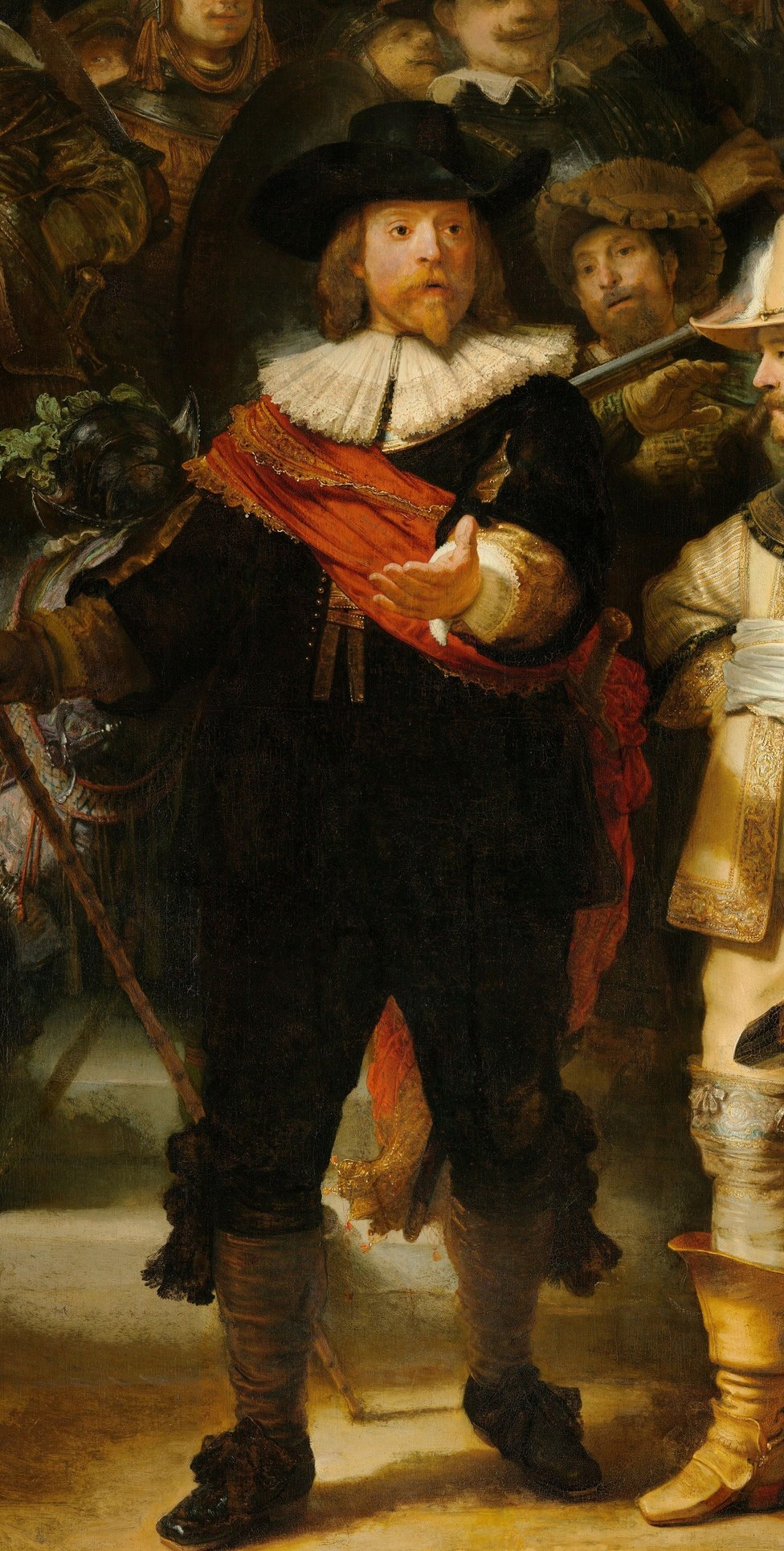
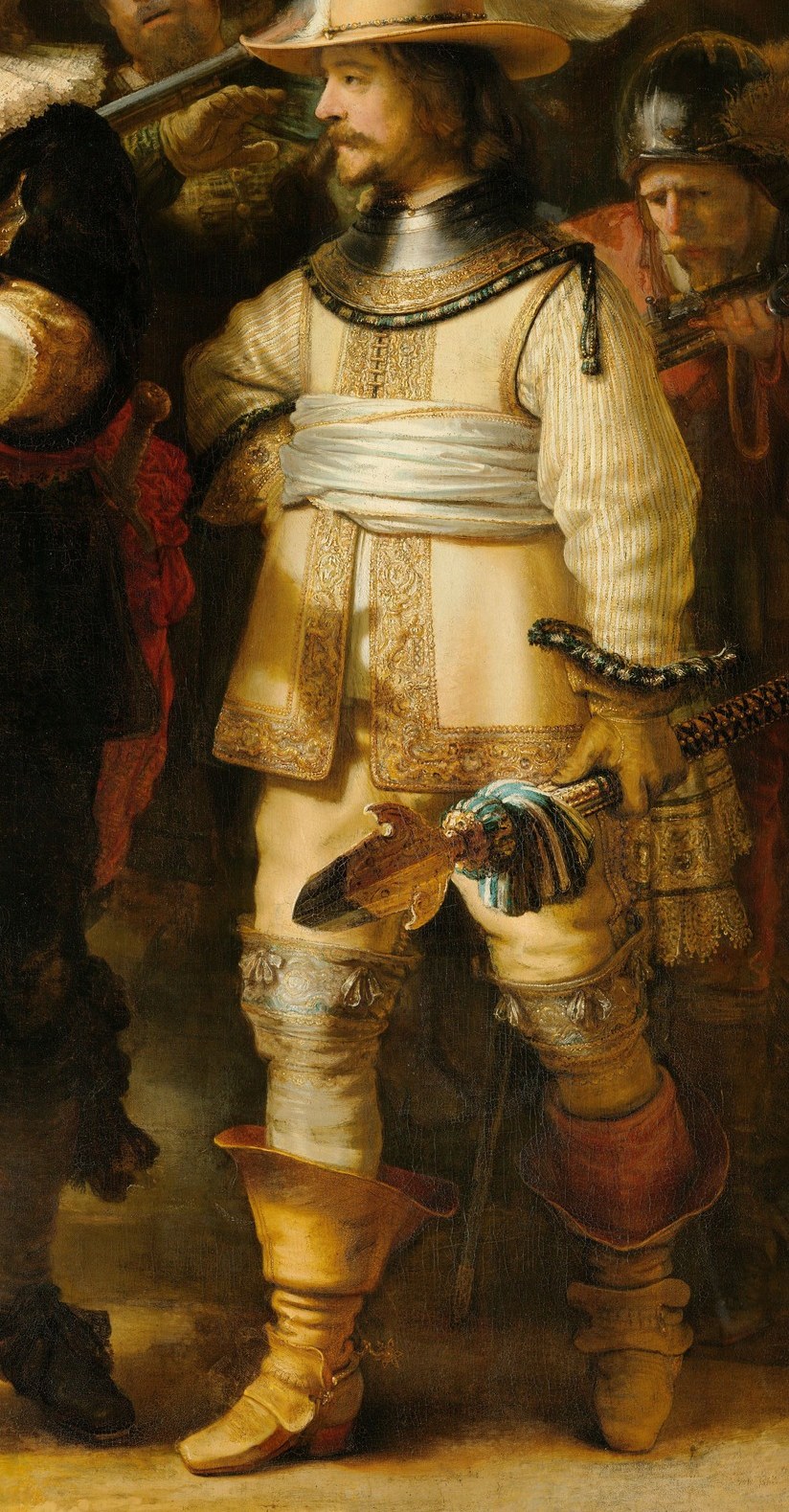
Look closely at Captain Frans Banninck Cocq, dressed in black with his commanding red sash and gesturing hand, leading his company. Beside him, Lieutenant Willem van Ruytenburch strides forward in vibrant yellow. Rembrandt transformed what was typically a static group portrait into a compelling drama, full of movement, light, and shadow.
This work was commissioned by the militia itself and delivered at the height of Rembrandt’s career during the Dutch Golden Age. Over centuries, darkening varnish led to its misnomer, but restorations have clarified its true daylight setting. It remains a powerful example of 17th-century art, showcasing Rembrandt’s innovative approach to composition and his ability to infuse life into his subjects.
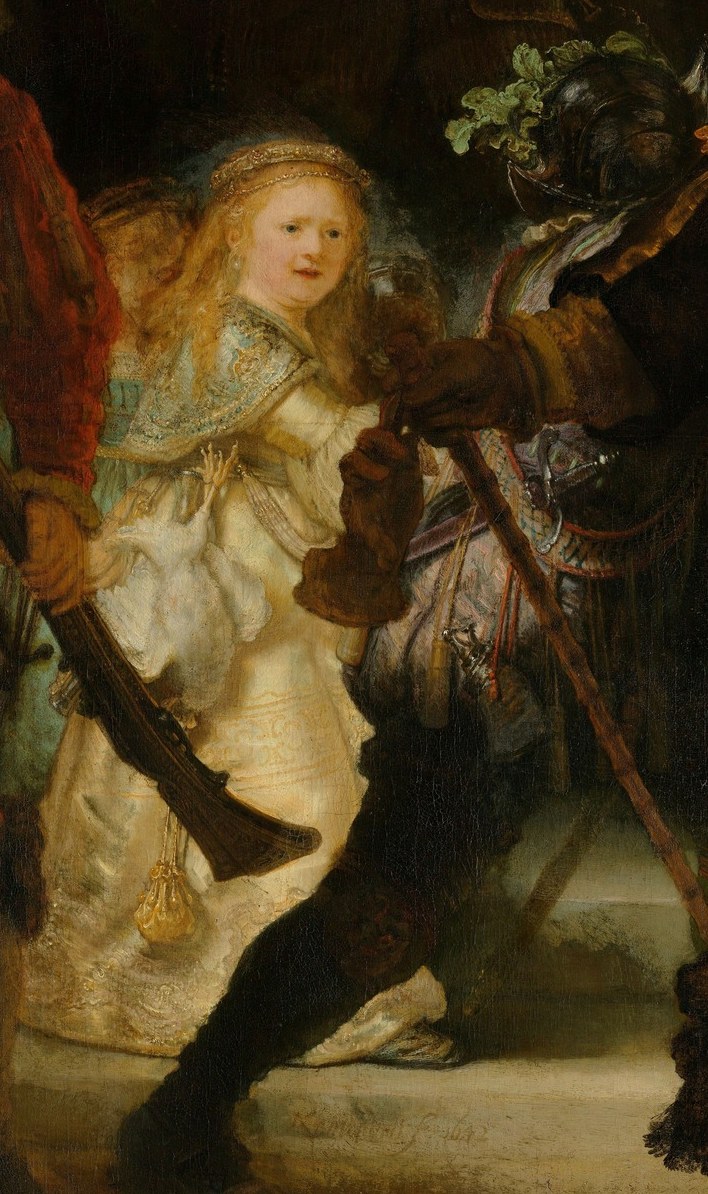
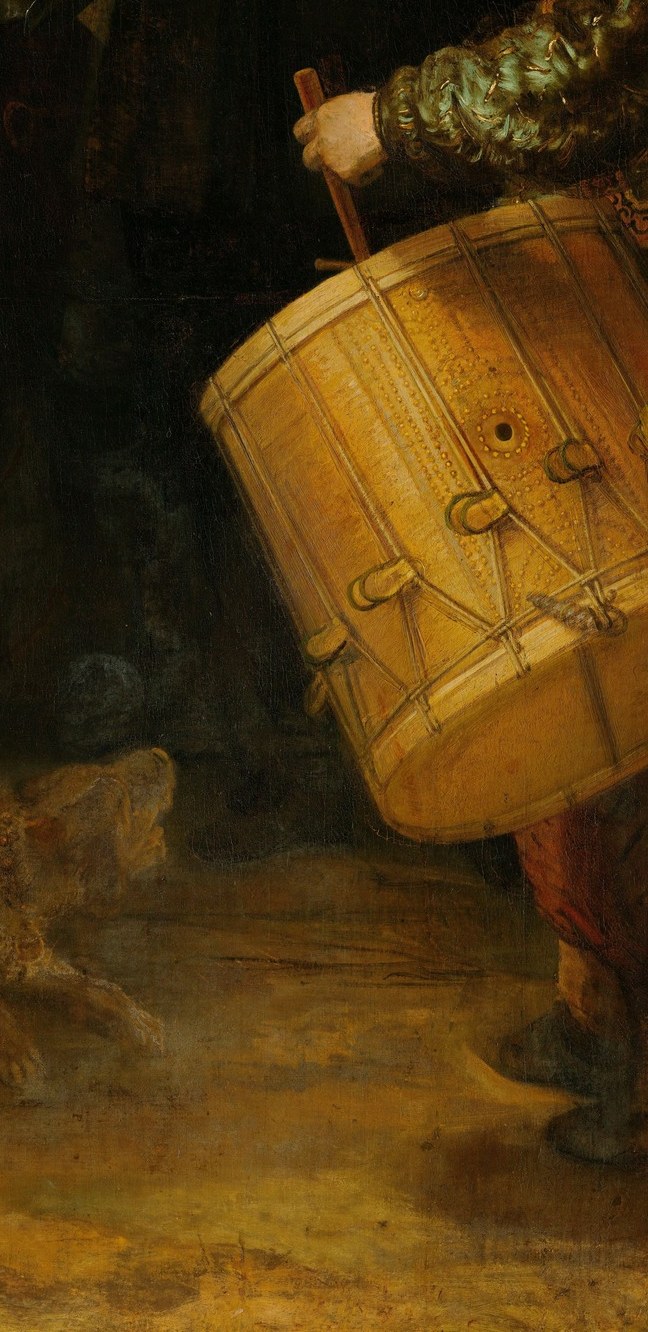
What details do you notice that add to the painting's sense of energy and narrative?
Details
Transcript
This is not a night scene, despite its famous title. It shows a militia company, moving out in daylight. Captain Frans Banninck Cocq leads, dressed in black. His red sash and gesturing hand signal command. To his right, his lieutenant steps forward in bright yellow. This painter transformed a static group portrait into vivid drama. He delivered this massive painting in 1642, at his career's peak.