Portrait of Augustus Saint-Gaudens by Ellen Emmet Rand
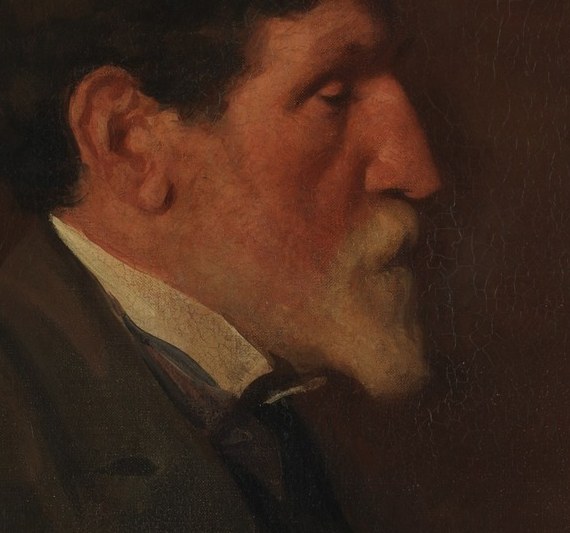
Ellen Emmet Rand painted Portrait of Augustus Saint-Gaudens in 1904. It hangs now at The Metropolitan Museum of Art, and it rewards anyone who stops and looks past the dark coat.
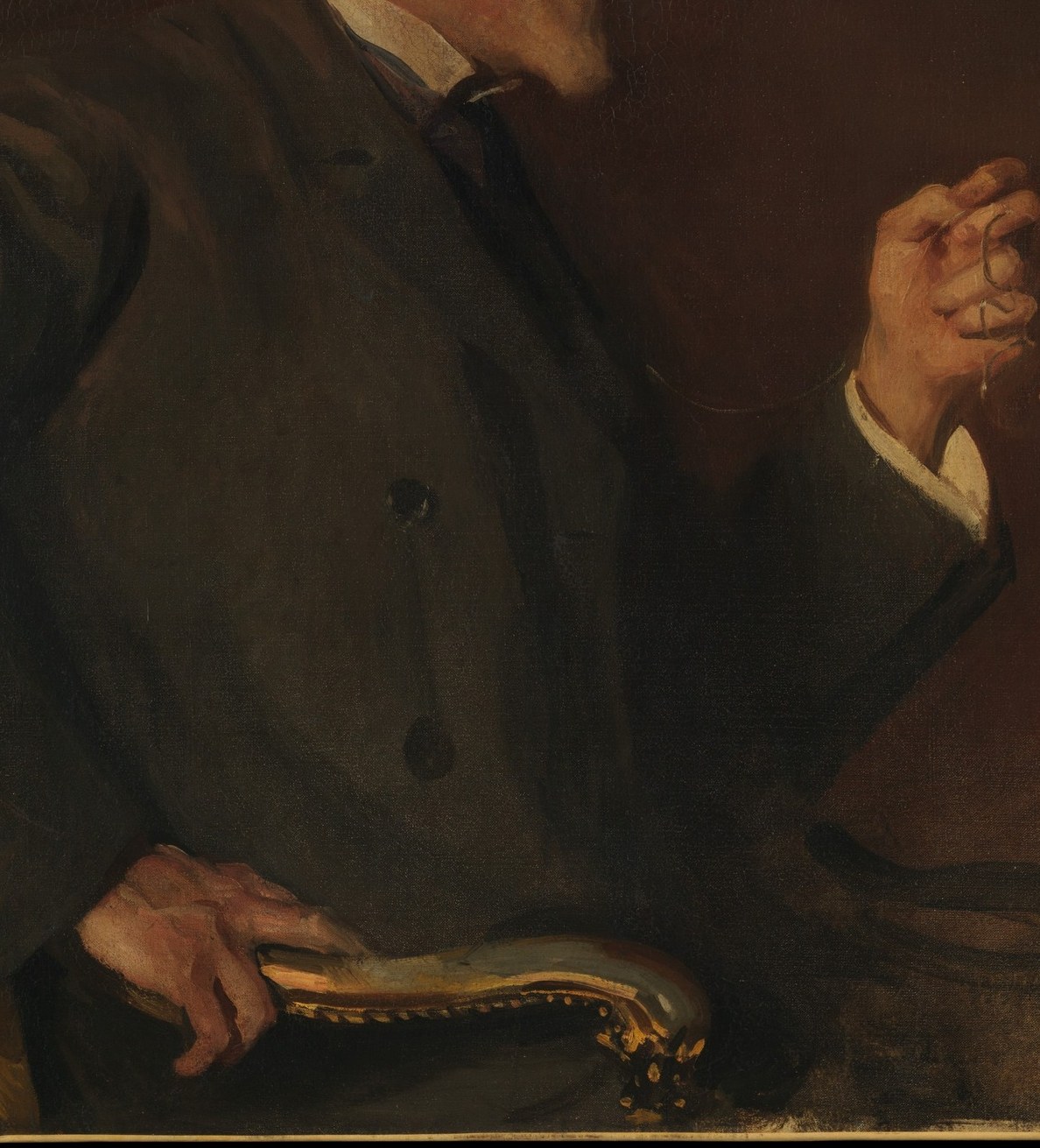
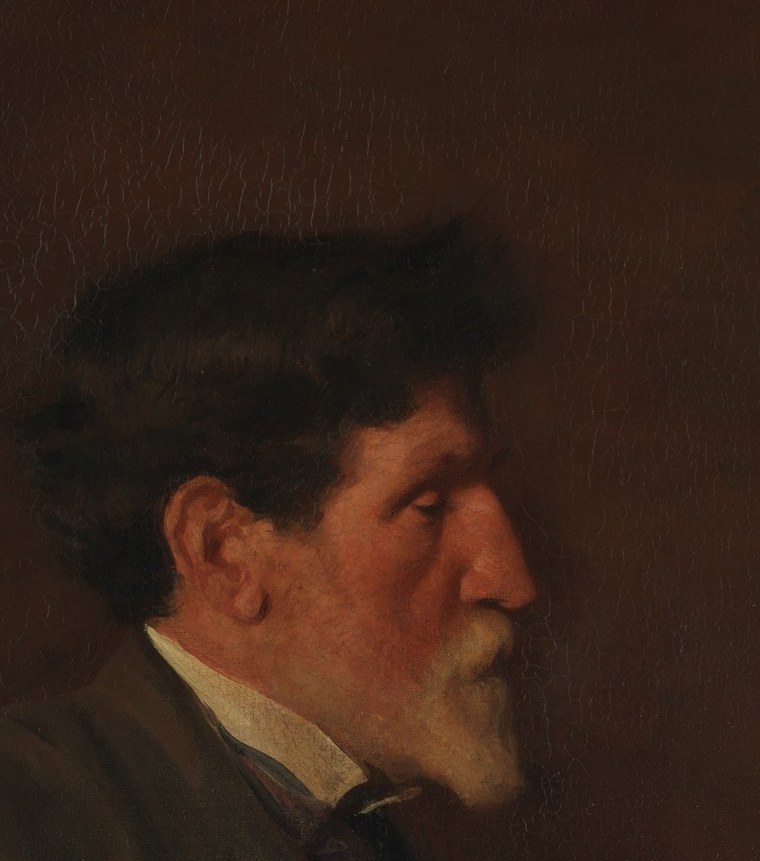
Rand painted the great sculptor not with his tools but with his face and his hands. The raised right hand, fingers slightly parted, is the compositional anchor: a hand caught testing a form in midair before it ever becomes marble or bronze. The lower hand rests still on the chair arm, creating a rhythm of idea versus rest. The single visible eye is cast softly downward, inward, not performing for the viewer.
Augustus Saint-Gaudens was among the most celebrated American sculptors of his generation, known for the Sherman Monument and the Adams Memorial. Rand was a prolific portraitist who studied in Boston and Paris, painted a president, and left behind more than 500 works. She understood that the real work of a sculptor happens before the chisel lifts: in the quiet space of thought she chose to give him here.
The dark object beneath his left hand remains ambiguous, maybe a sculptor's mallet, maybe a book. Rand leaves us to wonder.
Details
Transcript
She painted him in 1904, a sculptor at work. But she gave him no clay, no chisel. Only his face and his hands. His raised hand is the center of the painting. Testing an idea before it ever touches stone. His eye turns inward, not outward. Ellen Emmet Rand painted over 500 portraits in her career. She knew that a sculptor's real work happens before he touches anything.