Pasture Scene by James M. Hart
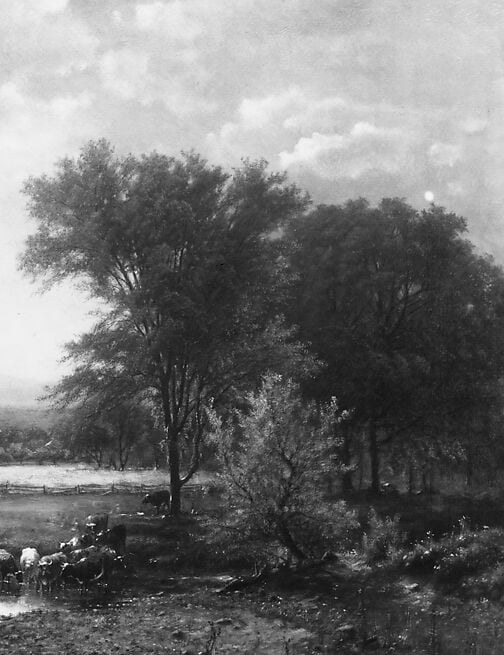
Beneath a tranquil sky, the 1876 painting *Pasture Scene* by James M. Hart, housed in The American Wing, subtly conveys a bittersweet truth about changing landscapes. While initially appearing as an idyllic depiction of nature, a small, often-missed detail hints at a deeper narrative.
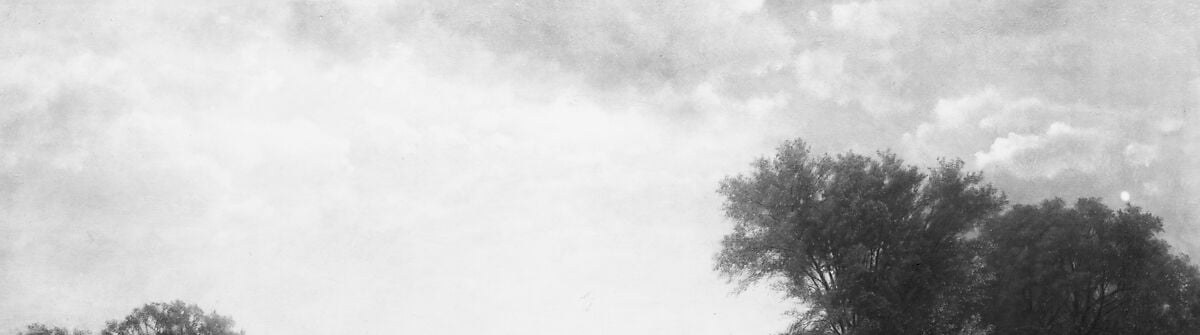
Look closely at the midground: five cows graze peacefully under a dominant oak tree. The artist, known for his serene cattle paintings, renders the scene with a masterful play of light and shadow, particularly in the expansive sky.
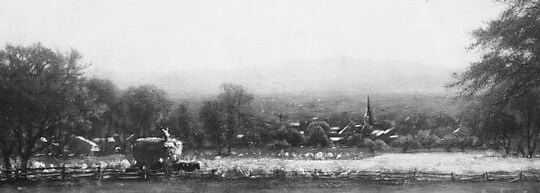
However, it's the faint cluster of spires on the distant horizon that reveals the painting's underlying message. This almost imperceptible town suggests the rapid urban expansion and industrialization occurring in upstate New York during the 1870s, making this *Pasture Scene* a quiet contemplation on the fragility of unspoiled nature.
Hart captures a moment of quiet beauty, imbuing it with a sense of impending change. What feelings does this hidden detail evoke for you?
Details

Transcript
This painting, from 1876, seems like a simple pasture scene. Five cows graze in the sunlight, under a massive oak tree. The artist was famous for painting cattle in serene landscapes. But look closely at the horizon, under the glowing sky. Just visible: a town, signaling encroaching development. It hints at the fragile beauty of vanishing natural spaces.