The Boot Black by William P. Chappel
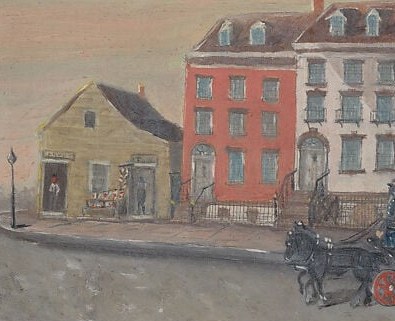
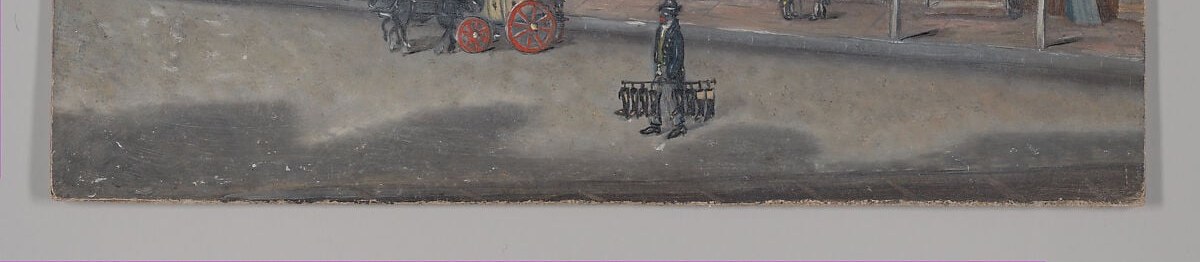
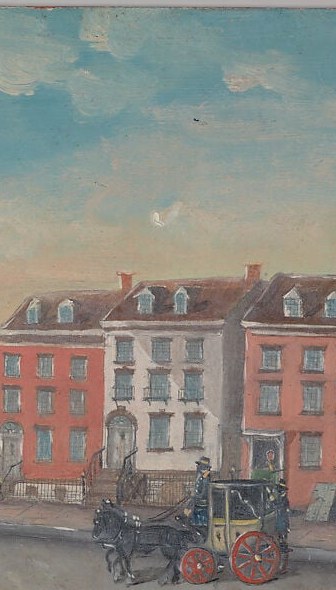
The Boot Black by William P. Chappel, painted around 1874 in New York City. The single most important thing in this painting is also the smallest: a child and a customer, almost swallowed by the street, conducting a transaction that lays the Gilded Age bare.
Look for the tiny figures at the bottom center-right. A boy in a patched coat crouches over a man's gleaming shoe. Above him, a horse-drawn carriage waits, the man can afford a ride but still stops for a street shine. The boy never leaves the cracked pavement. Chappel used oil on slate paper to render every texture with unnerving precision: the boot's reflective sheen, the dirt, the fissures in the stone.
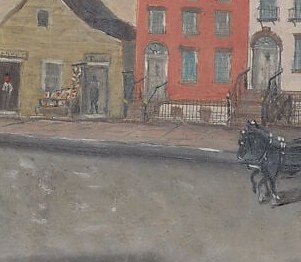
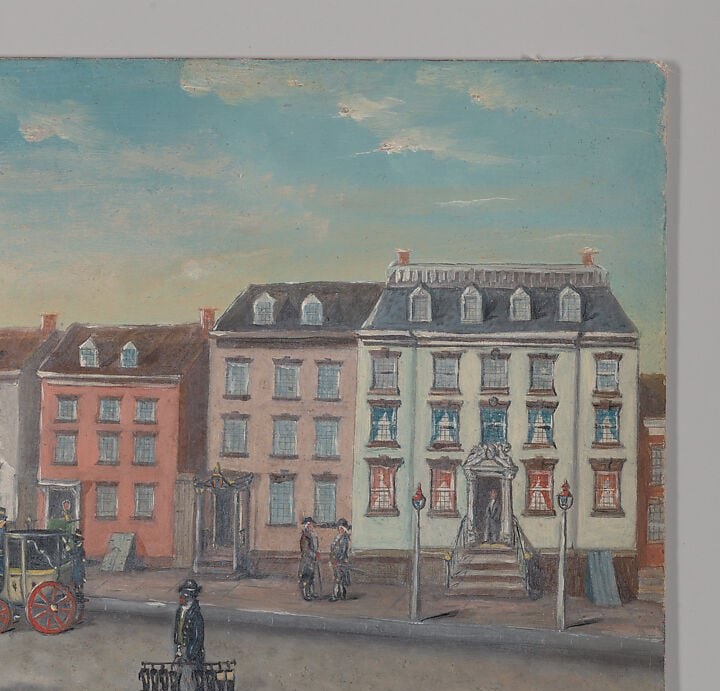
The painting is a social diagram built in brick and paint. The warm pink building at center divides the working-class left from the orderly brownstone row on the right, uniform cornices, repeated windows, private stoops. The boy works at the threshold of a world he will never enter. A coachman above him completes a three-tier city: driver, gentleman, child. Scale itself becomes a moral comment.
Chappel was a New Yorker painting New Yorkers during the Gilded Age, choosing ordinary labor over monuments. No one is looking down at the boy except us, and we nearly scrolled past.
Details
Transcript
New York, 1874. A street in the shadow of brownstones. A carriage waits. A coachman watches. A man stops on the sidewalk. At first glance, an ordinary afternoon in the Gilded Age. Now look down. The whole story is here, in cracked stone. A boy in a patched coat polishes a boot. The man above him paid for a shine, then climbed back into a carriage. Chappel painted this on slate paper so he could capture every fissure in the pavement.