Landscape at Sunset by Aert van der Neer
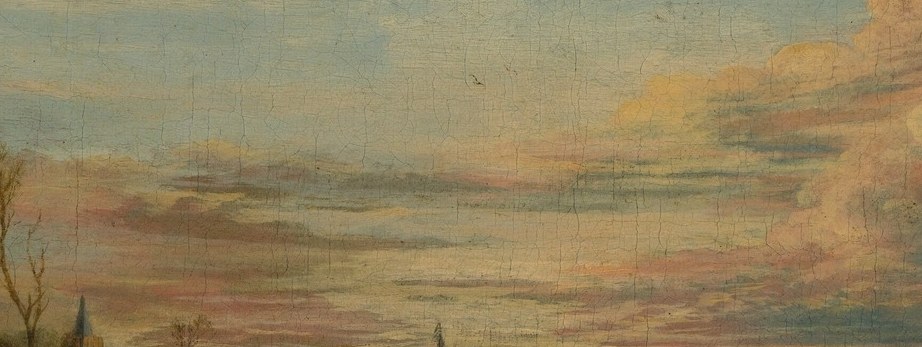
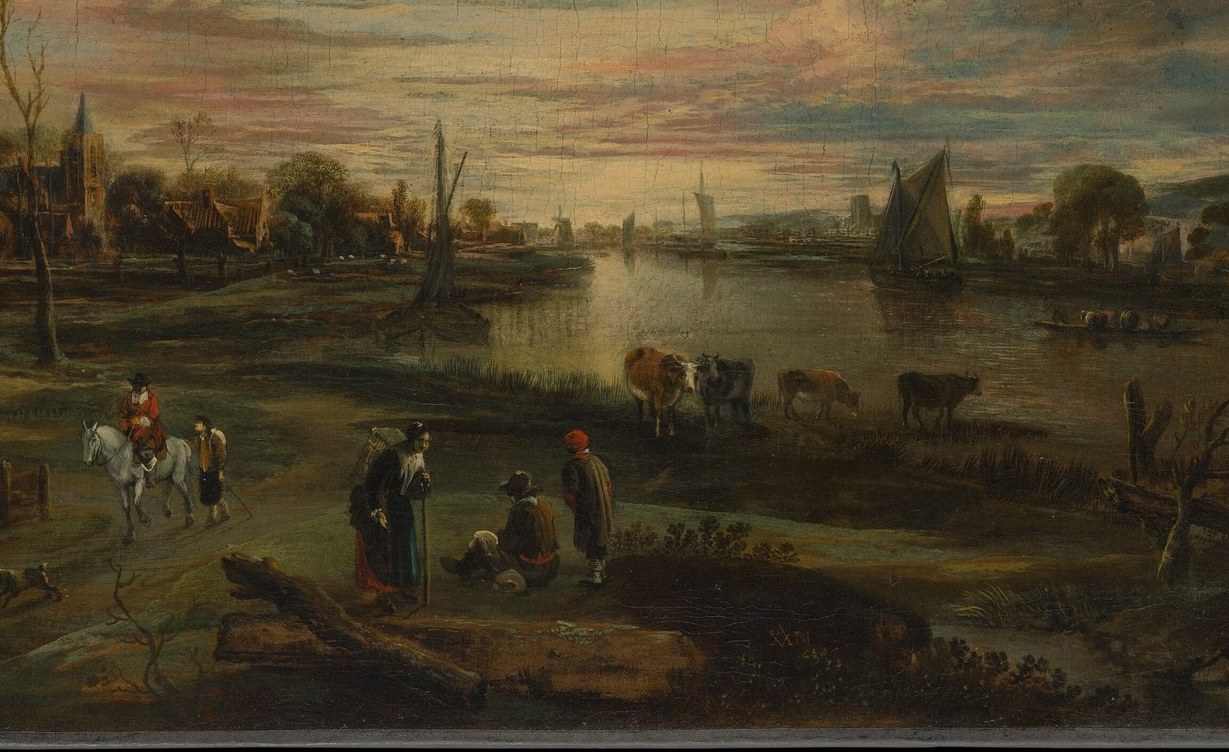
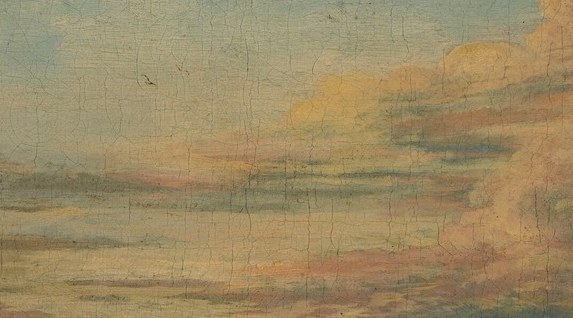
Aert van der Neer's Landscape at Sunset, painted around 1650, is a masterclass in capturing a specific moment. The painting is built entirely around a narrow band of golden light at the horizon, a hidden light source that illuminates the vast cloud, the river, and the few figures on the riverbank. Van der Neer specialized in twilight and moonlight scenes, and his signature technique was the mirrored river, a careful doubling of the sky's warmth on the water's surface.
This painting rewards a slow look. Start at the horizon and find that thin strip of intense gold (it is the engine of the whole image), then trace the glowing edges of the cloud above it. The water below carries the same orange light in a softer reflection, creating a sense that the river and sky are almost merging. On the left bank, a small cluster of figures gives the enormous landscape its human scale.
Van der Neer was a contemporary of better-known artists like Aelbert Cuyp, but he lived and died in comparative obscurity. The Dutch Golden Age saw a huge appetite for landscape paintings, yet van der Neer's meticulous, quiet scenes never made him wealthy. He is now regarded as the preeminent painter of Dutch nocturnal and twilight landscapes, and this work shows exactly why: a world reduced to a single light source and its long, slow echo across water and sky.
Details
Transcript
The sun is about to vanish. This is a Dutch river at twilight. First, find the light source. It is a narrow golden band at the horizon. That thin strip alone lights the cloud, the water, and the land. The river doubles the sunset. This water mirror was the painter's signature. Down on the left bank, a few figures are still outdoors. The Dutch Golden Age was the first to truly paint the time of day. A church spire at the vanishing point. Barely visible. The painter spent his life in obscurity. He died poor.