Second Beach, Newport by Whittredge, Worthington
Worthington Whittredge’s "Second Beach, Newport," painted around 1878-1880, is a serene oil on canvas that perfectly captures a tranquil moment at the seaside. Housed in various collections before public exhibitions, this painting exemplifies Whittredge's later focus on American coastal scenes.
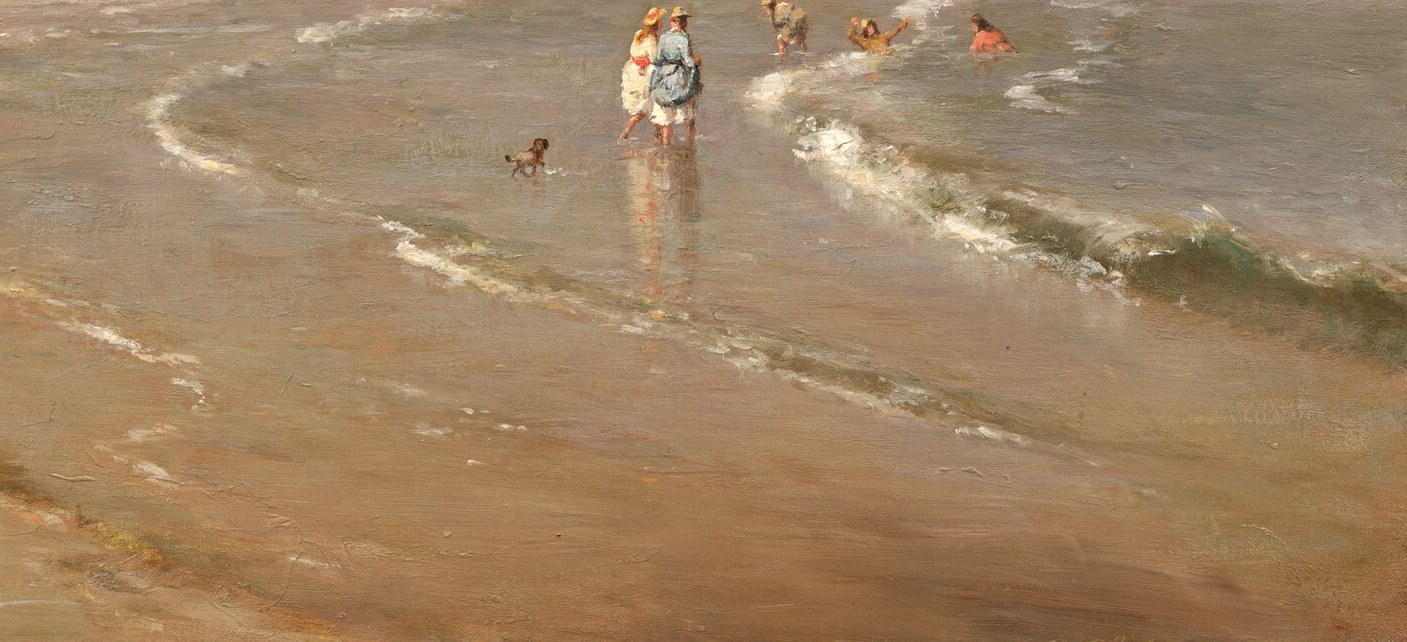
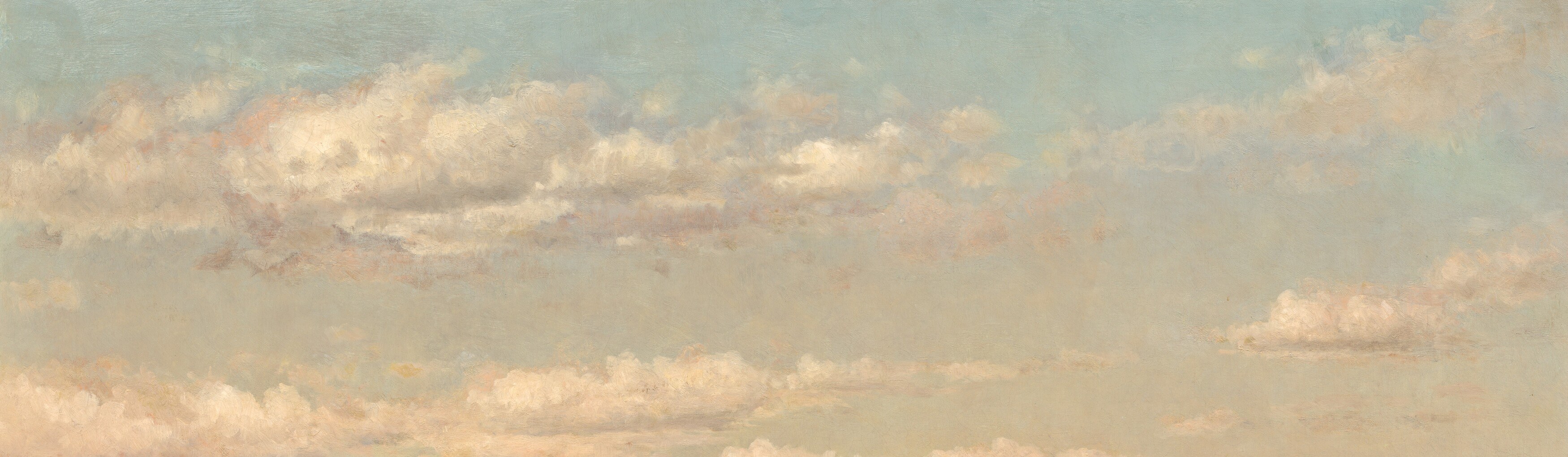
Notice the way the artist uses loose, sketch-like brushwork, especially in the water and sky. The gentle waves seem to melt onto the sandy shore, and the soft clouds drift across a muted, airy sky.
Whittredge's genius lies in his ability to convey light and atmosphere not through sharp detail, but through subtle shifts in color and visible brushstrokes. This creates a sense of immediacy and movement, almost hinting at early impressionistic styles. He masterfully evokes the feeling of a calm, everyday interaction between people and the natural environment.
The painting invites us to pause and appreciate the quiet beauty of a beach outing, rendered with a gentle warmth and a fresh, lively quality.
Details

Transcript
This painter was a master of capturing light and air. See how the gentle waves dissolve into the sand. He uses soft, visible brushstrokes to create movement. The light isn't painted, it's evoked by subtle color shifts. Look at the light on the distant water and horizon. This delicate play of light and atmosphere is his trick.