A monkey and a dog beside dead game and fruits, with the estate of Rijxdorp near Wassenaar in the background by Jan Weenix
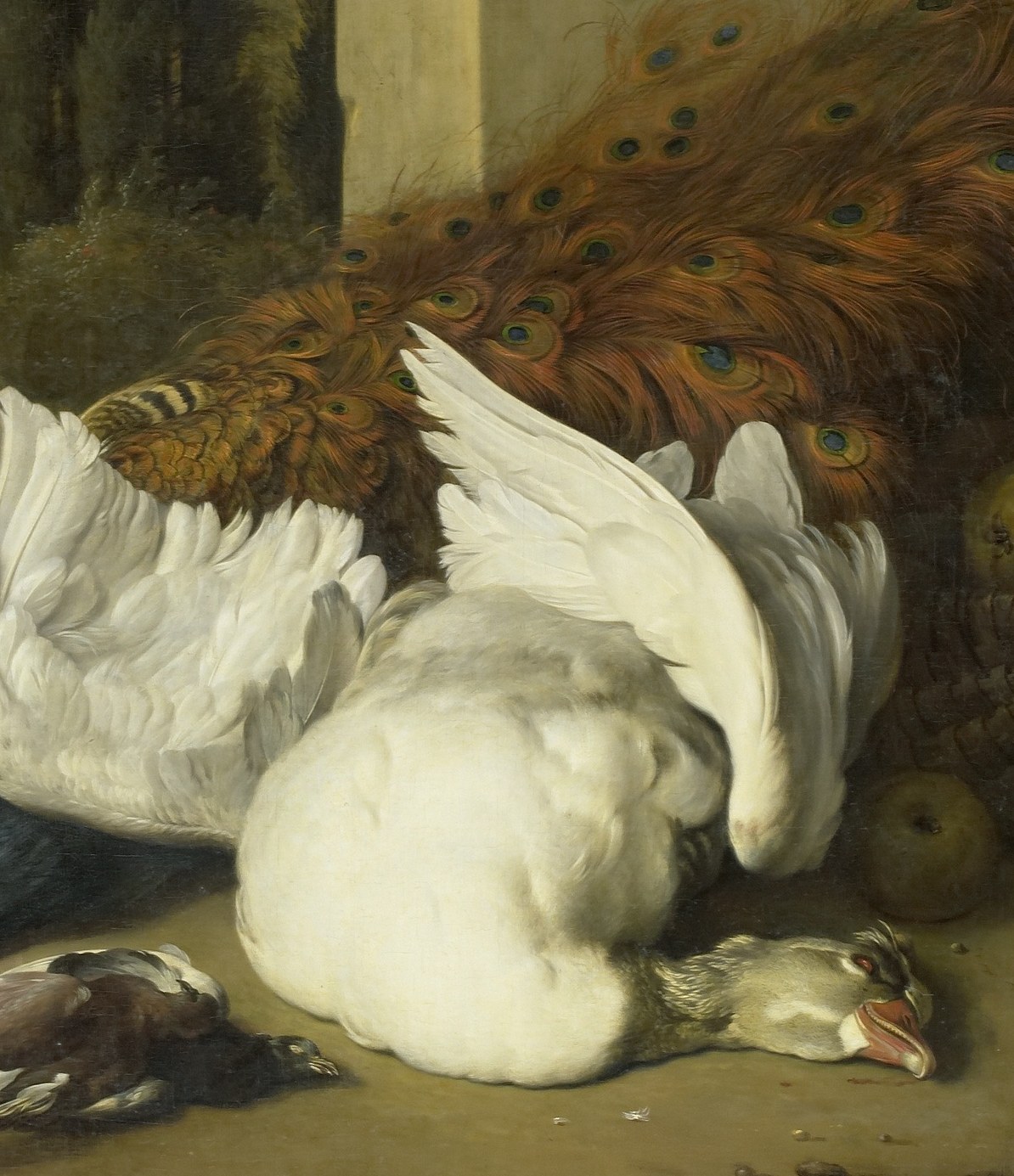
For two centuries, Jan Weenix's paintings were credited to his father. Take A Monkey and a Dog beside Dead Game and Fruits, painted around 1700, now in the Rijksmuseum.
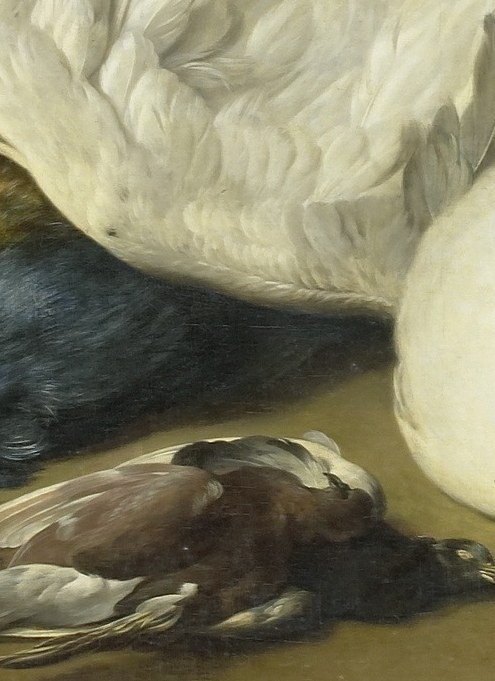
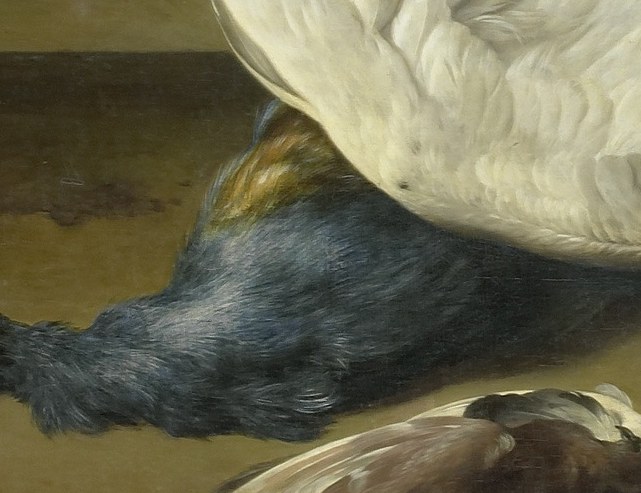
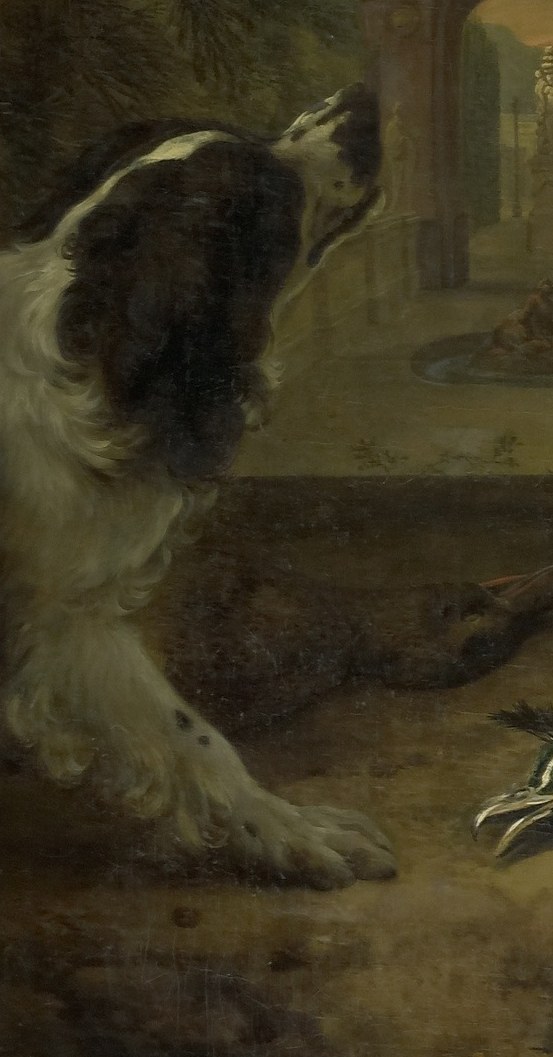
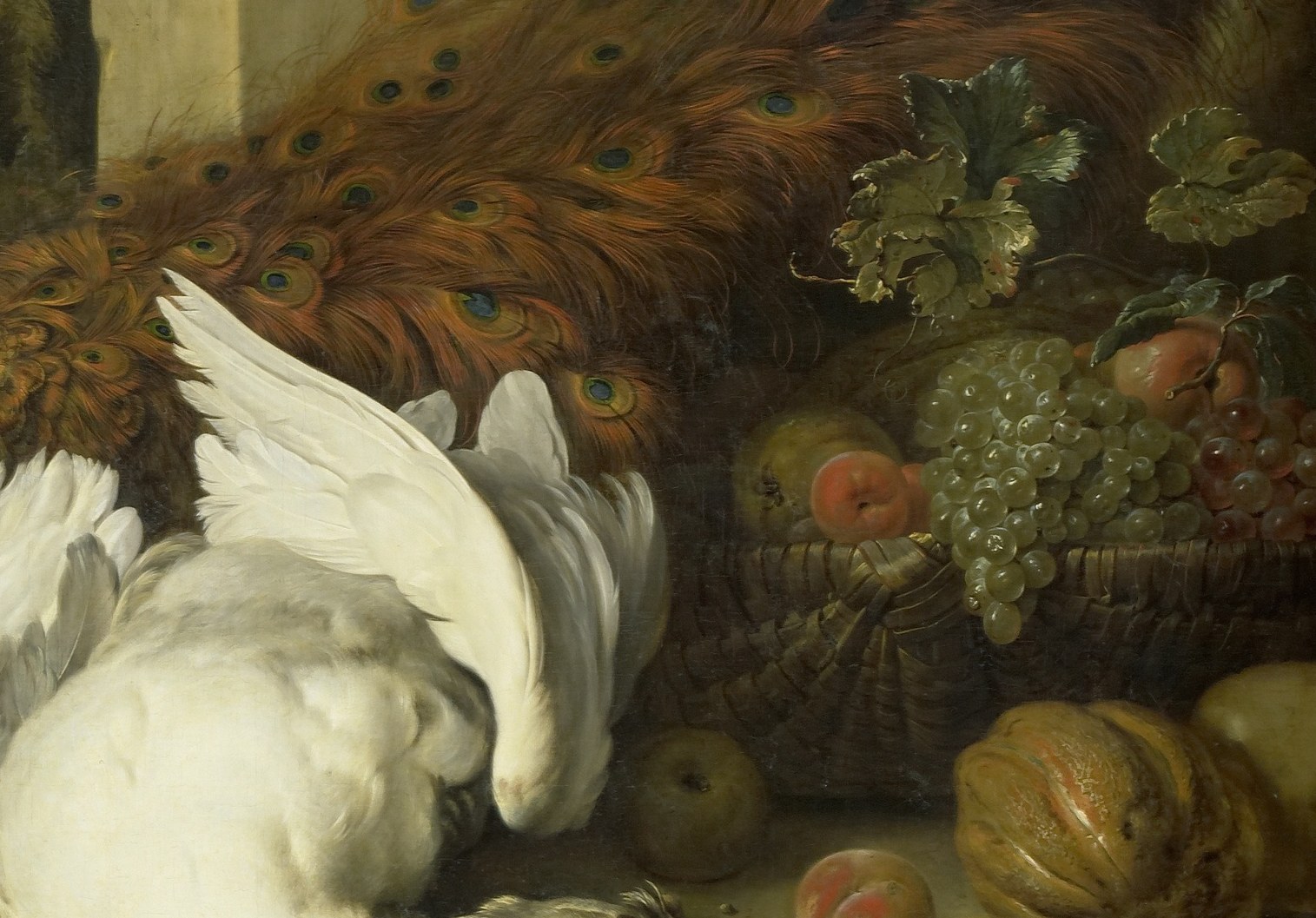
Look past the dead peacock. A monkey watches a red bird, a dog stands alert among fallen game. The painting balances on the line between living and dead. The peacock feathers alone are a lesson in brush control.
Weenix trained under his father, Jan Baptist Weenix, a well-known painter of Italianate landscapes and game pieces. After the son died in 1719, dealers began selling his hunting scenes under his father's more famous name. Scholars eventually untangled the brushwork.
His father taught him to paint. Then his father took the credit, for two hundred years.
Details
Transcript
Jan Weenix painted this in 1700. His father taught him. The dead peacock: iridescent blue and green, each feather a separate stroke. A monkey watches a red bird. Alive, among all this death. The dog, alert and loyal among the fallen birds. After he died, his paintings were attributed to his father. It took two hundred years to see past the signature.