Twilight by Théodore Rousseau
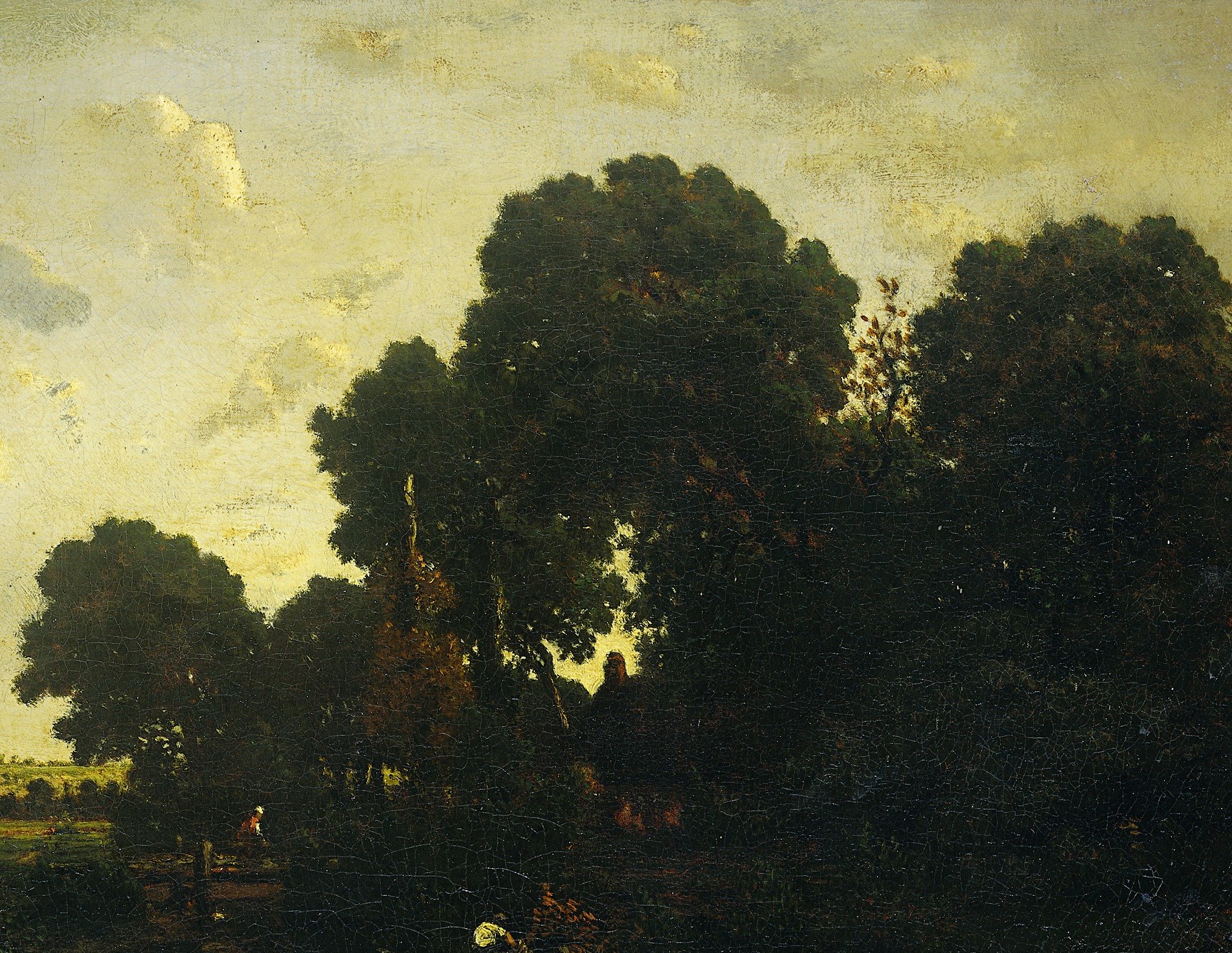
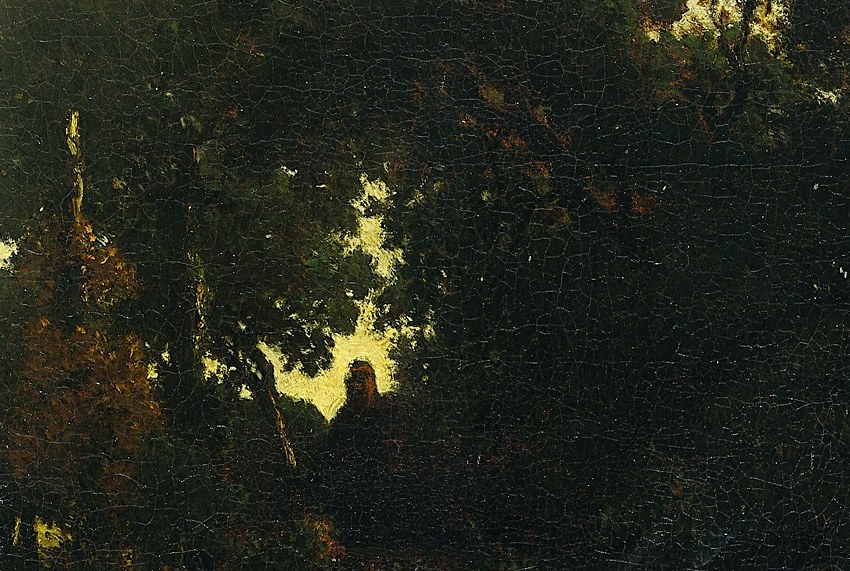
Théodore Rousseau painted Twilight around 1850, capturing the fleeting minutes after sunset in the French countryside. Rescued from a Nazi salt mine, it now hangs in a museum as a record of an artist who gave everything to light.
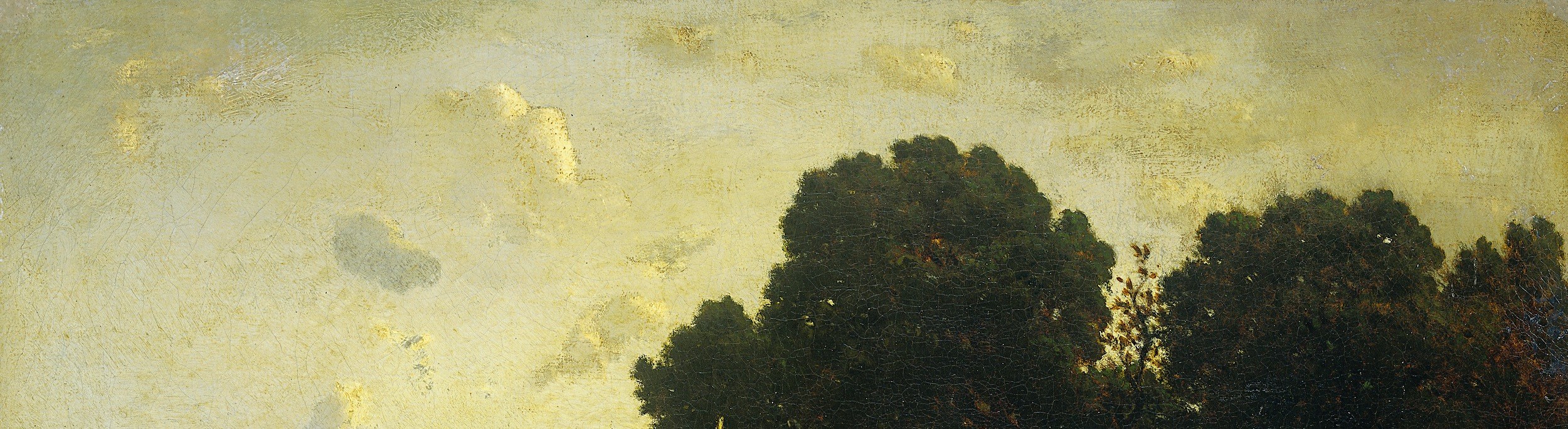
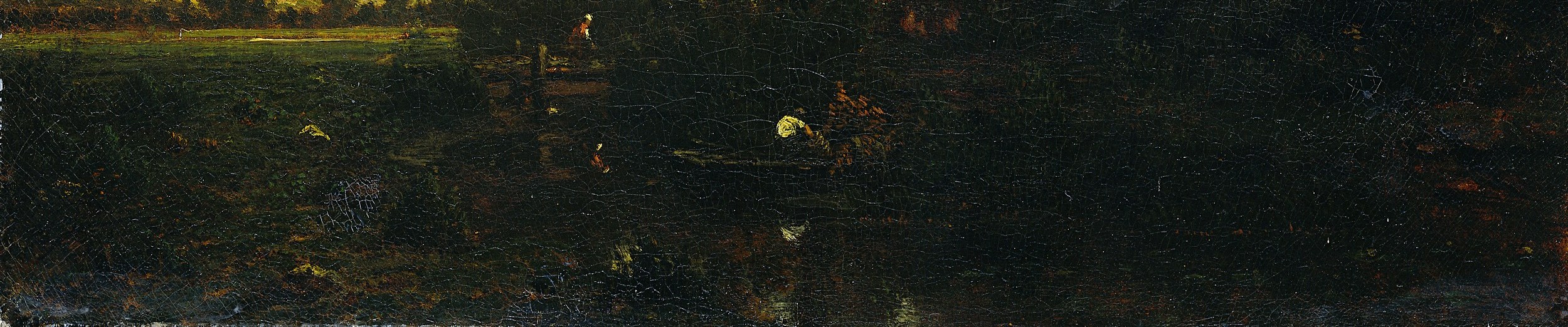
The canvas itself tracks the physics of dusk. In the foreground, the meadow has already slipped into full shadow, while the sky still holds a pale amber-grey glow. The trees are the main event: their canopy traps a warm interior light Rousseau carefully observed, and their lacework silhouette against the sky required him to paint individual branches readable against the pale background.
Rousseau was a central figure of the Barbizon School, a group of mid-19th-century French painters who abandoned idealized classical landscapes and moved their easels into the forest. They believed the truth was in direct observation. Rousseau obsessed over the exact way color and value shift at twilight, returning to the same stands of trees to paint the transition again and again.
The painting outlived him by a century and then some. The Nazis seized it from a French collection, and it was among the thousands of works Allied Monuments officers discovered in an Austrian salt mine in 1945. Rousseau did not live to see old age. In 1867, he died by suicide in the forest of Fontainebleau, the same woods he had painted his whole life.
#arthistory #barbizonschool #theodorerousseau
Details
Transcript
In 1945, Allied Monuments officers found this painting. It was in a salt mine, hidden with thousands of looted works. Look at the trees holding the last warmth of the vanished sun. The earth has already lost its light. Rousseau painted this precise moment minutes after sunset. He worked obsessively outdoors, chasing this light. Twenty years later, he died by his own hand in the forest he painted.