Artwork
Twilight
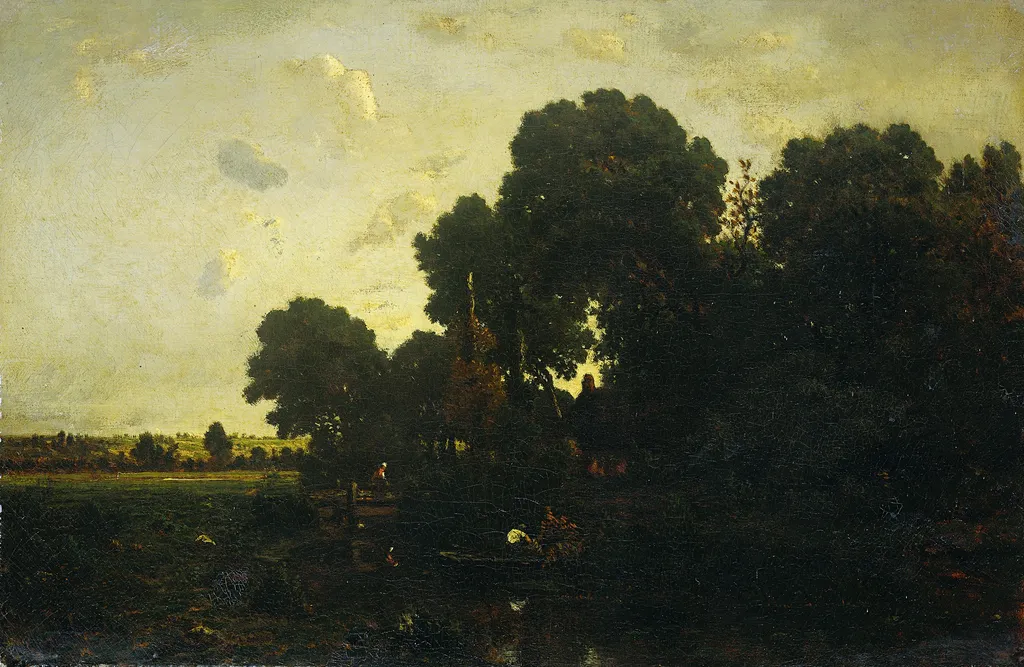
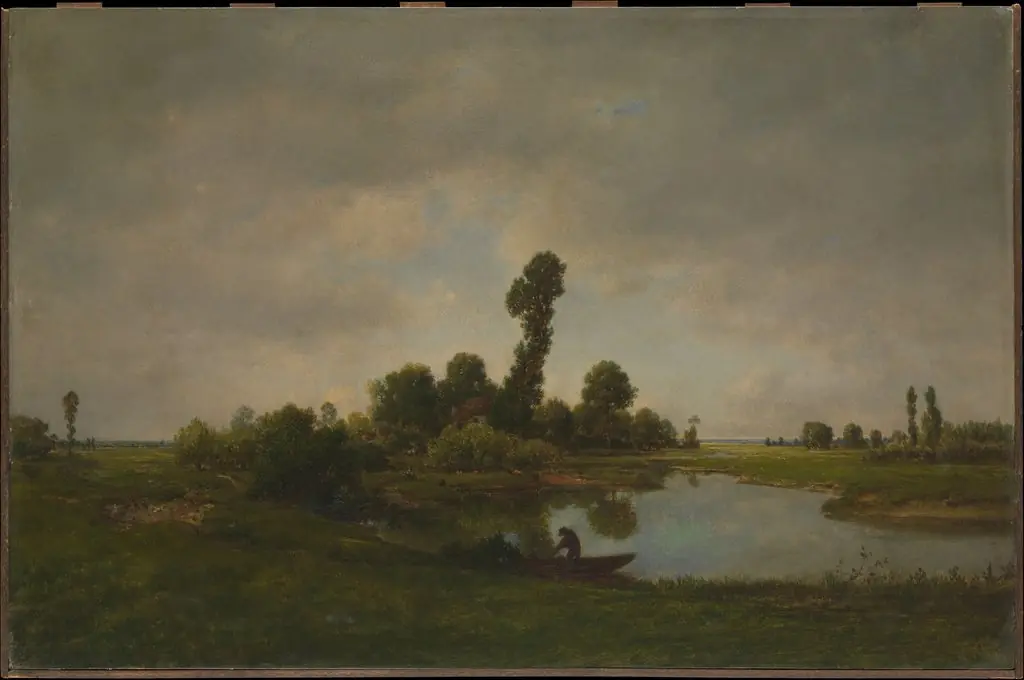
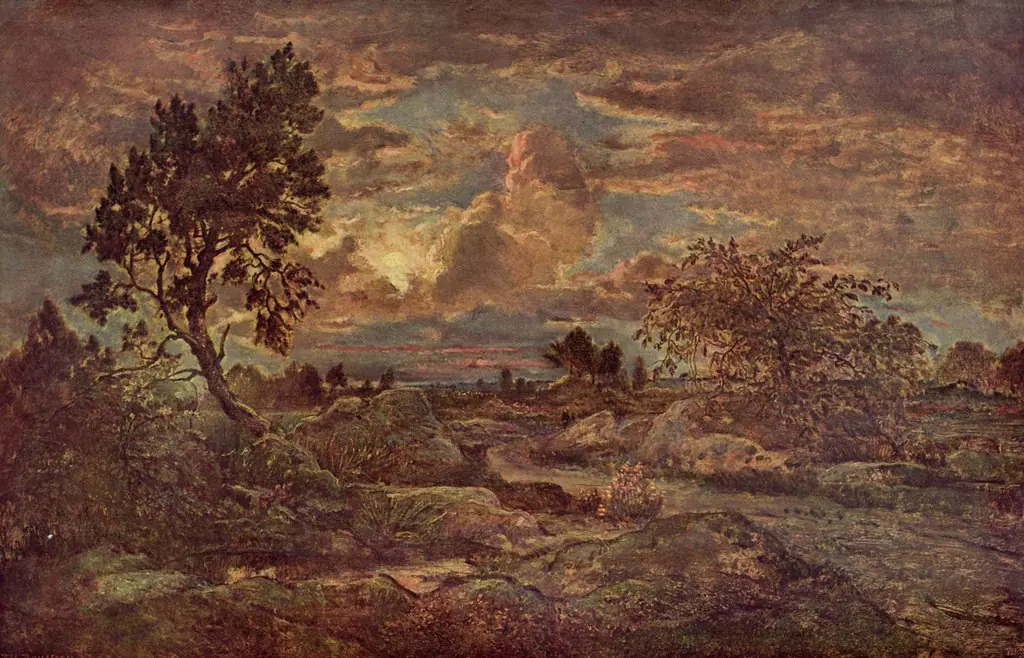
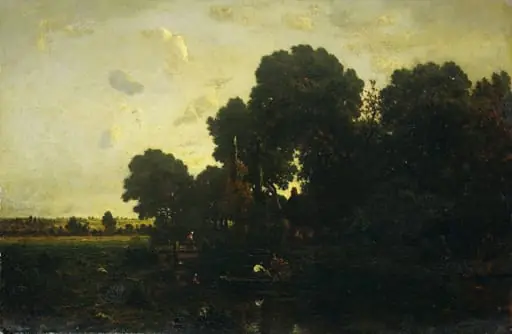
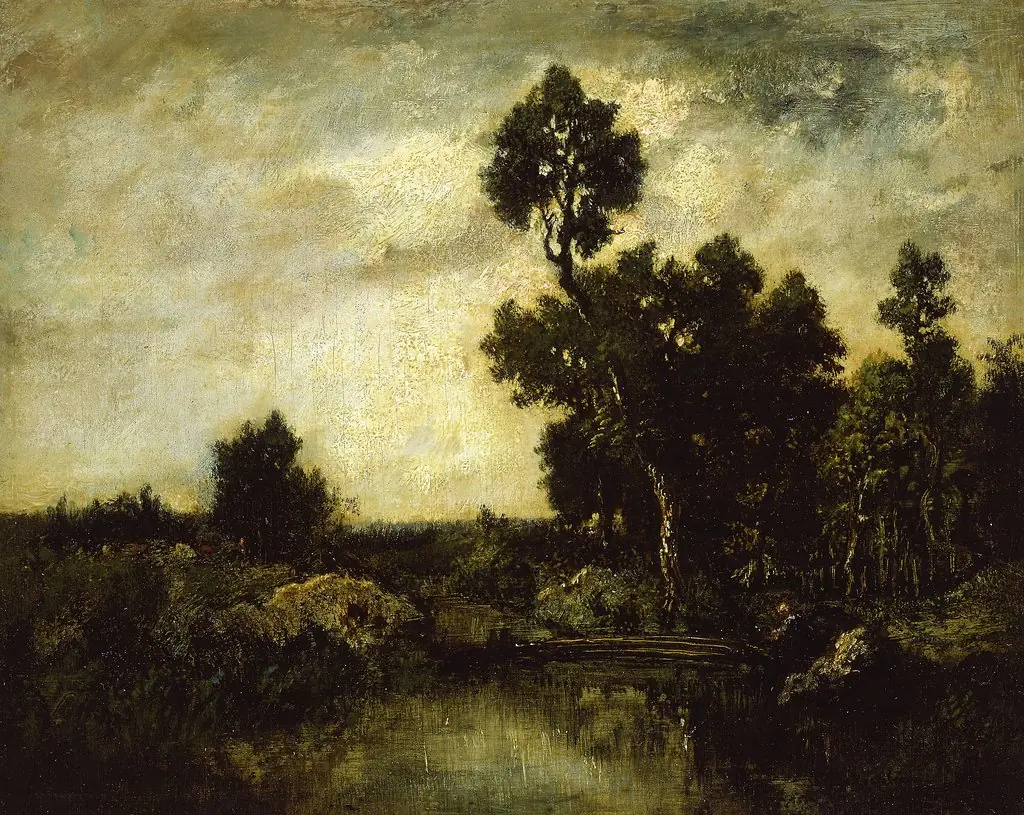
Twilight is an oil painting by the Barbizon school artist Théodore Rousseau. It dates from 1850 and is held in the collection of the Rijksmuseum.
About this work
Subject & Meaning
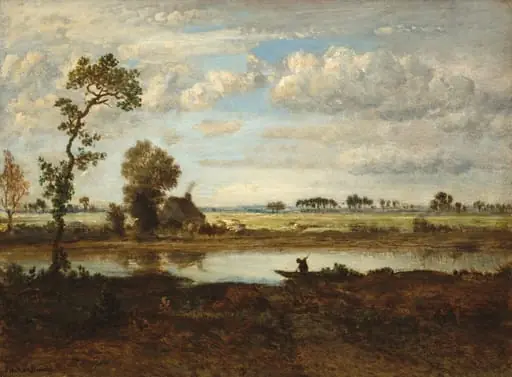
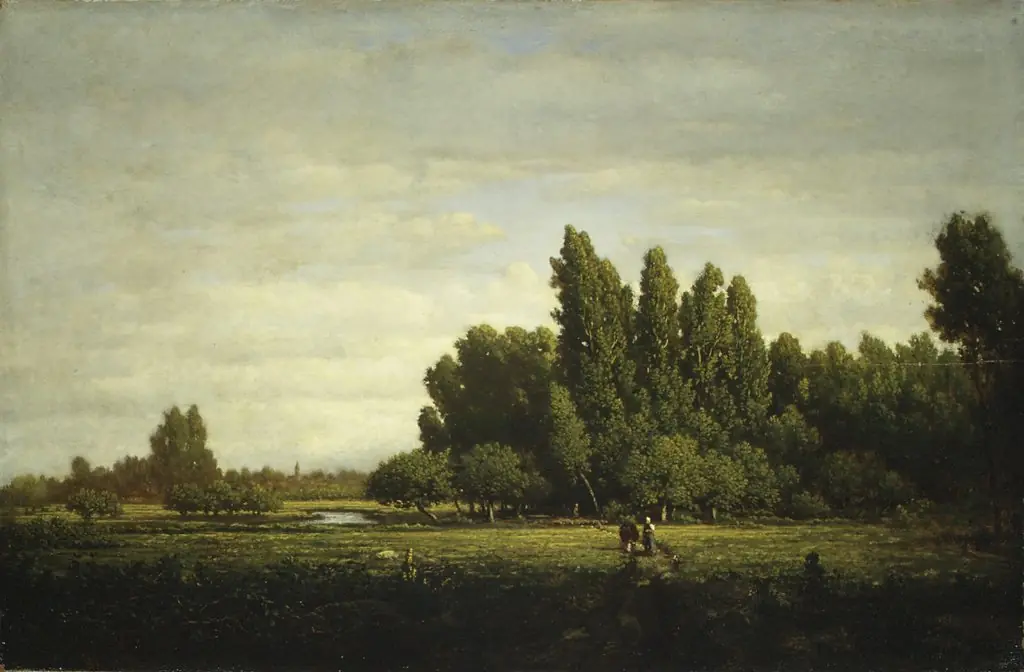
The composition features a broad-leaved tree with visible bark standing near a body of water, surrounded by a meadow, forest, and hedge under a cloudy sky.
Théodore Rousseau's 1850 oil painting Twilight depicts a rural landscape at the transition between day and night. The composition features a broad-leaved tree with visible bark standing near a body of water, surrounded by a meadow, forest, and hedge under a cloudy sky. By utilizing a contre-jour technique, the artist captures the specific lighting conditions of a sunset or evening, emphasizing the silhouettes of the shore and grass against the fading light.
As a work of the Barbizon school, the painting focuses on the naturalistic representation of the forest and sky, presenting the twilight hour not merely as a time of day but as a distinct atmospheric state within the French countryside.
Technique & Style
The work titled Twilight (1850) is executed in oil paint on canvas, measuring 42 × 63 cm. Rousseau's technique employs a thinly layered oil medium that captures the fleeting qualities of twilight, with careful rendering of sky, clouds, and the contre-jour effect on foliage and water. The composition reflects the Barbizon school's emphasis on naturalistic landscape, incorporating detailed depictions of broad-leaved trees, meadow, and a body of water rendered in a restrained palette.
History & Provenance
Théodore Rousseau created the landscape painting Twilight in 1850. Executed in oil paint on canvas, the work belongs to the Barbizon school movement. It depicts a rural sunset scene featuring a broad-leaved tree, a body of water, and a meadow, and measures 42 by 63 centimeters.
It is currently held in the collection of the Rijksmuseum. The provided sources do not detail the specific commission circumstances or the intervening ownership chain prior to its modern museum custody, and no inventory or accession number is confirmed in the available records.
Overview
Twilight is an oil painting that captures a serene rural landscape during the transition from day to night. The artwork depicts a quiet countryside scene where two figures are visible near a cluster of prominent trees. The fading light of dusk casts their forms into silhouette, creating a tranquil atmosphere against a soft, pale sky, characteristic of the artist's focus on natural light.
Context
This painting exhibits characteristics associated with the Barbizon school, a group of French artists active in the mid-19th century. These painters moved away from idealized, classical landscapes, instead focusing on direct observation of nature and capturing its changing moods and atmospheric effects. Their emphasis on natural light and unembellished rural scenes significantly influenced the development of modern landscape painting.
Own this work as a print
Artist & collection
Artist
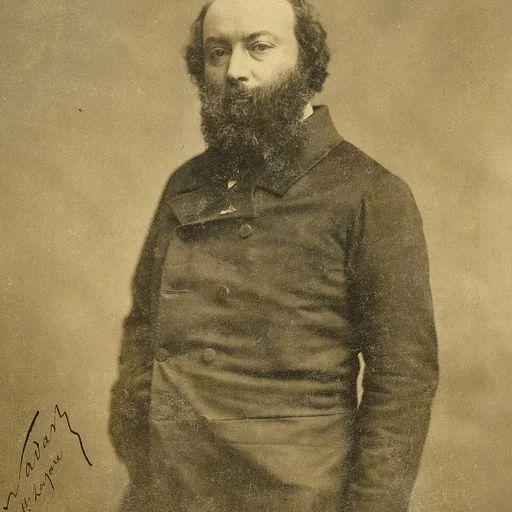
Étienne Pierre Théodore Rousseau (French pronunciation:; 15 April 1812 – 22 December 1867) was a French painter of the Barbizon school.