Madonna and Child with Saint Jerome and Saint Bernardino of Siena by Benvenuto di Giovanni
View the artwork: Madonna and Child with Saint Jerome and Saint Bernardino of Siena →
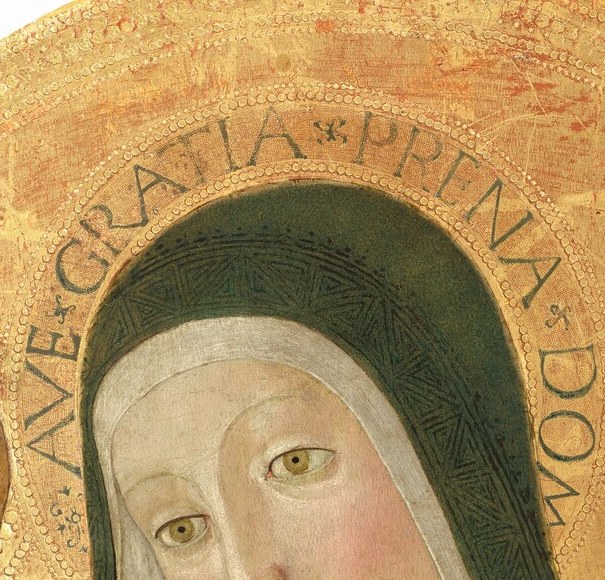
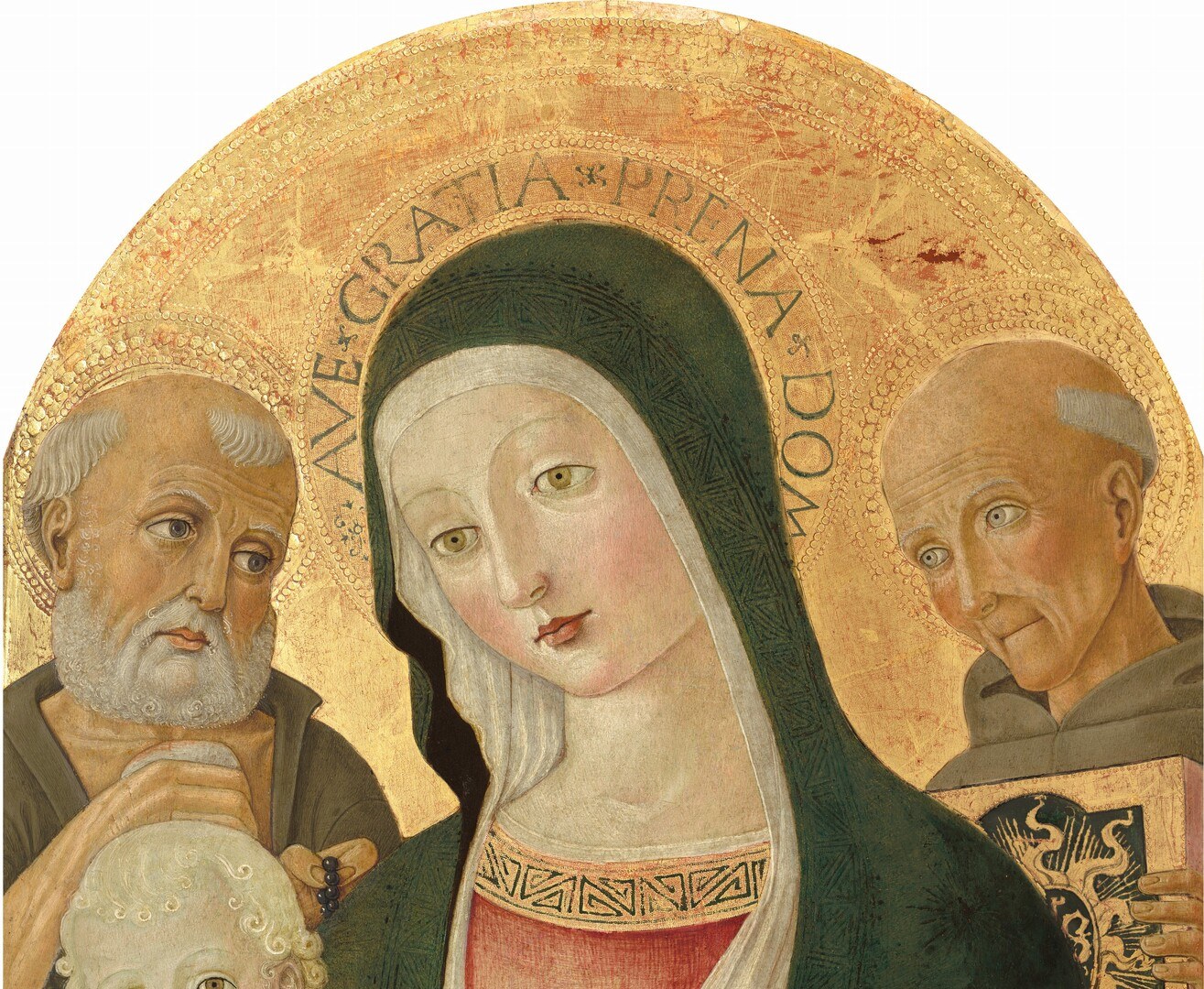
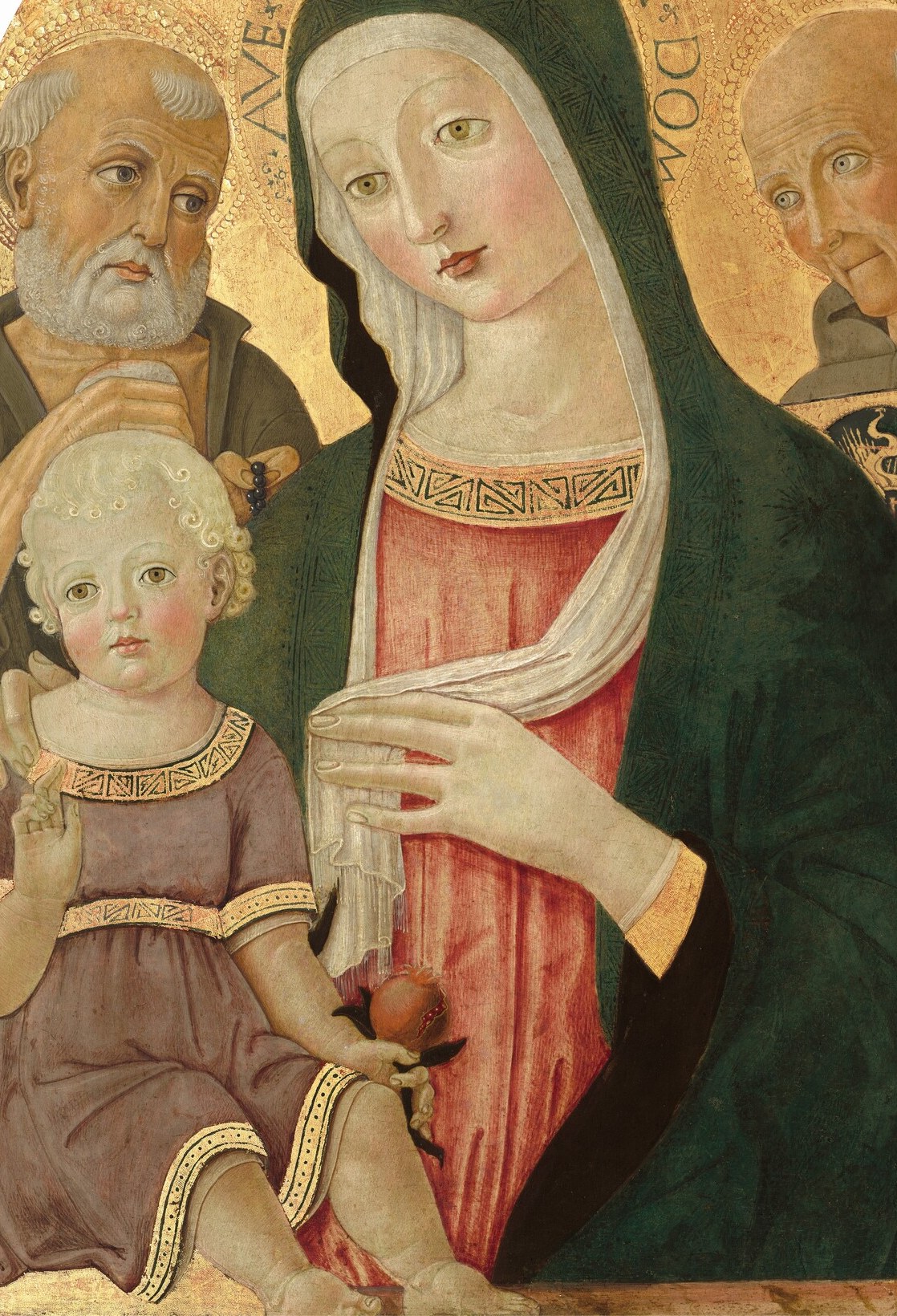
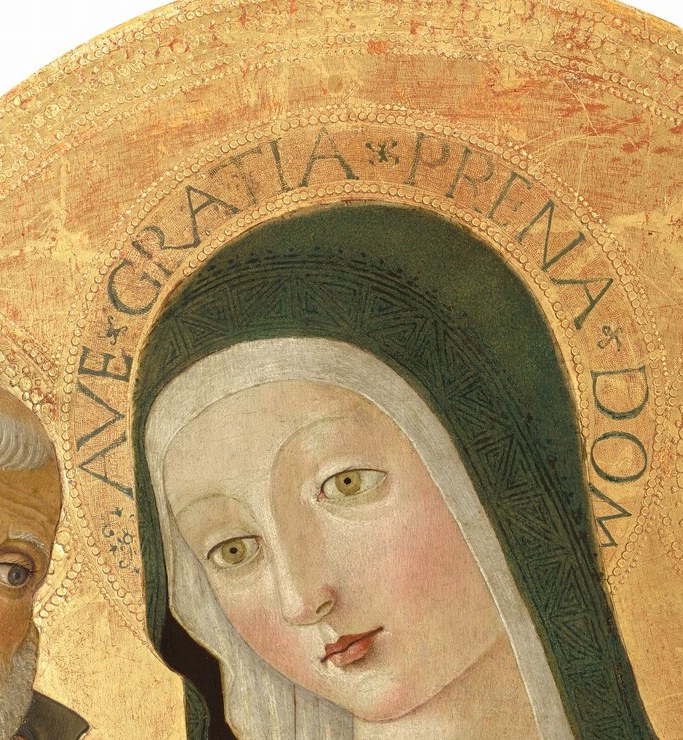
Benvenuto di Giovanni's Madonna and Child with Saint Jerome and Saint Bernardino of Siena, painted around 1480, is a small panel with a very specific local address. It's a sacra conversazione made for Sienese viewers, and it has a subtle anchor on the right side of the frame that you might not register on a quick scroll.
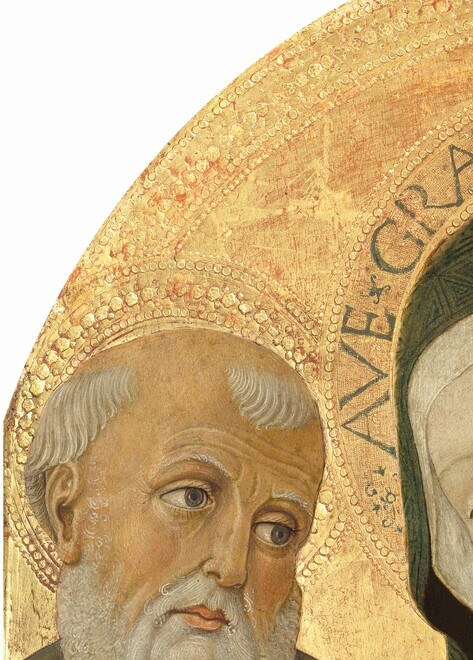
Look at the two saints who flank the Madonna. On the left, Jerome wears the cardinal-red robe that became his standard attribute, even though he was a fourth-century hermit and never held the office. On the right stands Bernardino of Siena, a Franciscan preacher canonized in 1450. He holds his signature attribute, likely the IHS sunburst disk he famously carried through the streets. For a Sienese person around 1480, Bernardino's face was the face of their own civic saint, a very recent memory.
The center holds its own visual theology. The Christ Child does not recline in his mother's arms. He sits upright on her knee like a tiny sovereign, one hand raised in blessing, the other holding a pomegranate. The fruit's red flesh and packed seeds made it a loaded symbol: the Passion to come and the multitude of the faithful contained in the Church.
Benvenuto di Giovanni trained in Siena and worked there for more than four decades, painting altarpieces, illuminating manuscripts, and designing sections of the cathedral floor. This panel eventually passed through the hands of dealer Charles Fairfax Murray and the Widener Collection before arriving at the National Gallery of Art in 1942. Bernardino anchors it in its original world. Once you spot him, the painting stops being generic and becomes Siena's own.
#arthistory #sieneseschool #renaissanceart
Details
Transcript
You could scroll past these two saints in a heartbeat. One is Jerome, in a red robe he never actually wore. The other is why this altarpiece was made. Bernardino of Siena, canonized in 1450. A local hero. His preaching symbol is right here. The IHS disk. Every Sienese viewer would recognize him instantly. He's the point.