Artwork
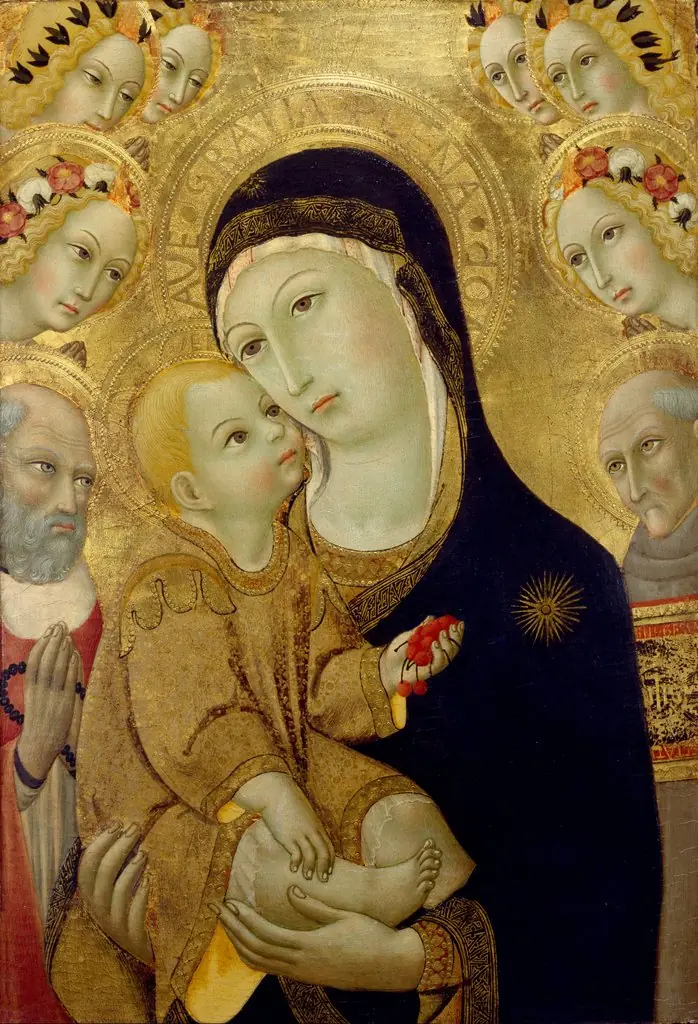
Madonna and Child with Saint Jerome and Saint Bernardino of Siena
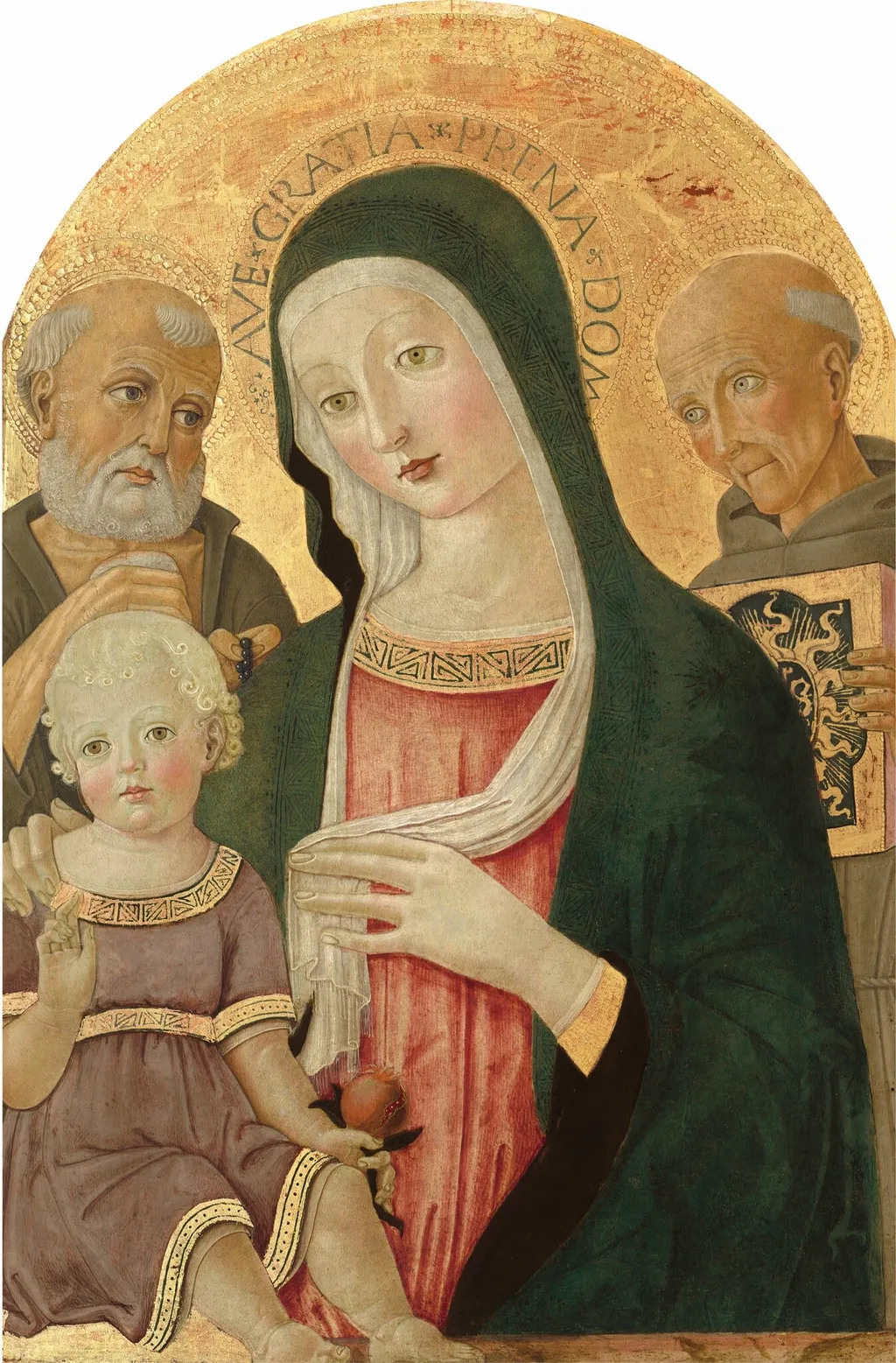
Madonna and Child with Saint Jerome and Saint Bernardino of Siena is a tempera painting by the Renaissance artist Benvenuto di Giovanni. It dates from 1482 and is held in the collection of the National Gallery of Art.
- Inscription
- Inscribed:upper center in the Madonna's halo: AVE.GRATIA.PRENA.DOM[INVS TECVM] (Hail, full of grace the Lord is with thee; from Luke 1:28)
About this work
It arrived at the National Gallery in 1942 with the Widener Collection.
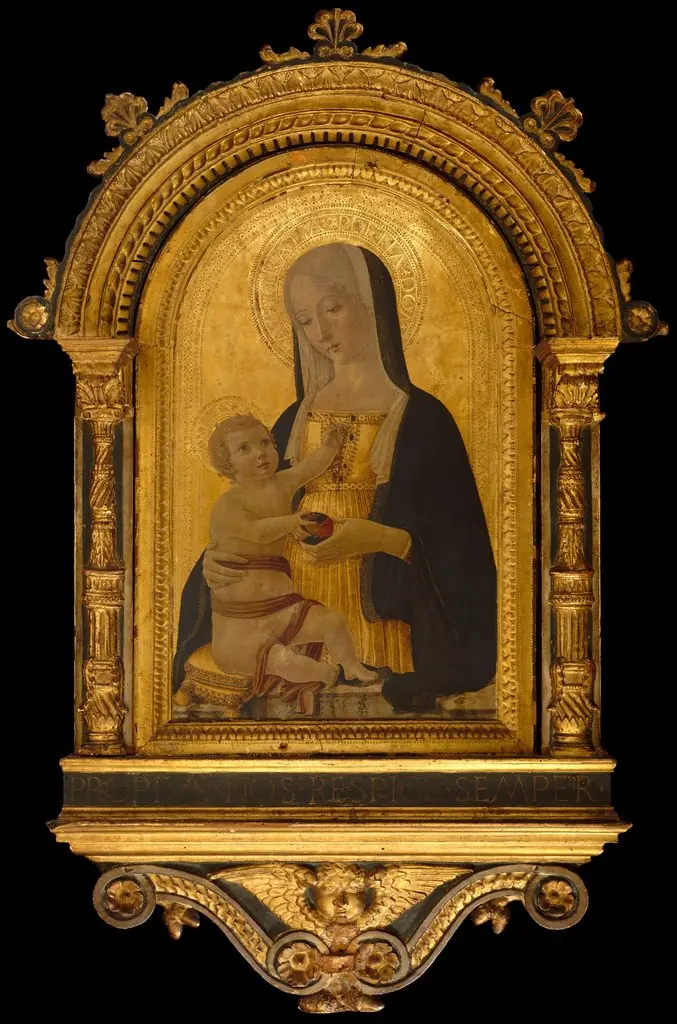
A curly-headed Christ Child perched on his mother's knee raises his hand in blessing while holding a pomegranate, flanked by two saints in an intimate Sienese devotional panel. Benvenuto di Giovanni painted it around 1480, pairing Saint Jerome with Saint Bernardino of Siena, the great preacher canonized just three decades earlier who became the city's most revered local saint. It arrived at the National Gallery in 1942 with the Widener Collection.
Overview
Benvenuto di Giovanni's Madonna and Child with Saint Jerome and Saint Bernardino of Siena, painted around 1480, exemplifies a sacra conversazione, a "holy conversation" where saints gather around the Virgin and Child. Executed in tempera on panel, this devotional work places the central figures between two significant saints, reflecting late fifteenth-century Sienese artistic conventions. The panel displays the refined linework and decorative richness characteristic of the Sienese school, while also incorporating a sense of unified pictorial space.
Subject & Meaning
The composition centers on the Virgin Mary, with the Christ Child perched on her knee, rather than cradled. He raises a hand in blessing and holds a pomegranate, a fruit symbolizing the Church and the Passion. To the left stands Saint Jerome, a revered fourth-century scholar and hermit.
Opposite him is Saint Bernardino of Siena, a Franciscan preacher canonized in 1450, whose inclusion highlights his status as Siena's most important local saint, underscoring the panel's specific civic and religious context.
Technique & Style
This tempera on panel painting showcases the distinctive decorative elegance of the Sienese school. It features precise linework, subtle gold accents, and intricately patterned textiles that enhance its visual richness. Despite these traditional Sienese elements, the artist also constructs a coherent spatial setting for the figures.
This integration of a unified pictorial space suggests an awareness of broader compositional innovations emerging from Florentine art during the same period.
Context
Born in Siena around 1436, Benvenuto di Giovanni likely received his artistic training in the workshop of Lorenzo Vecchietta. His career began by 1453, when he contributed to frescoes in the Siena Baptistery. Over more than four decades, Benvenuto produced a diverse body of work, including altarpieces, manuscript illuminations, and designs for the Siena Cathedral floor, often collaborating with his son Girolamo di Benvenuto in his later years. The prominence of Saint Bernardino reflects his significance to Sienese identity.
History & Provenance
The painting's documented history includes its acquisition by the National Gallery of Art in 1942. It became part of the museum's collection through the generous bequest of the Widener Collection, a significant addition that brought numerous important European artworks to the institution.
Own this work as a print
Artist & collection

Artist
Benvenuto di Giovanni, also known as Benvenuto di Giovanni di Meo del Guasta (13 September 1436 – c.

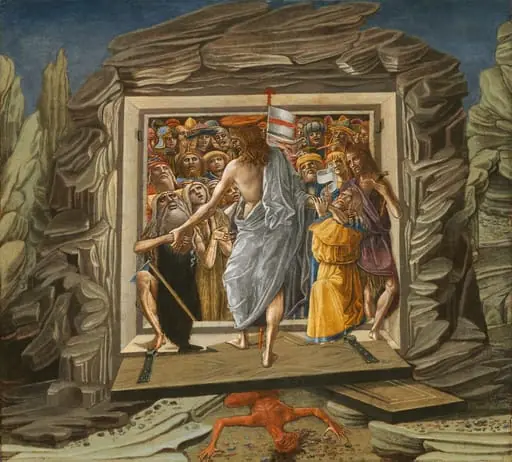
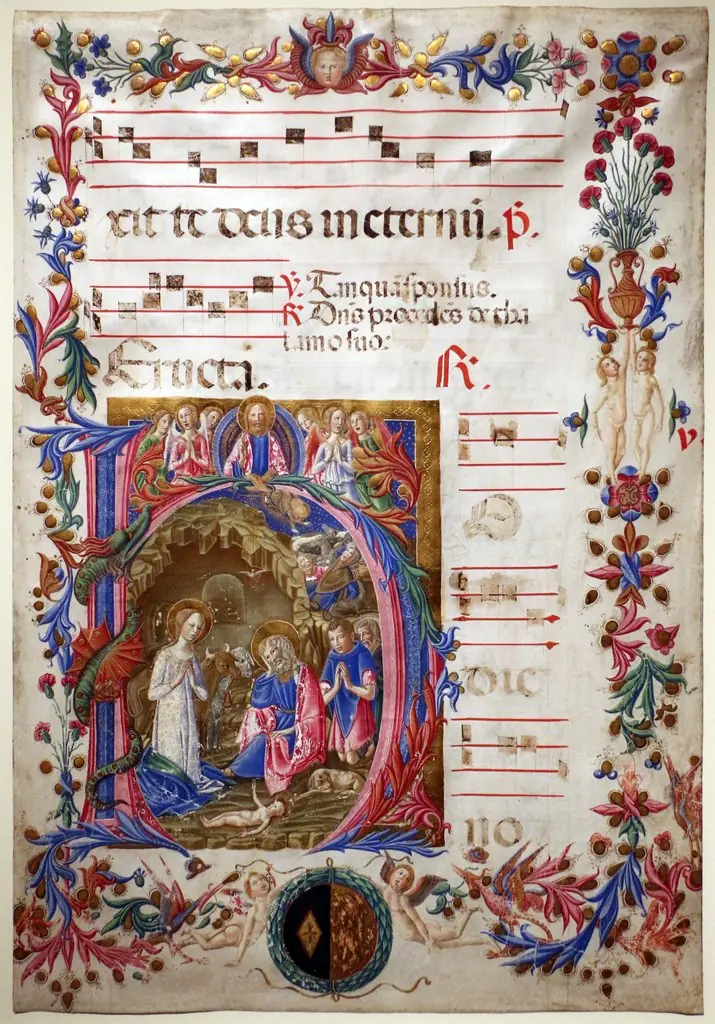
- Madonna and Child with Saint Jerome, Saint Bernardino, and Angels
 Virgin and Child with Saints Jerome and Bernardino of Siena and Six Angels
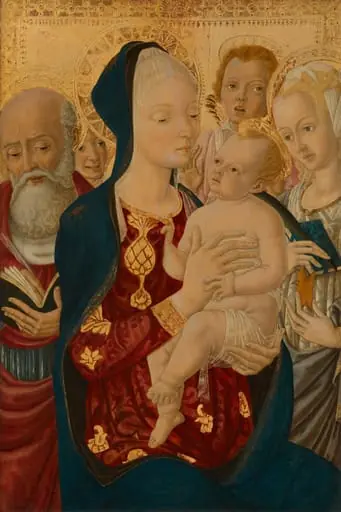 Madonna and Child with Saint Jerome, Saint Catherine of Alexandria, and Angels
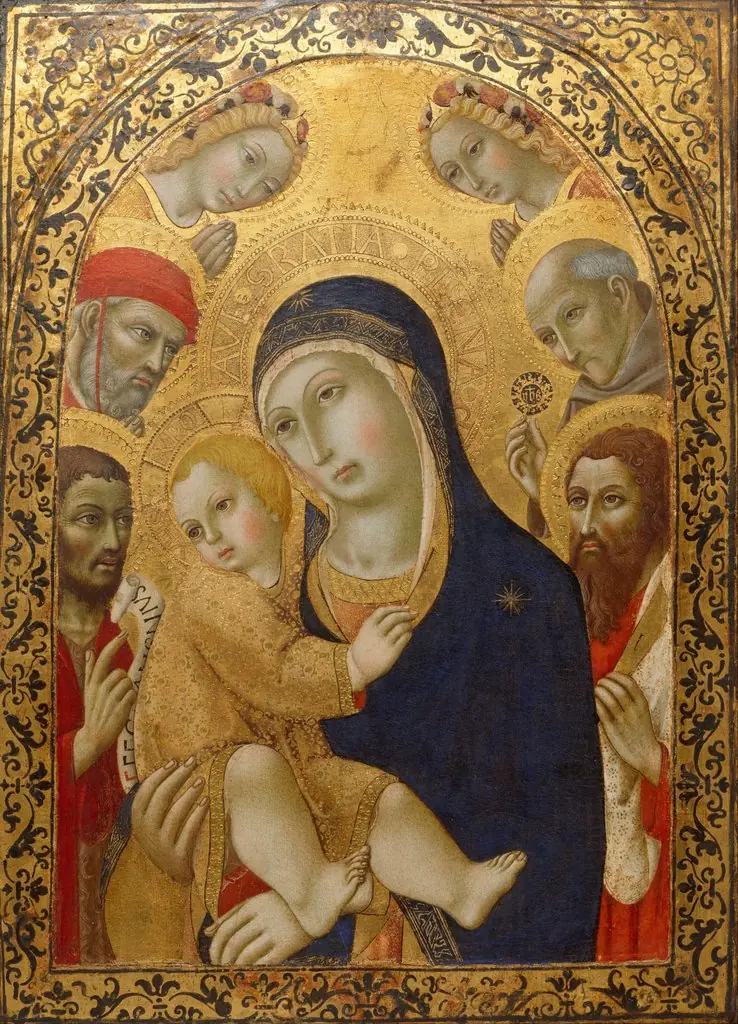 Madonna and Child with Saints Jerome, John the ...
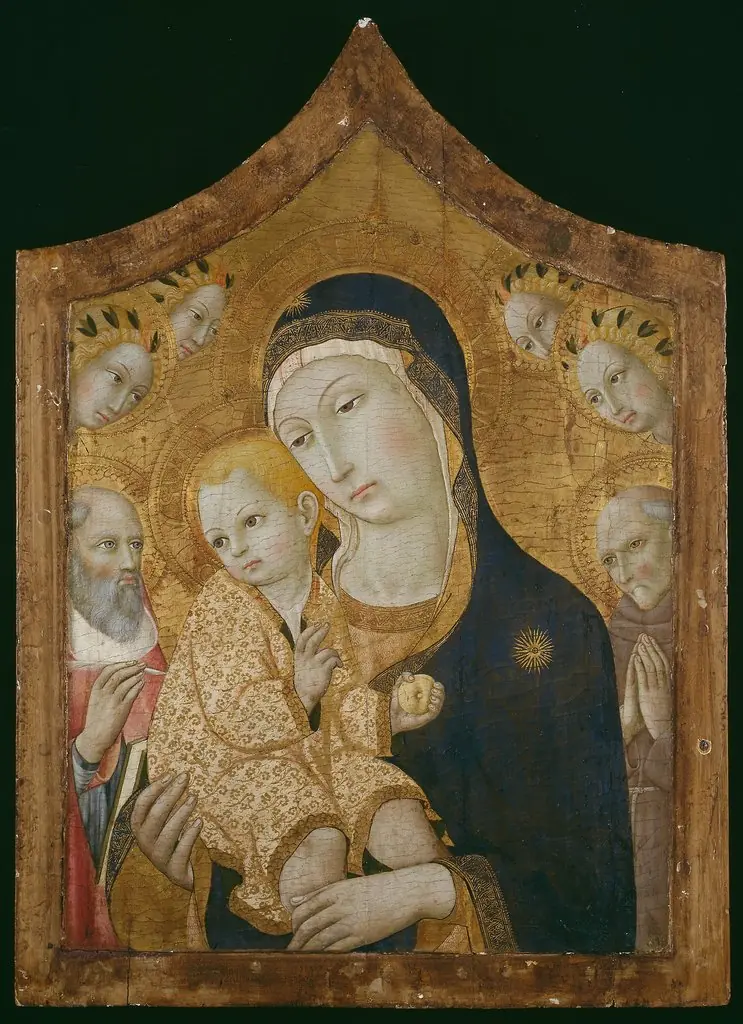 Virgin and Child with Saints Jerome, Bernardino of Siena, and Angels
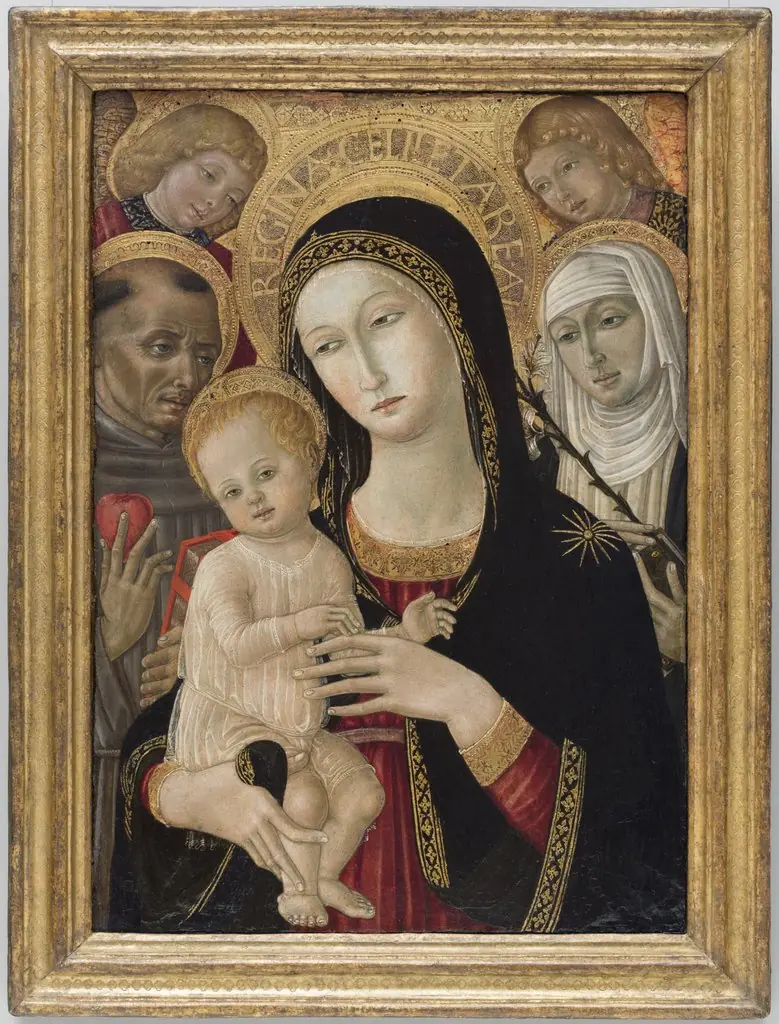 Madonna and Child with St. Catherine of Siena, Saint Anthony of Padua and Angels
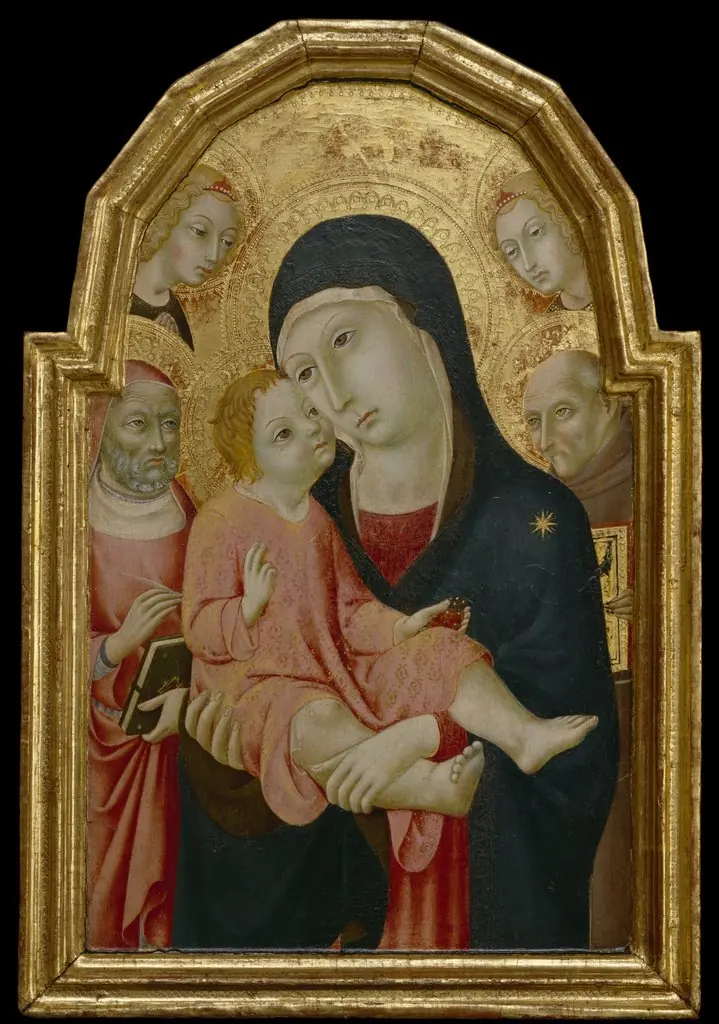 Virgin and Child with Saint Bernardino, Saint Jerome and Two Angels