The Nativity by Christus, Petrus
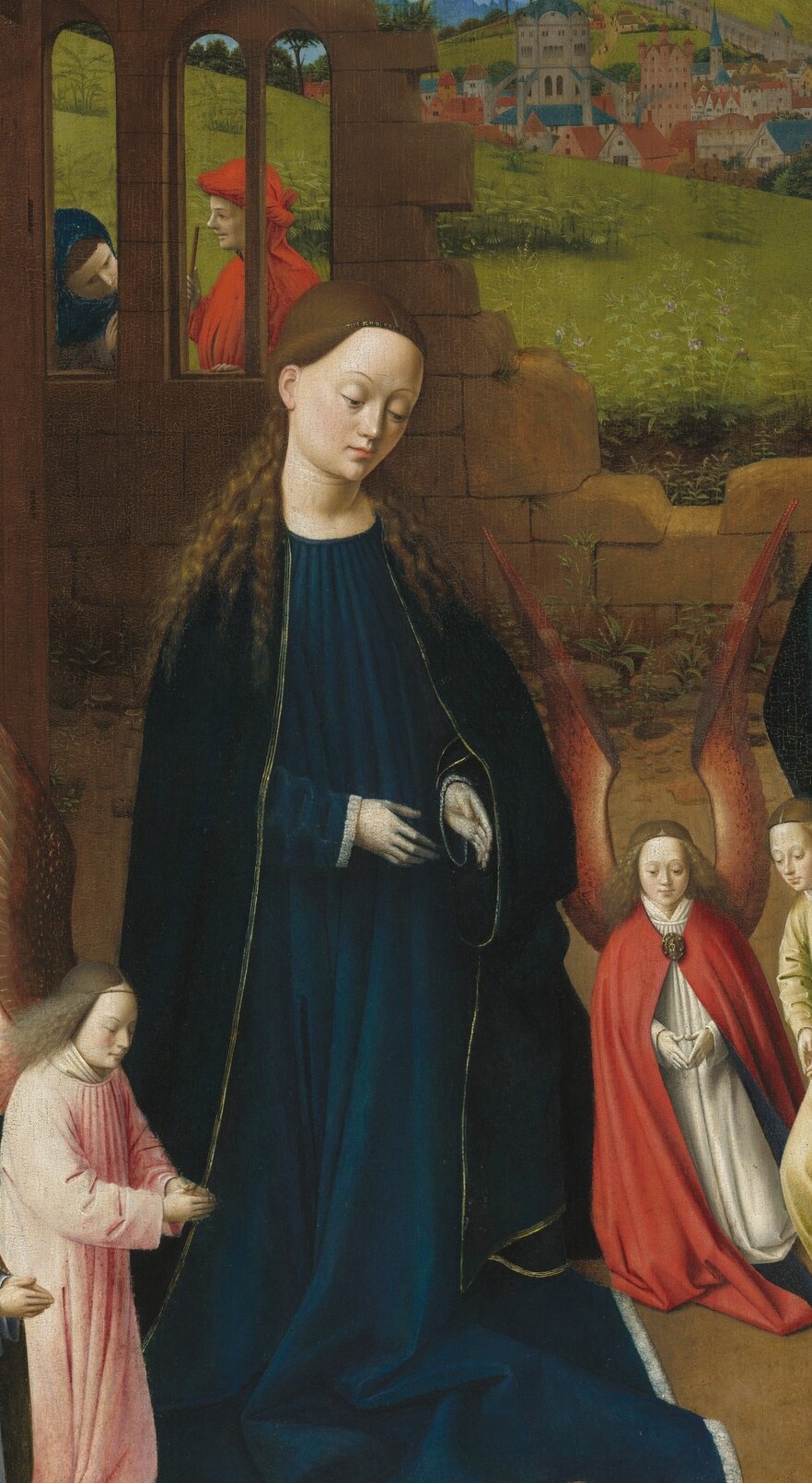
This is Petrus Christus's The Nativity, painted around 1450 in Bruges, and now in the National Gallery of Art. It was likely not made for a grand cathedral but for a private home, meant to sit in a room where someone would look at it every day. That intimacy is the whole point. The landscape behind the stable is not the Middle East but a borrowed patch of Flanders, so the original owner could see this holy moment happening in their own world.
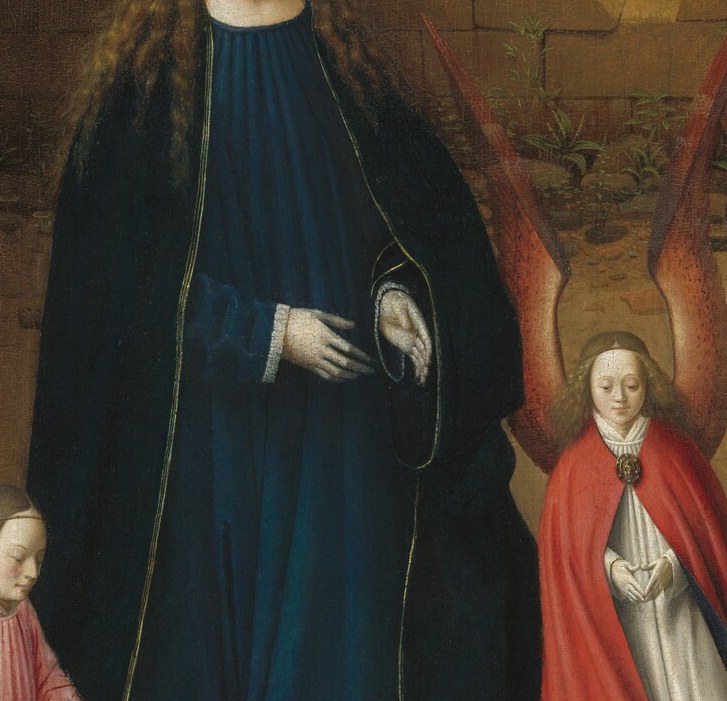
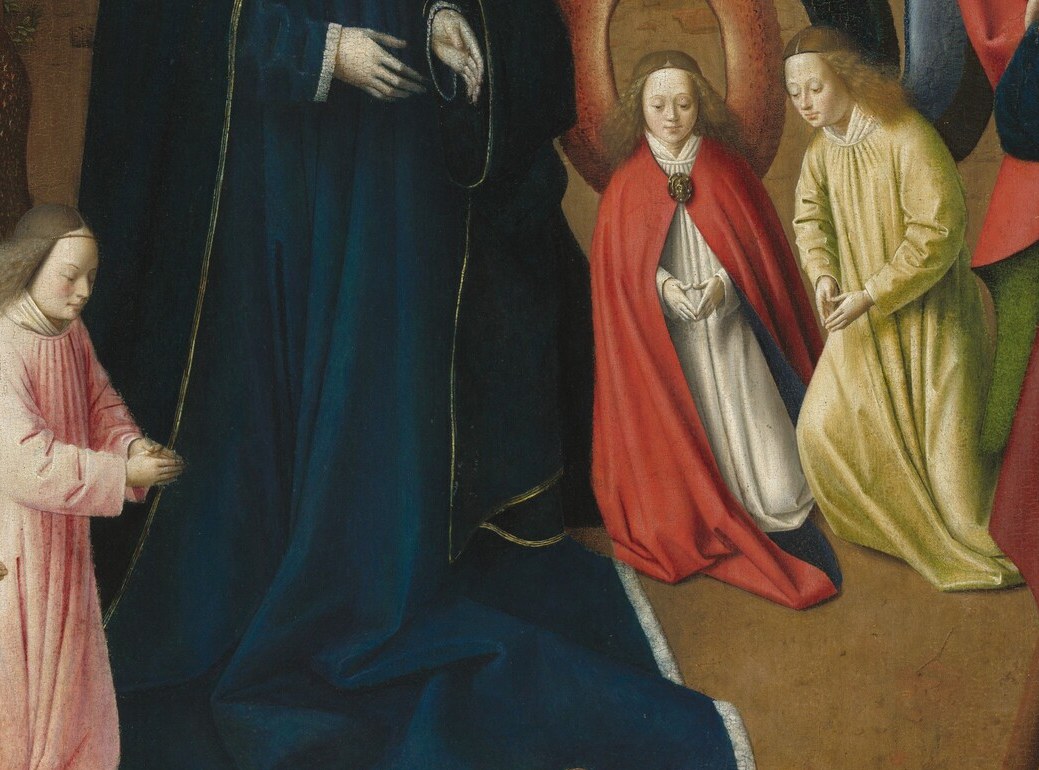
Everything in the painting funnels you toward one detail: Mary's clasped hands. It is a gesture borrowed from Jan van Eyck and Rogier van der Weyden, but Christus strips it of ceremony. Her fingers are not tense. She simply holds them together, and in the devotional language of the 15th century, that single posture said prayer, wonder, and complete surrender. Below her hands the infant lies on bare ground. The theology is uncompromising. The maker of the world arrives with nothing under him.
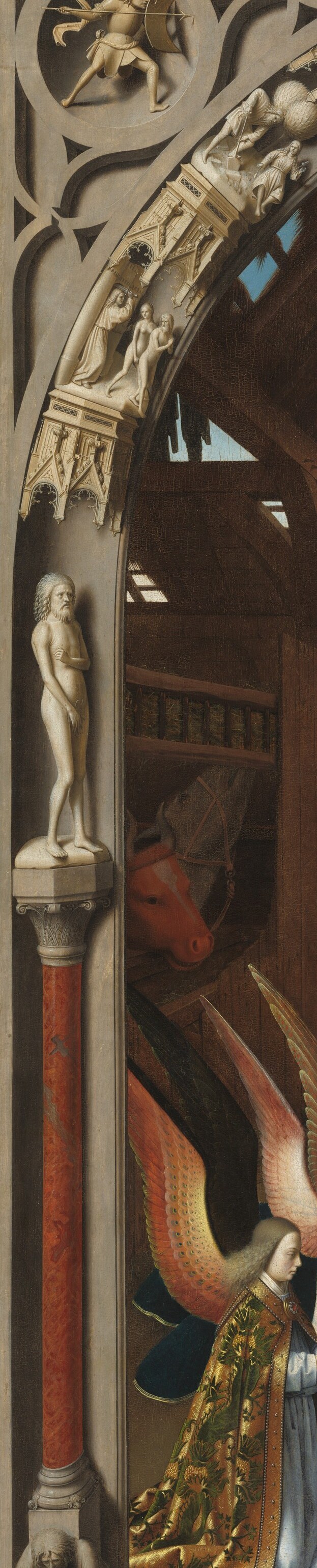
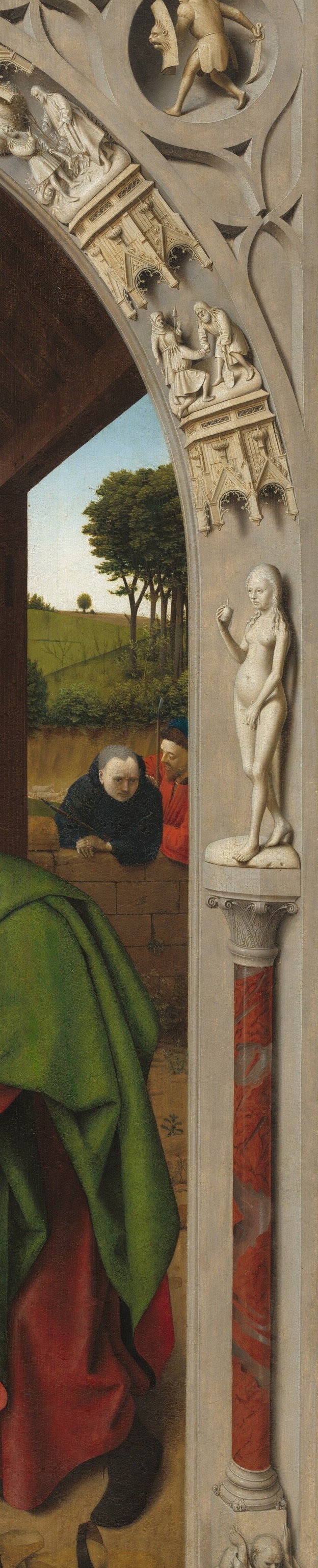
Christus was a quieter figure than van Eyck, but he was technically audacious. The gray stone pillars on either side are not real stone; they are painted illusions in grisaille, down to the Old Testament scenes carved into them. And the stable roof beams recede in perfect one-point perspective, an early and deliberate demonstration that the space is mathematically built to pull your eye to its center. The painting is small miracles stacked inside each other.
Even the attribution had to wait. Max Friedländer confirmed it was Christus's hand only in 1930, calling it superior in scope to everything else the painter ever made. So it sat quietly, in houses and collections, for nearly five hundred years before its name caught up with its achievement.
Details
Transcript
Bethlehem, borrowed from the fields of Flanders. This was painted for someone's home. A private devotion. The painter makes you look past these fake stone pillars. His name was Petrus Christus, and he loved a quiet trick. Look at Mary's hands. Nothing is clenched. Nothing is dramatic. She just folds them. That exact gesture meant prayer and surrender to a 1450s viewer. And her eyes rest on the child who, the theology says, rests on nothing.