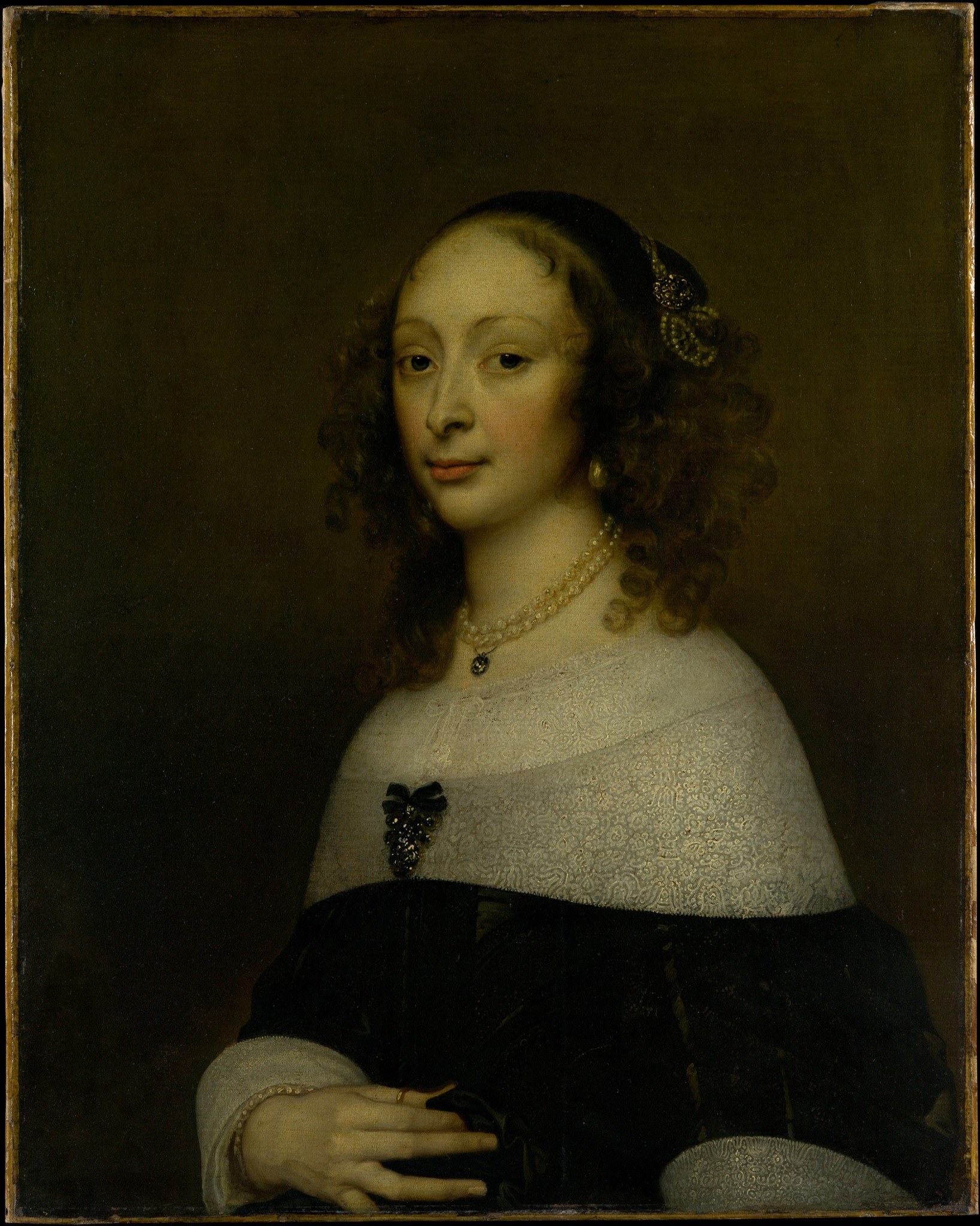
Portrait of a Woman by Adriaen Hanneman
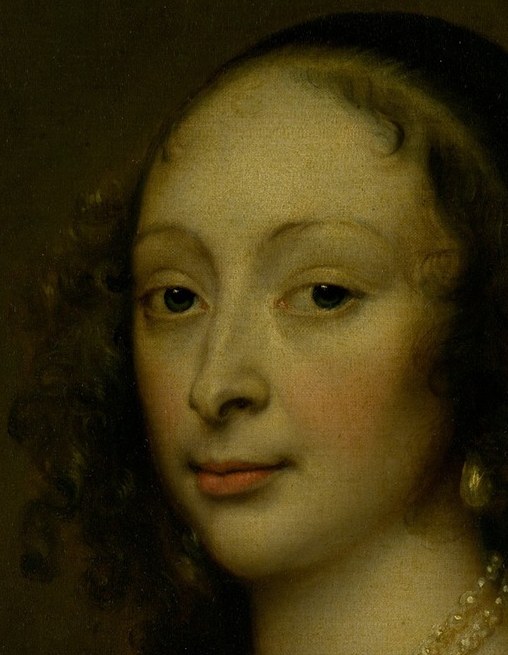
Adriaen Hanneman's "Portrait of a Woman," painted in 1653, is more than just a likeness; it's a carefully constructed message. Through specific details, the artist communicated the sitter's identity and status.
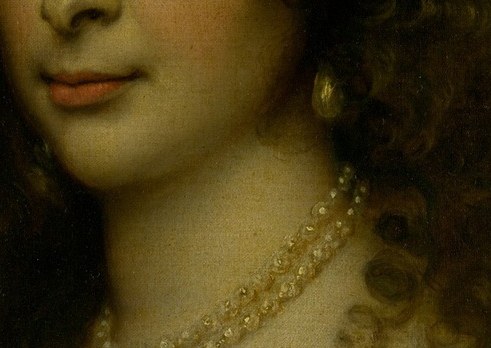
Observe the pearl necklace, a classic symbol of purity and wealth in the Dutch Golden Age. Her elegant, dark brooch, while subtle, further emphasizes her refined taste and social standing. Then, look closely at her finger, where a simple gold ring quietly denotes her marital status.
Hanneman, a Dutch Golden Age painter influenced by Anthony van Dyck, was known for his portraits, often for the exiled British royal court. He masterfully used such visual cues to convey a sitter's narrative without words, allowing the viewer to 'read' the painting's hidden meanings.
What other subtle details do you notice that tell a story?
Details
Transcript
This woman's portrait holds a hidden language. The artist, Adriaen Hanneman, was known for such details. Her lustrous pearl necklace signals purity and wealth. A dark brooch on her chest adds a touch of elegant mystery. And this simple ring suggests her marital status. These objects identify her as a woman of means and standing.