Alfonso d'Avalos Addressing his Troops by Titian
This is Titian's "Alfonso d'Avalos Addressing his Troops," painted around 1540 and now in the Museo del Prado. The Marquis of Vasto commissioned it to commemorate a moment of genuine political crisis: his Spanish troops in Milan were on the edge of mutiny over unpaid wages, and he talked them down. The painting is both a portrait and a piece of careful self-presentation.
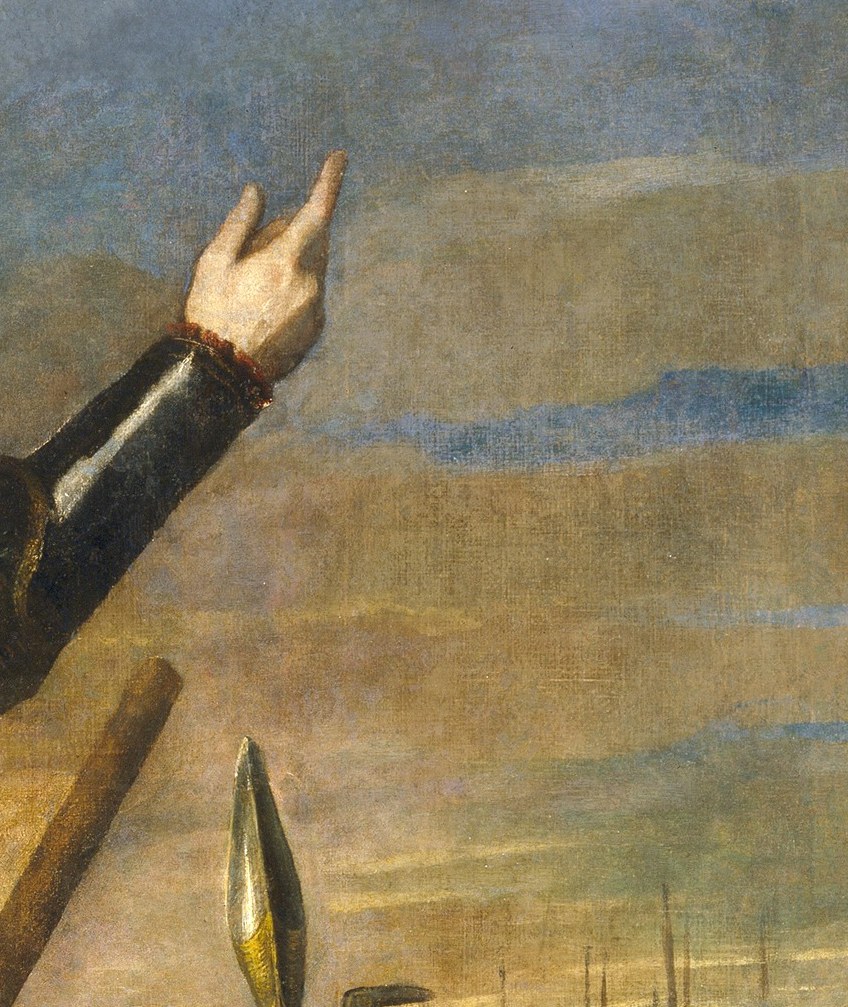
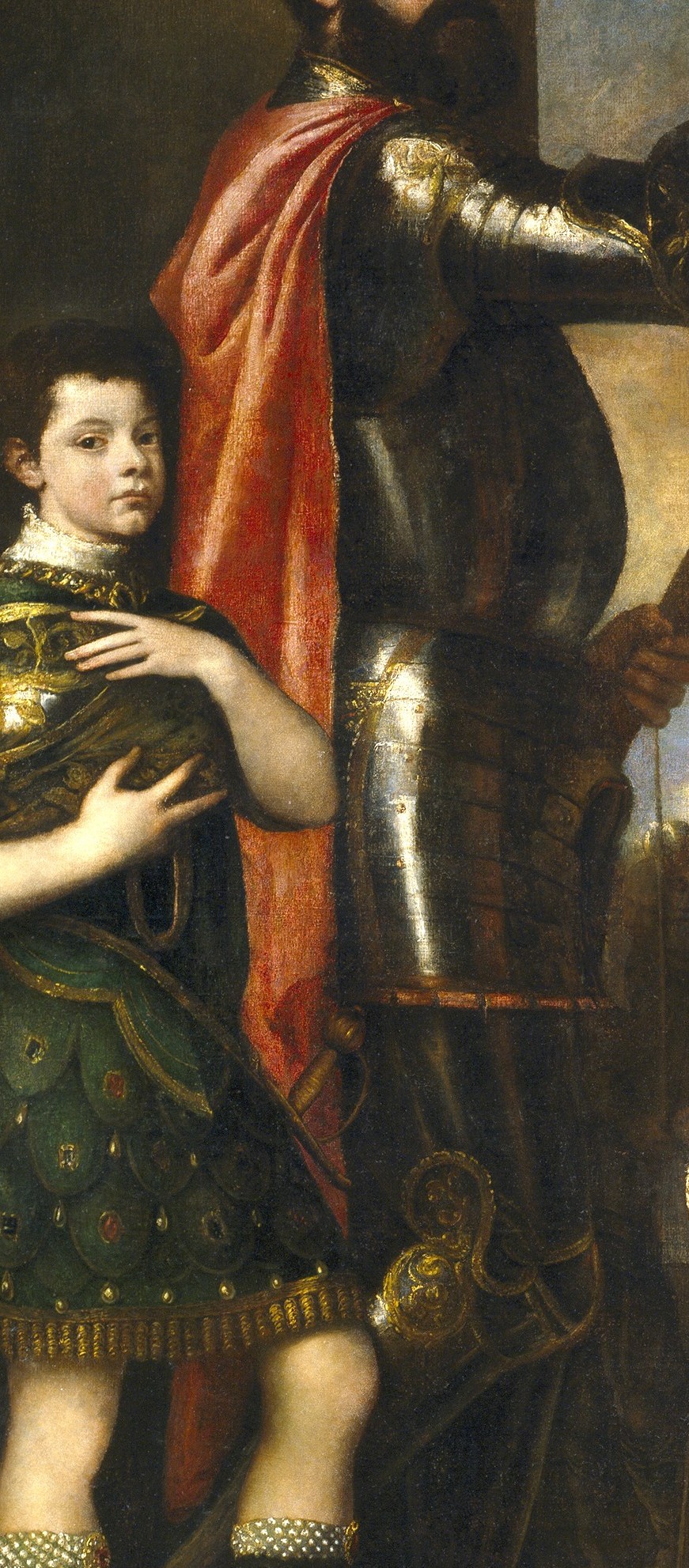
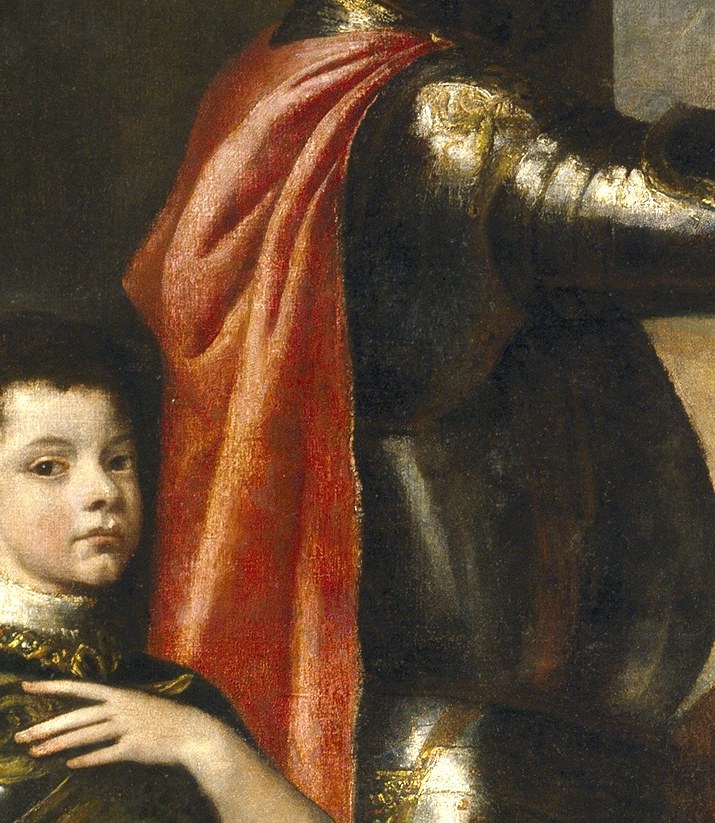
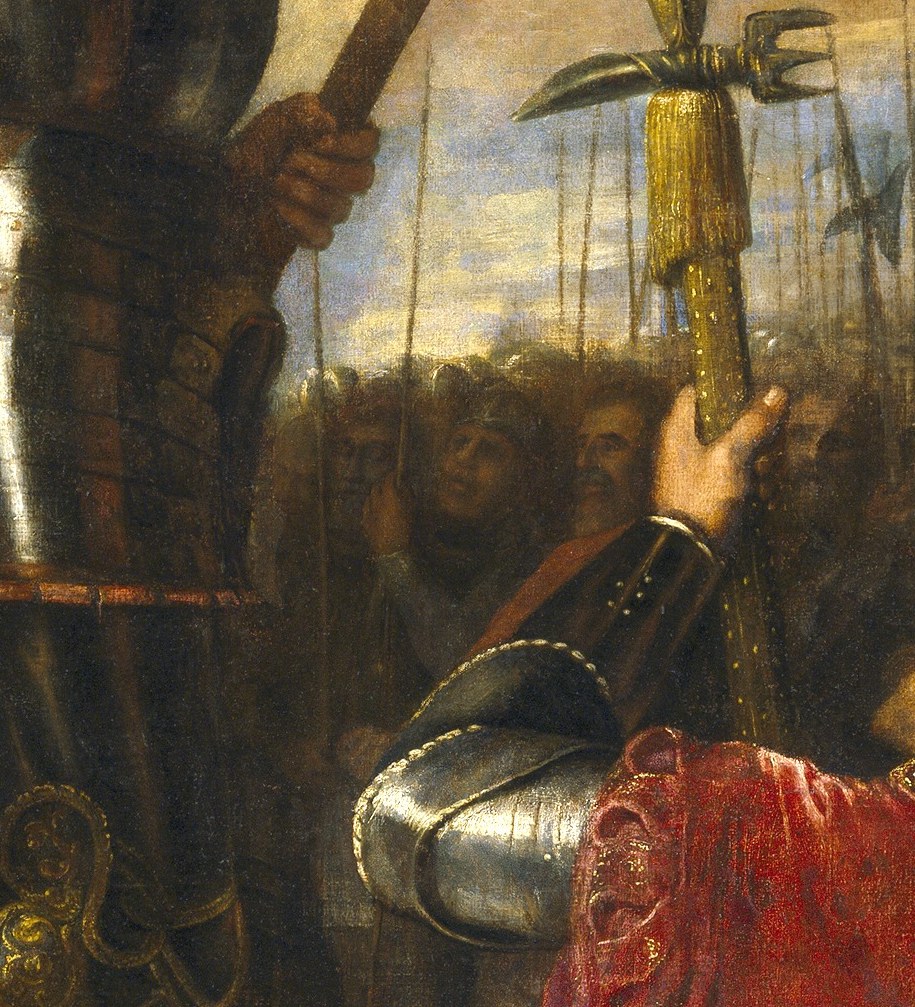
Titian packed the canvas with classical signals of legitimate authority. Alfonso's raised right arm is the ancient orator's gesture of oath-taking, borrowed from Roman reliefs. The commander's baton in his lowered left hand reinforces his lawful rank. And the young boy beside him is not a page, he is Alfonso's son, left with the soldiers as a living guarantee that pay would come. Every object makes the same argument. This is not a tyrant threatening; this is a governor persuading.
The incident happened in 1537, and Alfonso commissioned the painting two years later during a visit to Venice. It was first displayed publicly in Milan in 1541 for a visit by Emperor Charles V. The painting then passed through the Gonzaga collection in Mantua and into the hands of King Charles I of England. After Charles's execution, his assets were auctioned, and Philip IV of Spain acquired it for the Spanish crown. In 1828 Ferdinand VII gave it to the Prado.
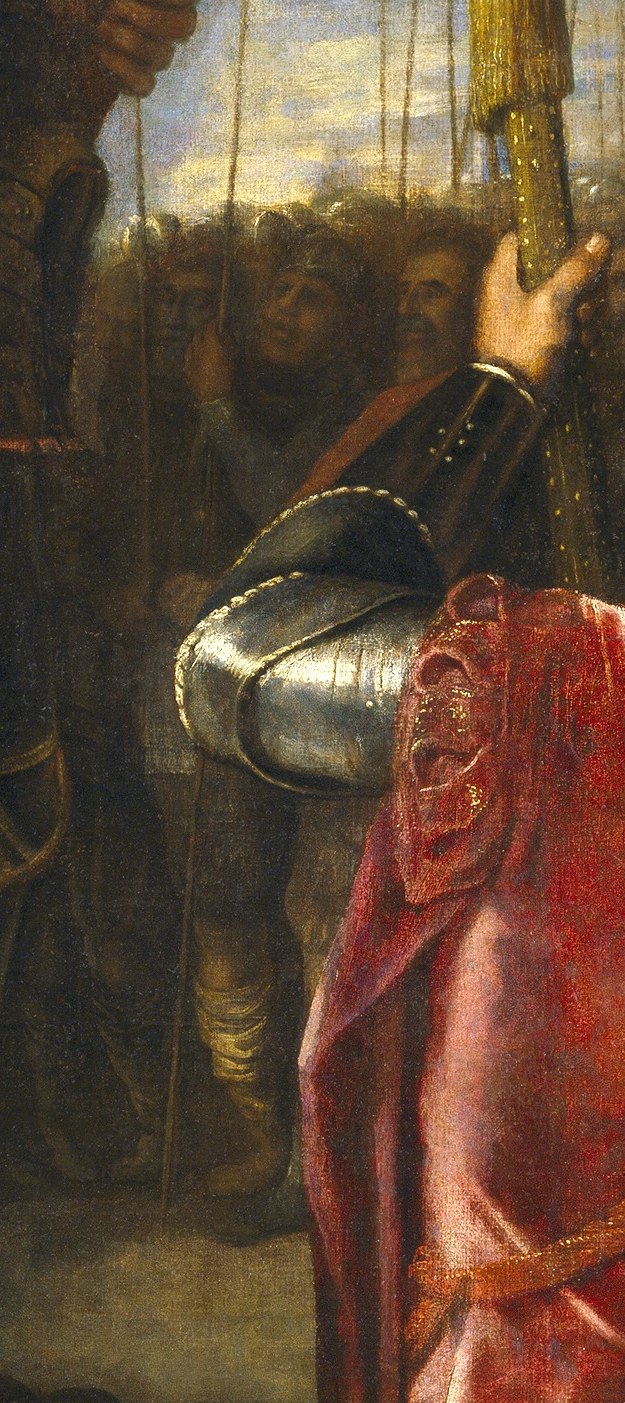
What interests me most is how the composition itself enacts persuasion: the soldiers' faces in the middle ground look on, and even the red-cloaked figure in the foreground echoes Alfonso's raised arm. The army listens, and Titian wants us to see that they are convinced.
Details
Transcript
He isn't just pointing. He is swearing an oath. The raised hand comes straight from Roman oratory. His baton is the mark of lawful command. Look at the boy holding his helmet. He is not a servant. He is Alfonso's own son. The boy was left as a human guarantee the troops would be paid. Polished steel, a loyal crowd: the whole argument for his rank.