The Betrayal of Christ by Bartolomeo di Tommaso
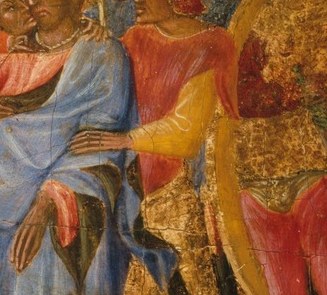
Bartolomeo di Tommaso's "The Betrayal of Christ," painted in 1445, captures a moment of profound religious drama from the early Renaissance. Housed at The Metropolitan Museum of Art, this tempera painting vividly depicts Judas's treacherous kiss, which identified Jesus to the Roman soldiers in the Garden of Gethsemane.
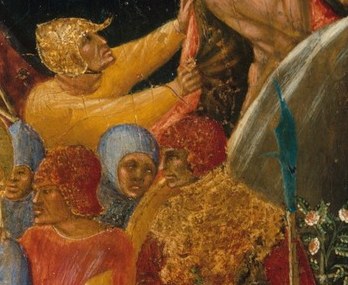
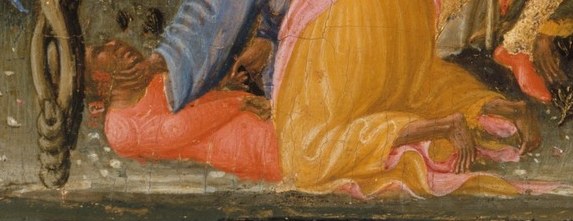
Look closely at the central embrace, the sharp spear, and the surrounding chaos. These elements highlight the gravity of the event, marking the beginning of Christ's Passion narrative. The artist, an Italian painter from the Umbro-Sienese school, uses a crowded composition and distinct colors to convey the tension.
Created in the mid-15th century, this work is a notable example of Bartolomeo di Tommaso's style, blending regional artistic influences. It remains a powerful illustration of betrayal and destiny in Christian art.
What details in the painting resonate most with you?
Details
Transcript
This painting shows a moment of intense drama. The artist Bartolomeo di Tommaso painted it in 1445. In the center, Judas embraces Christ. This kiss identifies Christ to the Roman soldiers. A soldier's spear points to the impending violence. The chaotic scene in the Garden of Gethsemane begins Christ's Passion. It's a pivotal moment of treachery and divine resignation.