A Small Orejona Village by Catlin, George
George Catlin's 'A Small Orejona Village' (1854/1869) at the Smithsonian American Art Museum, offers a glimpse into a frontier community's life. Catlin, a lawyer turned artist, dedicated his career to documenting Native American life in the American West.
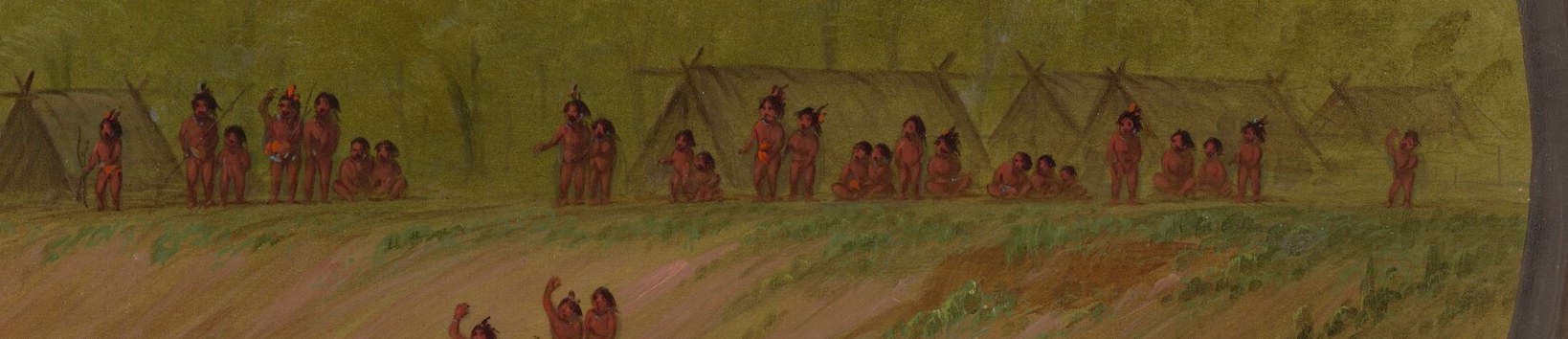
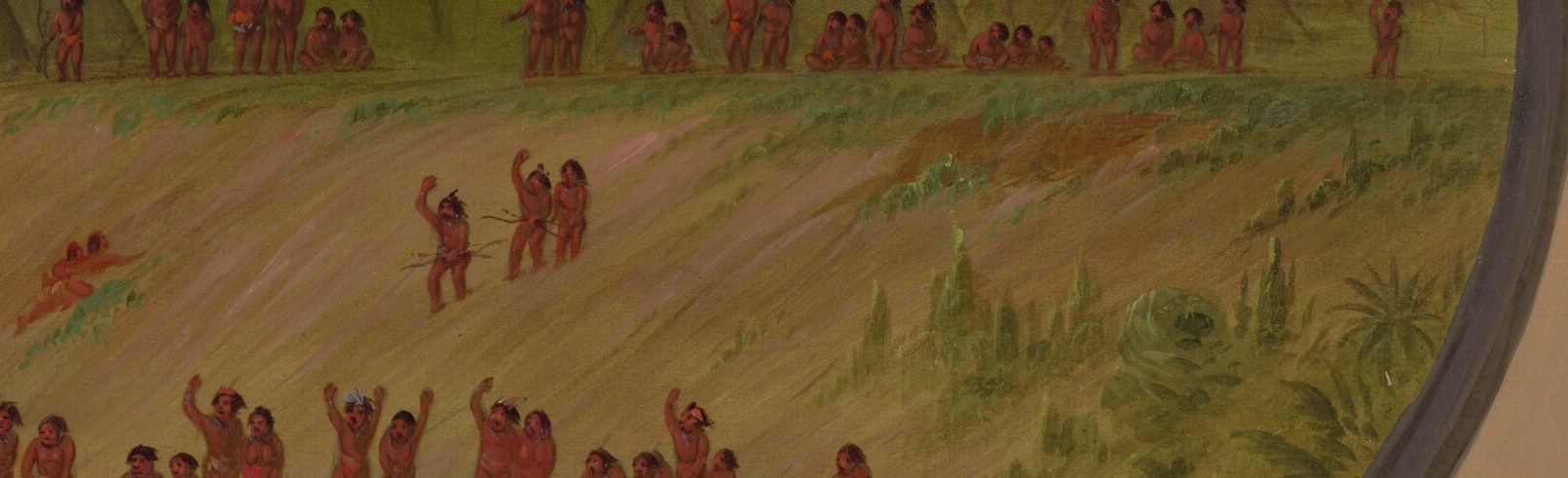
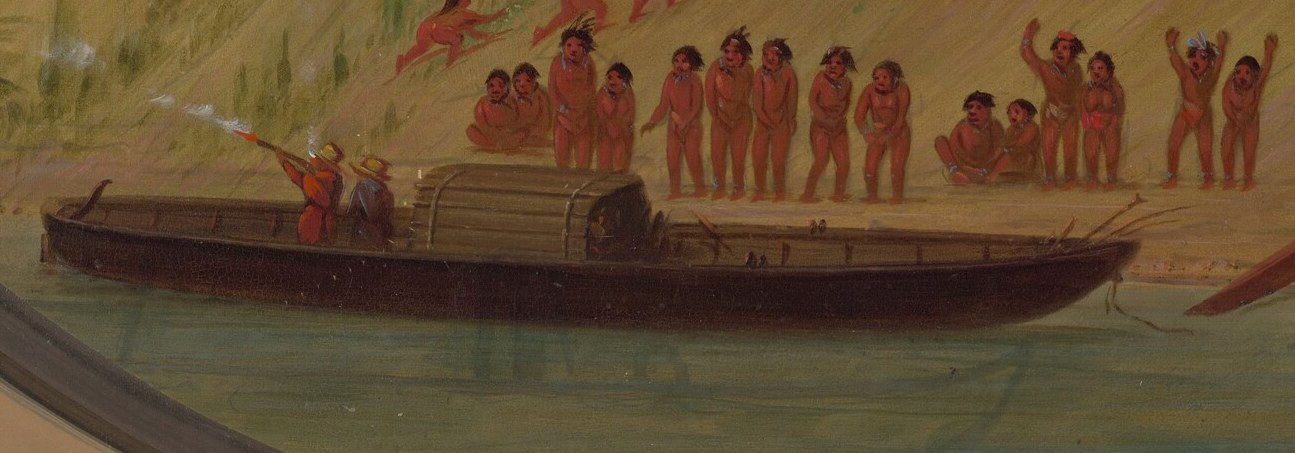
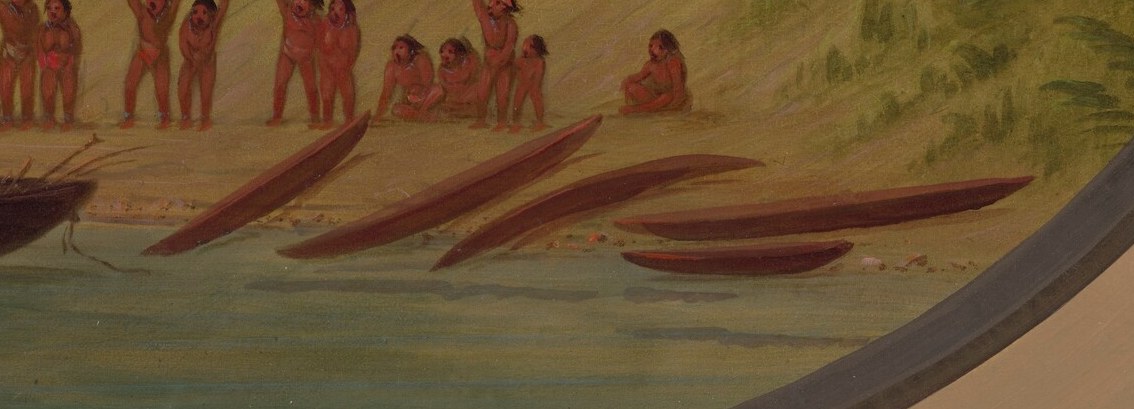
Look closely at the various elements, from the modest dwellings to the river boats and canoes. These details paint a picture of how the inhabitants interacted with their environment and connected with the wider world.
Created during a period of rapid change on the western frontier, Catlin's work aimed to record a way of life that was rapidly transforming. His travels across the American West provided him with unique insights into the communities he depicted.
What stories do these subtle details tell about the people who lived here?
Details
Transcript
This painter documented life in the American frontier. The village sits by a river, central to daily life. People gather at the water, perhaps for trade or travel. A large river boat suggests connections to the outside world. Smaller canoes indicate local transportation and resource use. The inscription 'S.S.V.' remains a mystery, perhaps a dedication. The artist created this work as a visual record of a disappearing way of life.