Mrs. John Garden (Ann Garden, 1769–1842) and Her Children, John (1796–1854) and Ann Margaret (born 1793) by John Hoppner
Mrs. John Garden (Ann Garden, 1769-1842) and Her Children, John and Ann Margaret, painted by John Hoppner in 1798. Oil on canvas. The Metropolitan Museum of Art.
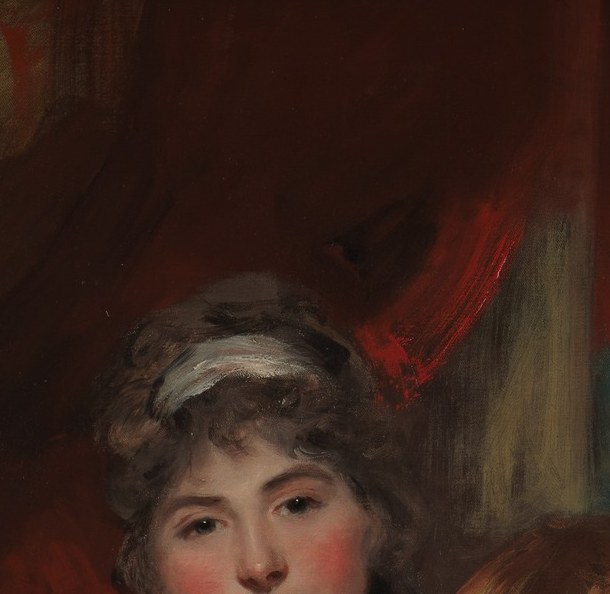
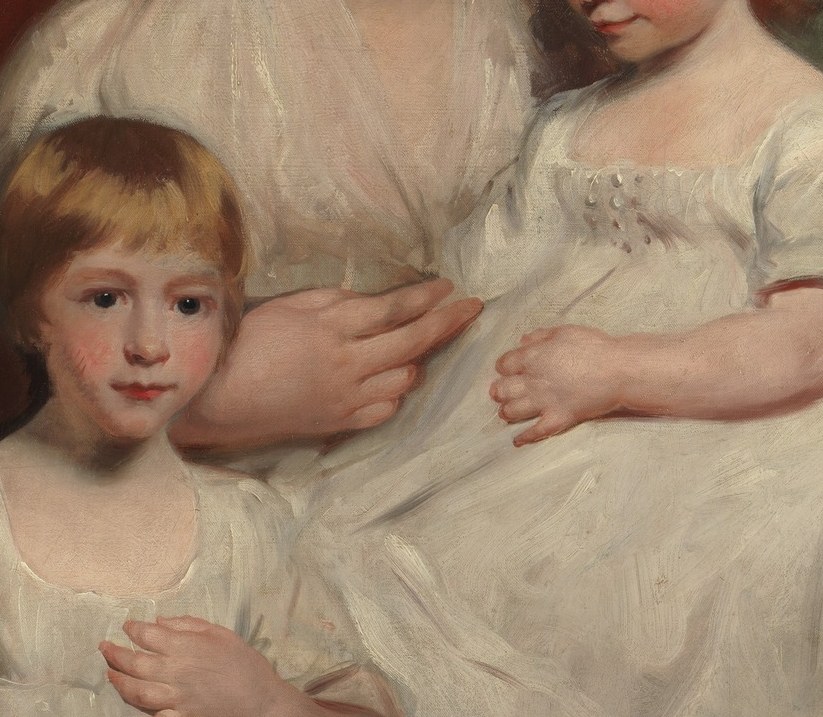
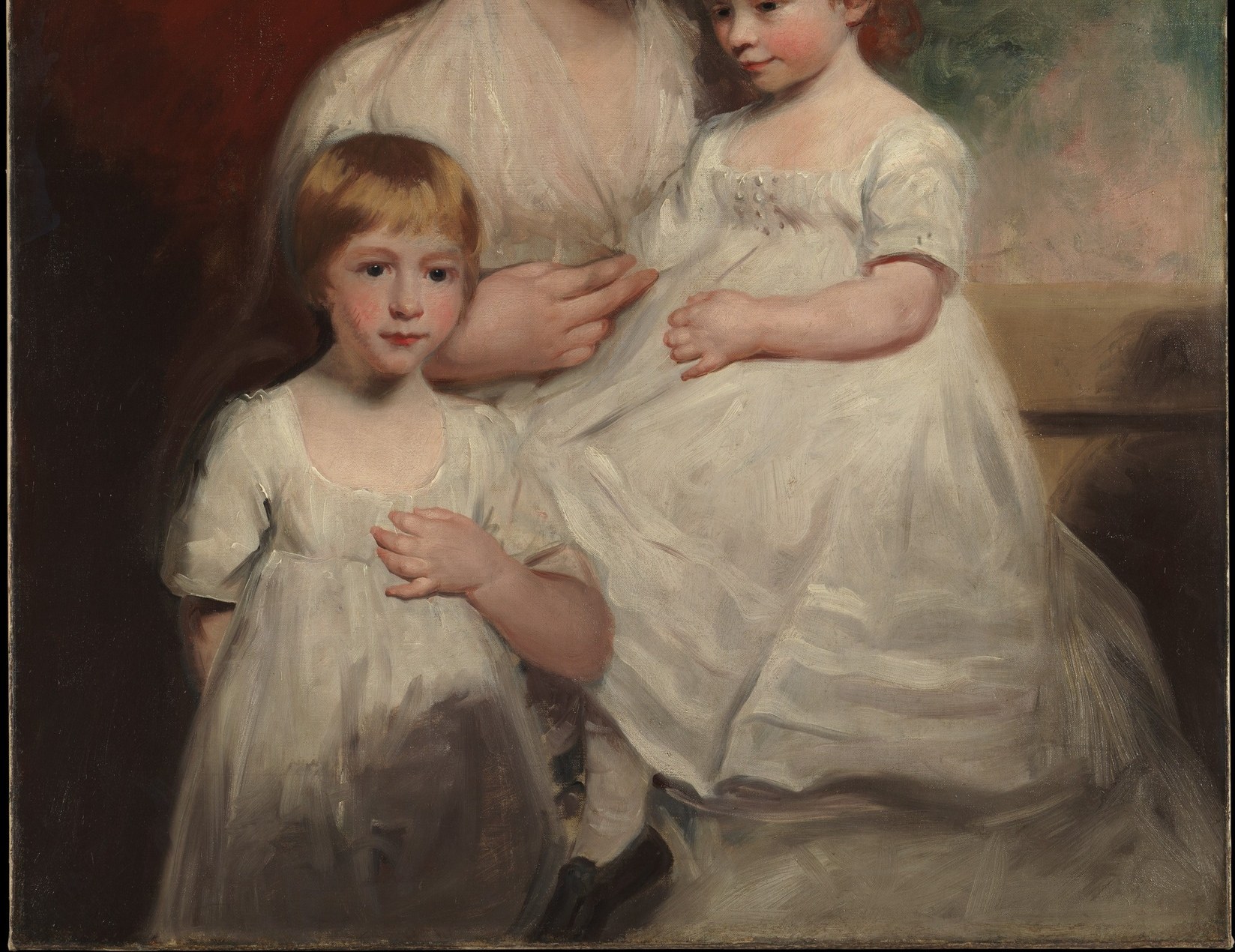
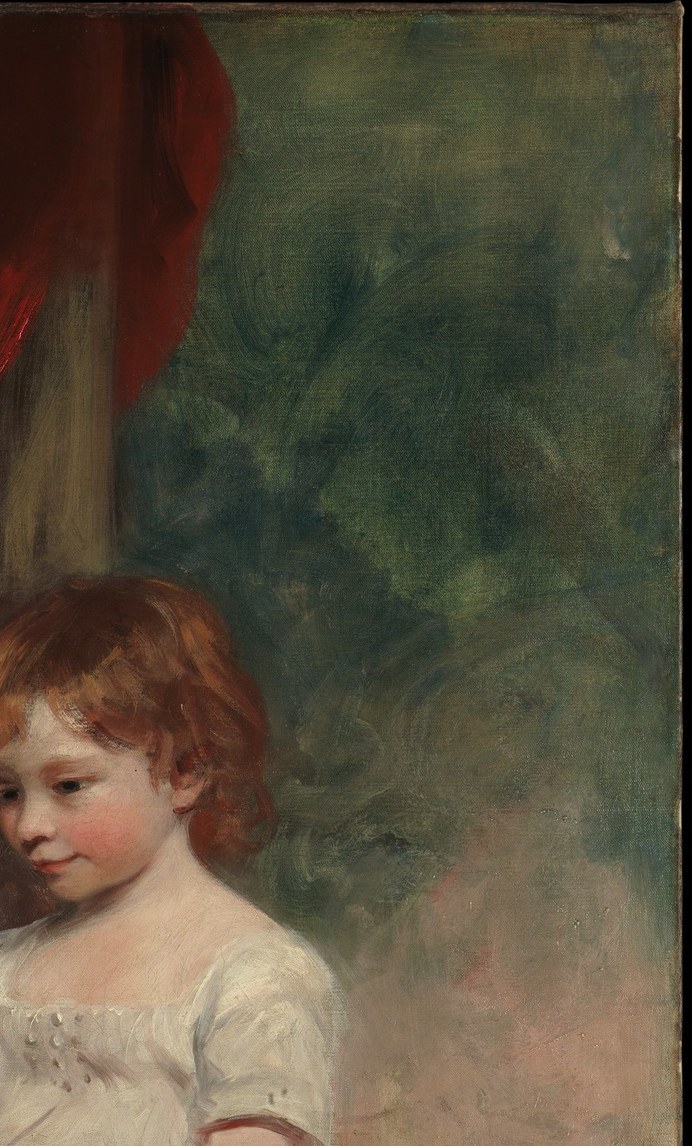
This is a family portrait, but it is also a historical document of changing feeling. In the 1790s, the idea of childhood was being transformed: children were no longer miniature adults to be held at arm's length, but people to be cherished, held close, and shown in physical affection. Hoppner records that shift plainly. The mother's arms are the painting's true subject: one hand resting gently on her daughter, the other supporting her infant son. Her eyes never meet the viewer. All her attention belongs to them.
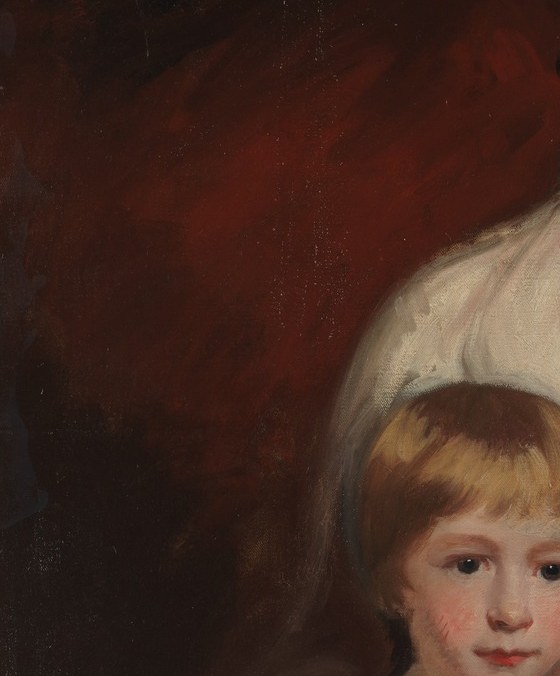
Look at the dresses. All three figures wear white muslin against a near-black background and a deep red curtain, a technical challenge Hoppner borrowed from his great rival, Joshua Reynolds. Painting white on white without losing the forms required subtle cool and warm shifts in tone. The curtain itself is an old aristocratic prop, going back to van Dyck, but here it feels less like a throne and more like a warm room.
John Hoppner was the son of a German-born surgeon and quickly rose to become a favorite portraitist of the British elite. He was a sharp colorist and an open rival to Thomas Lawrence. This portrait, commissioned by John Garden, shows a family in a moment of real intimacy, a look that Hoppner and his contemporaries helped make fashionable.
Affection has a history. That is what a painting like this quietly records.
Details
Transcript
1798. London is a city of half a million, the empire's beating heart. This is Ann Garden. Her husband commissioned the portrait from a rising star, John Hoppner. Look at how he paints her arms. One hand steadies her daughter, the other wraps her son. Touch was the new language of motherhood. And her eyes stay on the children, not on us. A generation earlier, a mother in a portrait would have sat apart, formal and distant. Hoppner gave posterity a witness to the moment that changed.