Embroidery with the Annunciation by http://www.wikidata.org/.well-known/genid/7b4cdf798756d5f82489e8c9f7dfd72b
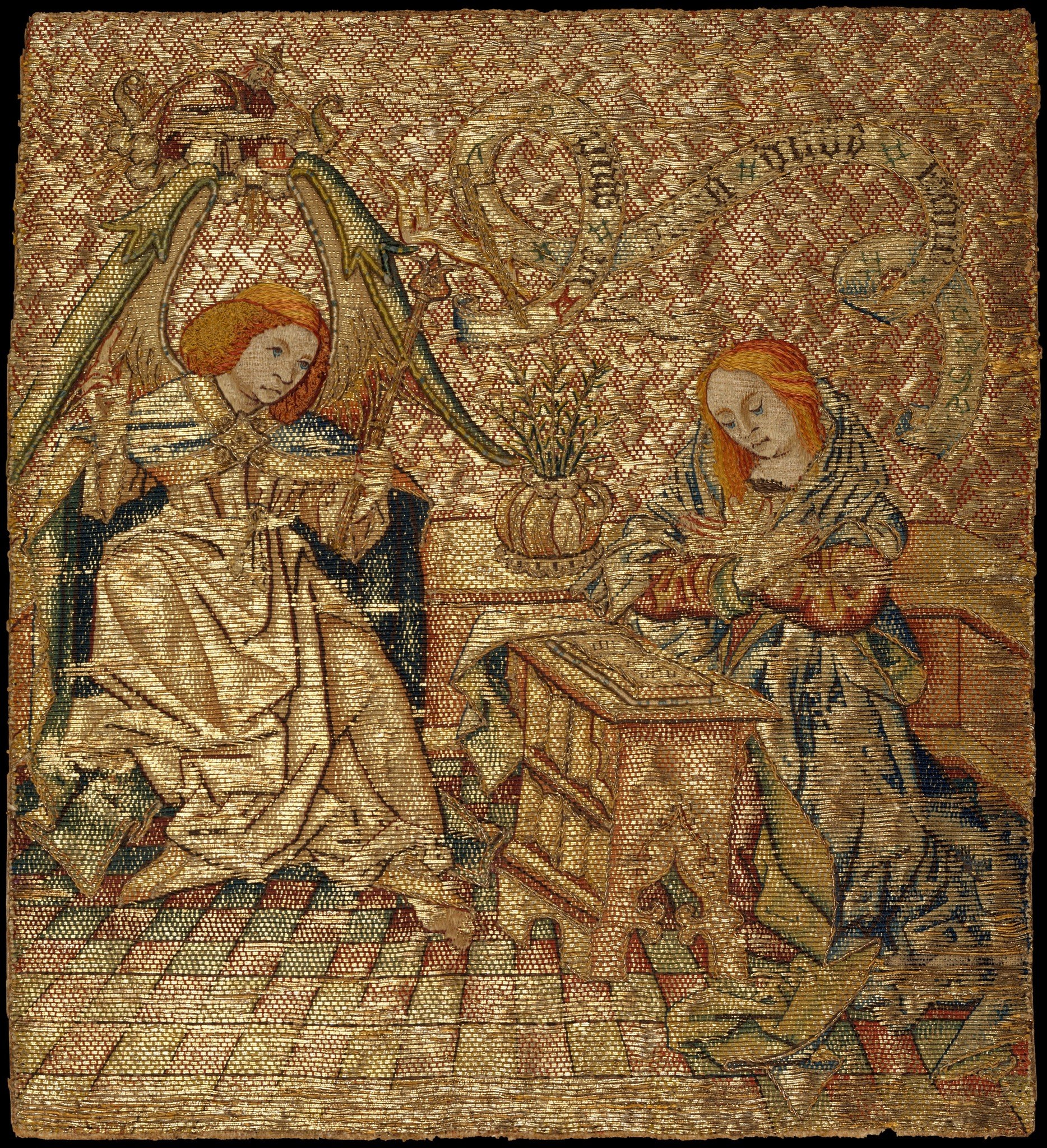
This is Embroidery with the Annunciation, made around 1450 by an unknown artist, most likely a nun working in a European convent. It now lives at The Metropolitan Museum of Art. The entire scene, from the angel's sweeping wing to the gold-patterned background, is built from needle and thread, not a brush. The labor itself was a form of devotion.
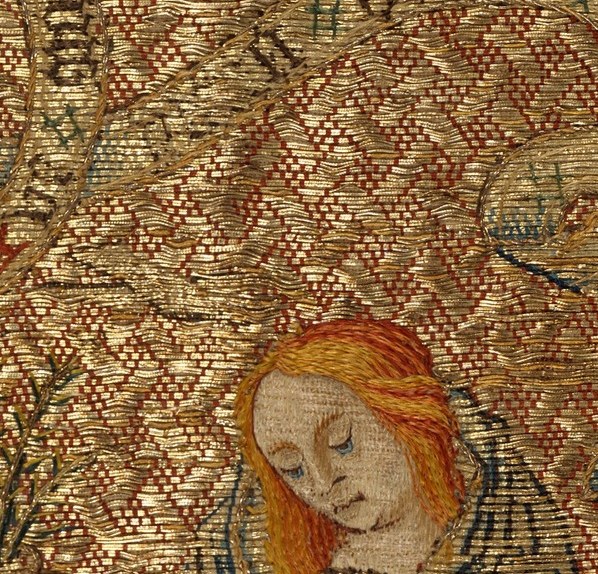
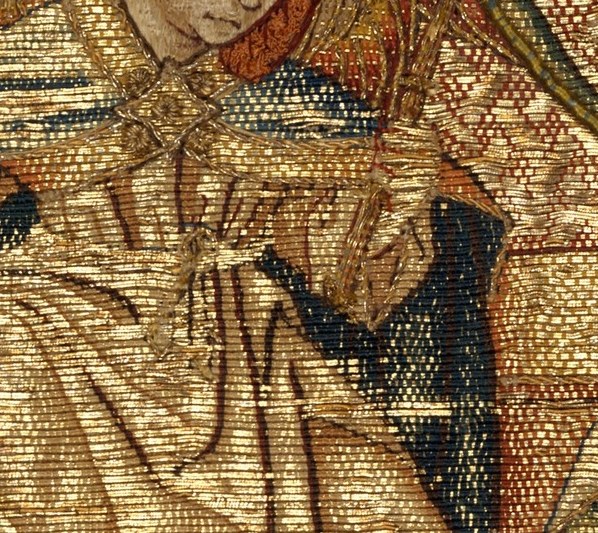
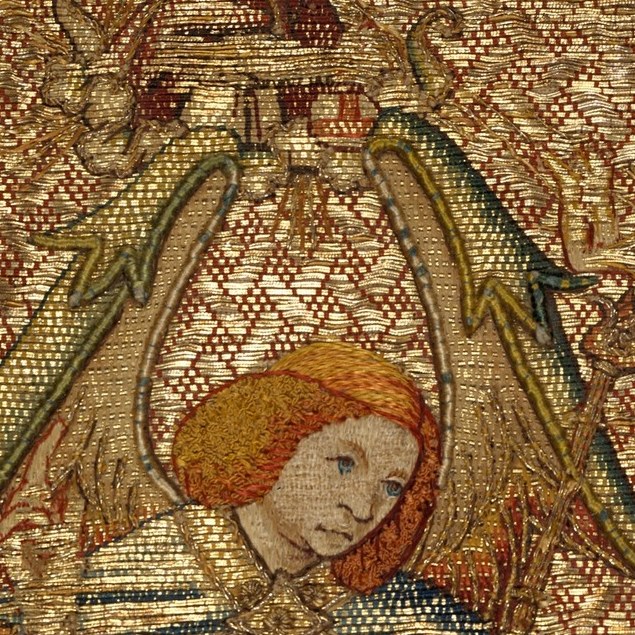
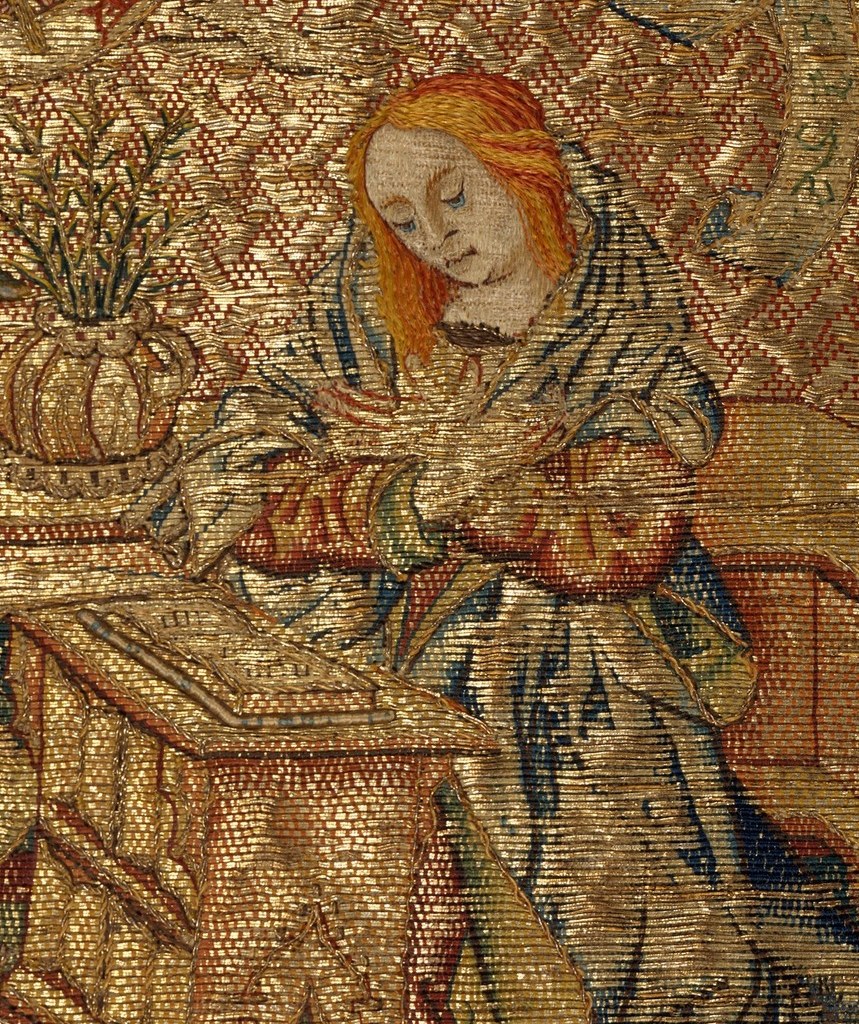
Look first at the two faces. Gabriel's is serene, his clasped hands carrying a message that will change everything. Mary's head is bowed, her eyes lowered. The embroiderer captured the exact moment of acceptance, not with expression but with the angle of the head and the stillness of the hands resting on the open book. The blue of Mary's mantle has faded over centuries, but the intention behind every stitch has not.
The work belongs to a tradition of opus anglicanum and related ecclesiastical embroidery, where textile art carried immense prestige. Convents produced works like this for altars and private chapels. The maker's name is lost, but her patience remains visible. She worked gold thread into a diaper pattern across the whole background, a sign of the heavenly realm. She gave Gabriel a crown that still catches light. She placed a vase of lilies at the center, the symbol of Mary's purity, rendered so carefully you can almost count the petals.
A woman in a cloistered room, needle in hand, spent more than a year making this. She could not know it would survive nearly six centuries. She only knew the story mattered, and she gave it everything she had.
Details
Transcript
This is not a painting. An anonymous woman, likely a nun, stitched this whole story. She spent a year or more in silent concentration. The Angel Gabriel announces the impossible. Mary hears it. Her head bows in acceptance. Every fold of her blue robe is built from thousands of silent stitches.