The Dead Toreador by Manet, Edouard
View the artwork: The Dead Toreador →
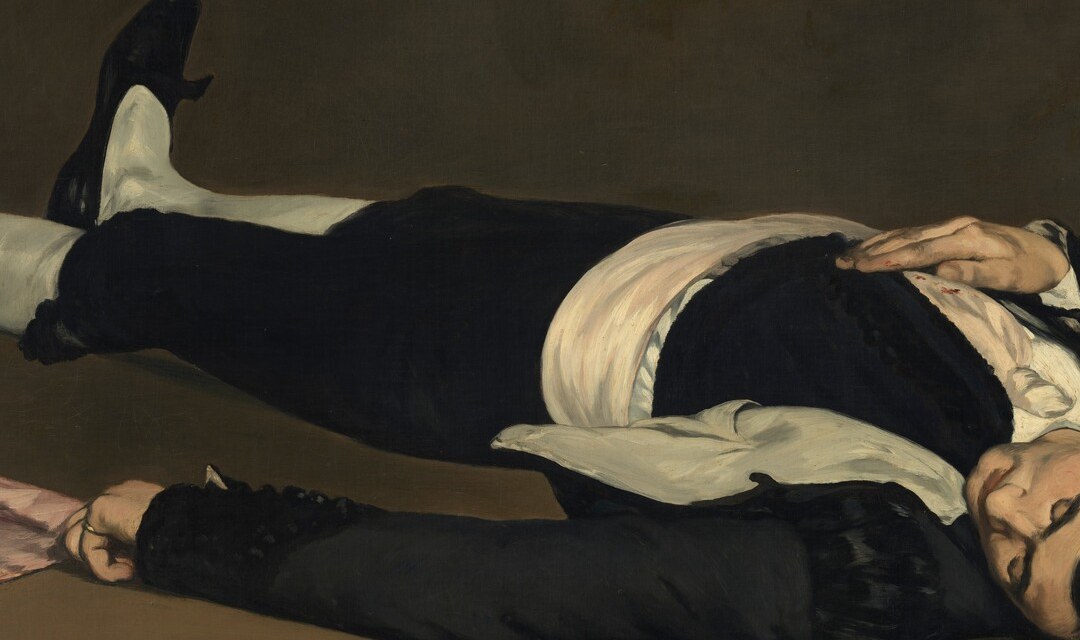
This is Édouard Manet's The Dead Toreador, painted around 1864. It hangs in the National Gallery of Art in Washington, D.C. The most startling thing about it is that it began as a failure, and Manet's response was radical: he took a knife to his own large Salon submission, Episode from a Bullfight, and cut this figure out. The crowd, the arena, the context, all gone. What remains is a corpse alone in a void, and it is one of the most affecting images of mortality in nineteenth-century painting.
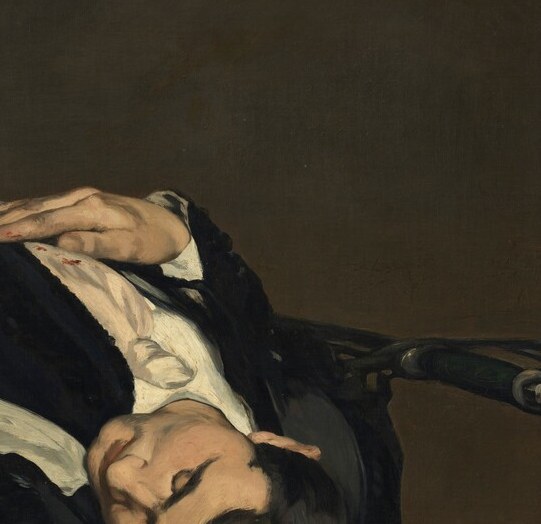
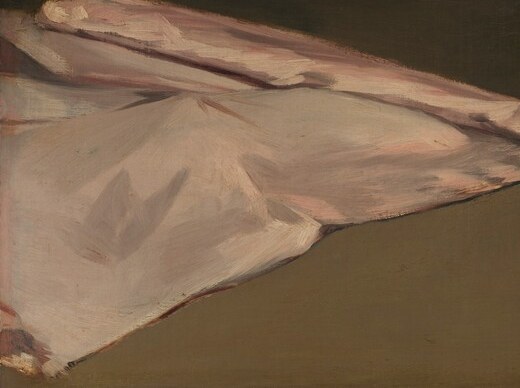
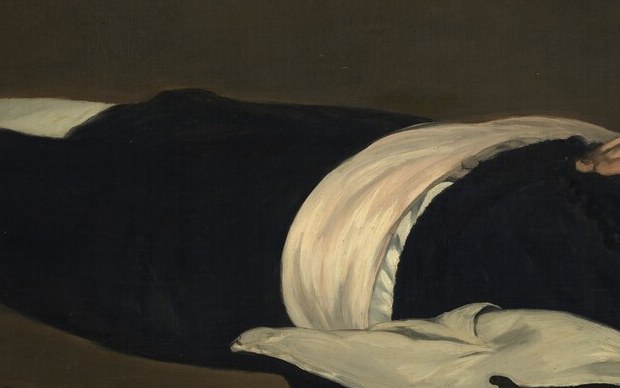
The figure lies horizontally across a featureless dark ground. Manet gives him no stage. Look at his face: it is ashen, slack, utterly drained of drama. This is not a theatrical death. It is quiet and final. His right hand rests where it dropped, the angle of the wrist marking total muscular release. At his waist, a break of luminous white cloth, the sash and undershirt, pulls the eye to the exact point where a bull's horn would have entered. Manet never shows the wound. The fallen pink muleta, the bullfighter's cape, lies crumpled at the lower left like discarded laundry, its soft domestic color quietly devastating against the black suit.
The story behind the painting is a story of public humiliation and private resolve. When Episode from a Bullfight was shown at the 1864 Salon, critics tore it apart. Théophile Thoré-Burger accused Manet of directly copying a Velázquez-attributed work called A Dead Soldier. Others mocked the flatness, the poor proportions, the unreal space. Manet's friend Charles Baudelaire rushed to defend him, but the damage was done. Manet physically cut the canvas apart and kept only two fragments. This one, the dead man, he then reworked heavily, turning it into a standalone work of far greater power. He renamed it The Dead Man, removing even the bullfight from the title, to give it a universal character, and sent it to the 1867 Salon on its own terms.
What you are looking at is a painting born from a wound. Manet isolated this figure and in doing so isolated the viewer with him. There is no crowd, no narrative, no distraction. Just a body and the dark. What do you feel looking at his face, not what you think you should feel, but what you actually feel?
#arthistory #manet #bullfighting
Details

Transcript
It was 1864. Manet was stung by the critics. They said his figures had no relief, his space was unreal. So he took a knife to his own canvas. He cut this figure free from the crowd and the arena. Look at his face. It is not dramatic. The skin is ashen, the features slack. A death mask, serene. Now look at his hand. It lies where it fell. The wrist tells you everything.