Artwork
The Dead Toreador
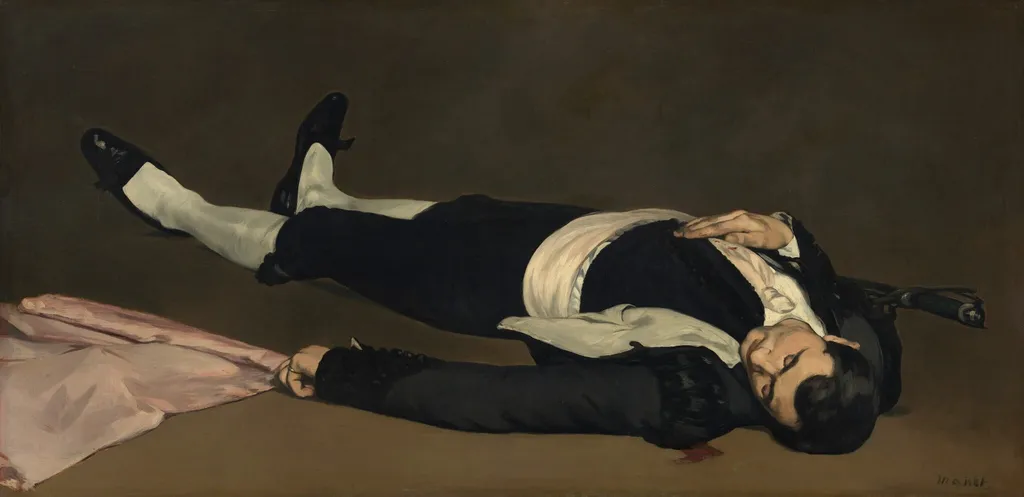
The Dead Toreador is an oil painting by the Realist artist Édouard Manet. It dates from 1864 and is held in the collection of the National Gallery of Art.
- Inscription
- Inscribed:lower right: Manet
About this work
A dead matador lies flat against dark ground, a fragment Manet cut from a larger canvas after the 1864 Salon savaged it. He kept the corpse as a horizontal study in black, the white stockings and sash flashing against the void, with Velazquez's Dead Soldier echoing in the pose. It now hangs in the National Gallery of Art.
Subject & Meaning
The work can be interpreted as a meditation on mortality and the fleeting glory of the spectacle, influenced by Spanish artistic traditions.
The painting depicts a dead matador lying supine on an earthen floor, still wearing the elaborate traje de luces (suit of lights) including a bolero, breeches, sash, and vest, with a sword and muleta nearby. Manet emphasizes the violence of the bullfight through visible blood and the bullfighter's lifeless pose, creating a stark contrast between the colorful costume and the somber subject. The work can be interpreted as a meditation on mortality and the fleeting glory of the spectacle, influenced by Spanish artistic traditions.
History & Provenance
Édouard Manet painted The Dead Toreador in 1864. No commission is recorded; the painting entered the art market several years later. In 1872 Manet sold it to the Parisian dealer Durand-Ruel, who in 1874 sold it to the celebrated baritone and collector Jean-Baptiste Faure.
Faure returned it to Durand-Ruel in 1892, after which it passed to the New York firm Cottier & Co. and then, in 1894, to Peter A.B. Widener of Lynnewood Hall, Pennsylvania. It remained in the Widener family, inherited by Joseph E. Widener, who donated it to the National Gallery of Art, Washington, in 1942.
Overview
Édouard Manet's oil on canvas, The Dead Toreador, dates from the 1860s. This painting originated as a fragment, having been excised by the artist from a larger composition titled Episode from a Bullfight. Depicting a fallen matador, the work exemplifies Manet's profound engagement with Spanish subjects and the dramatic spectacle of the bullfight, a significant artistic preoccupation during this period of his career.
Technique & Style
The composition focuses on the prone figure, rendered with a stark contrast between the dark earth and the matador's white stockings and sash. Manet's approach to the figure's pose draws clear parallels to A Dead Soldier, a work then attributed to Diego Velázquez. This fragment, isolated from its original context, emphasizes the horizontal form and the dramatic stillness of the subject.
Context
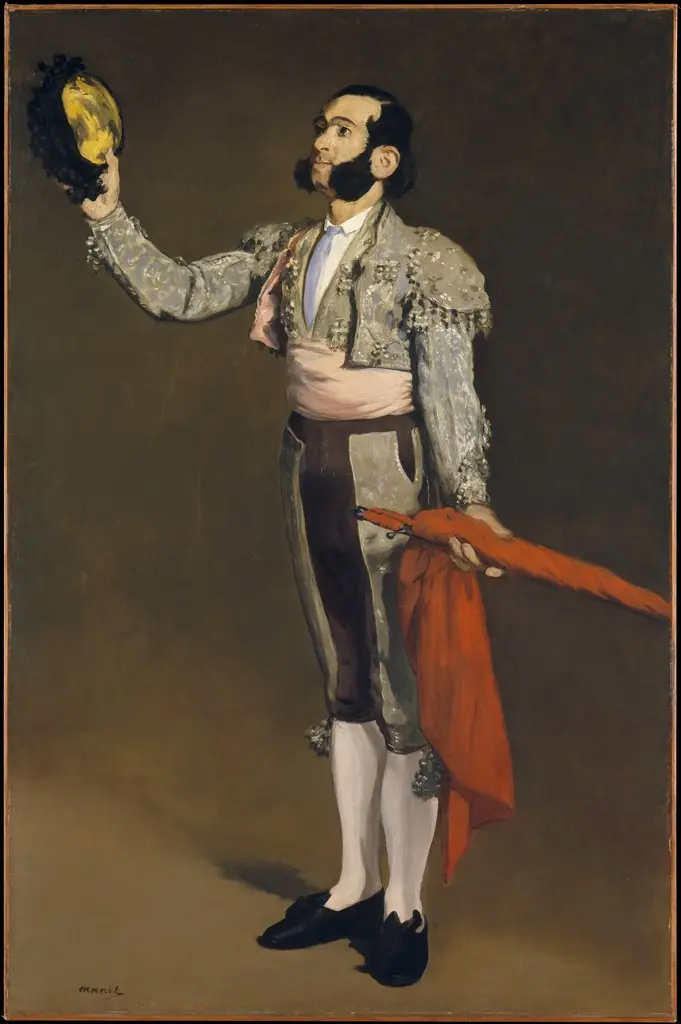
This painting emerged during a period in the 1860s when Manet was deeply engaged with Spanish culture and art. He drew inspiration from masters such as Diego Velázquez and Francisco de Goya, particularly Goya's La Tauromaquia. The theme of bullfighting was a recurring motif in his oeuvre, also appearing in works like The Matador Saluting. This fascination reflects a broader artistic trend among French painters of the era.
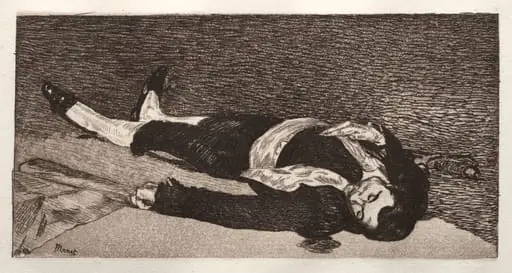
Artist & collection
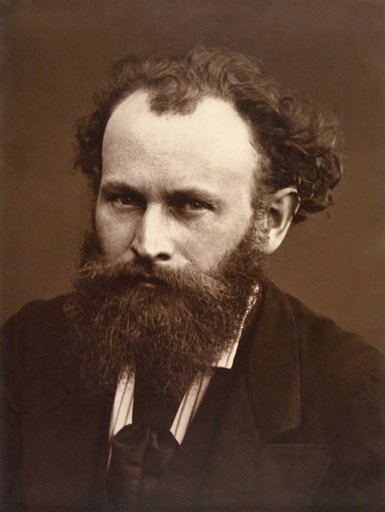
Artist
Édouard Manet was a French modernist painter. He was one of the first 19th-century artists to paint modern life, as well as a pivotal figure in the transition from Realism to Impressionism.

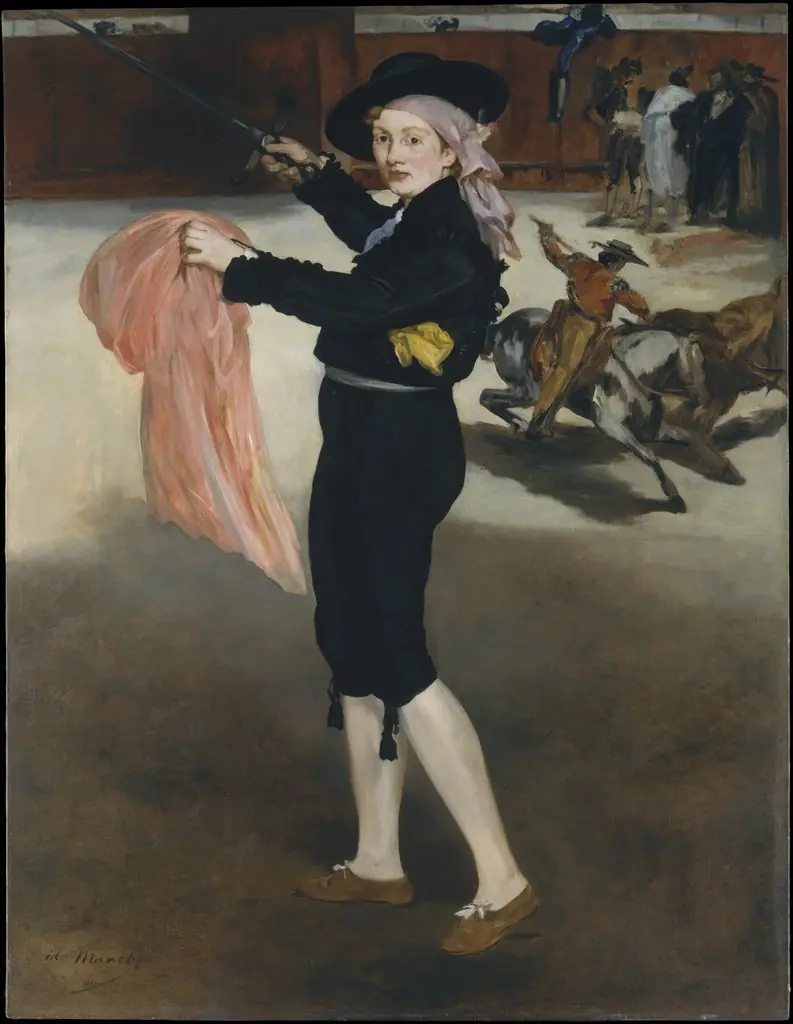
 Studied in the Impressionism course
  Compared in the Color & Light course