清 石濤 (朱若極) 十六羅漢圖 卷|The Sixteen Luohans by Shitao (Zhu Ruoji)
This is Shitao's handscroll "The Sixteen Luohans," painted in 1667 and now held at The Metropolitan Museum of Art. It is an ink-on-paper work that doubles as a self-portrait of a prince in hiding.
When the Ming dynasty fell to the Manchu invasion, Shitao was a child of the imperial bloodline. A family servant smuggled him to a Buddhist temple, where he took monastic vows and a new name. The painter holding the brush in 1667 was a man who had lost an empire. Instead of courtly splendor, he devoted his life to ink and spiritual discipline.
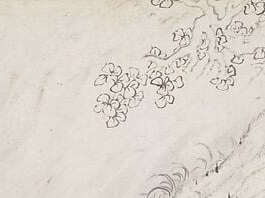
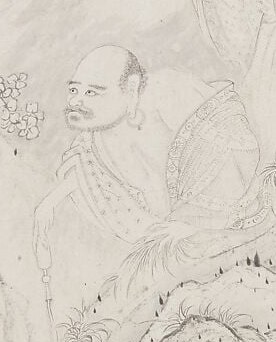
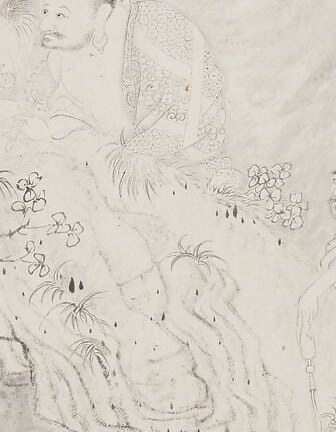
Watch for the individuality of the Luohans. They are not interchangeable holy figures. One sits in deep meditation, another leans heavily on a staff, and a third appears caught in a moment of wry laughter. Shitao argued that no single brushstroke could be a rule for another, each must be born fresh, like a living thing. That philosophy plays out in these faces and postures.
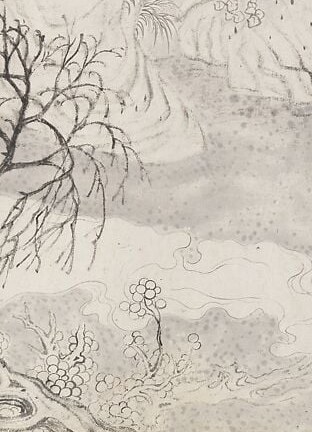
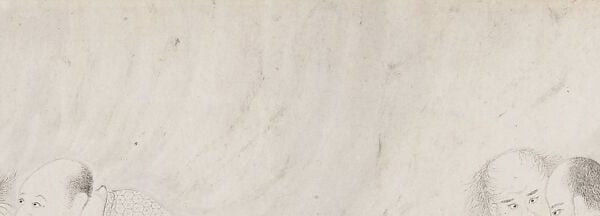
The real shock comes in the upper register. Where a European painter would fill the sky, Shitao leaves the raw paper untouched. That unpainted void is a deliberate statement of Chan Buddhist emptiness, the idea that the ultimate reality is not a thing but a negation, a space where identity and dynasty and loss all dissolve. A fallen prince found a strange freedom in that emptiness.
Details
Transcript
They look like Buddhist saints on a journey. The year was 1667. China's Ming dynasty had just collapsed. The painter was a Ming prince. Now, he was a fugitive monk. He hid in a temple, channeling everything into ink. So he painted these holy men not as icons, but as distinct personalities. One meditates. Another leans on a staff. A third seems to laugh. Look past them, into the mountain void. In Chan Buddhism, emptiness is not absence. It's the ultimate truth.