Death Struggle by Edvard Munch
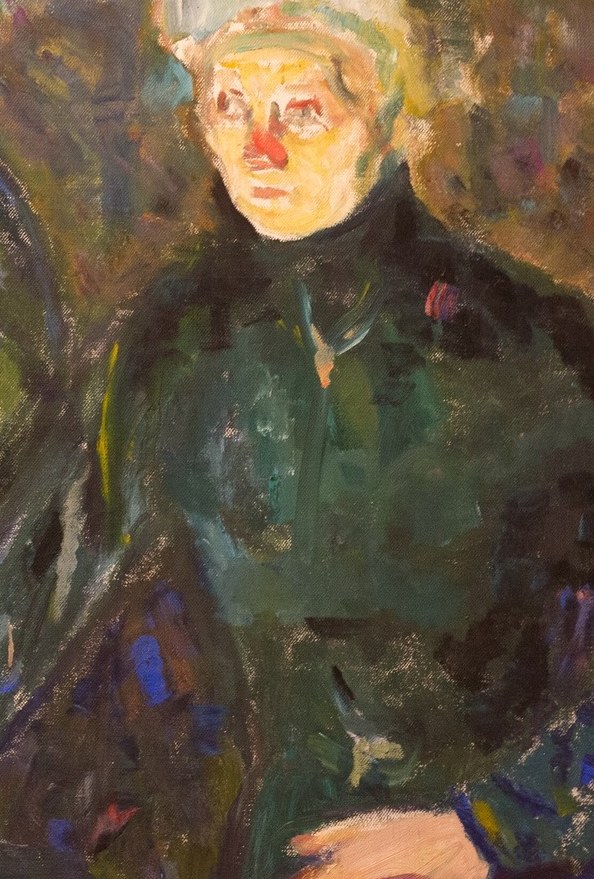
Edvard Munch's *Death Struggle*, painted in 1915 and held at the Statens Museum for Kunst, exemplifies his profound exploration of human emotion. His childhood was marked by illness and loss, which deeply informed his artistic practice.
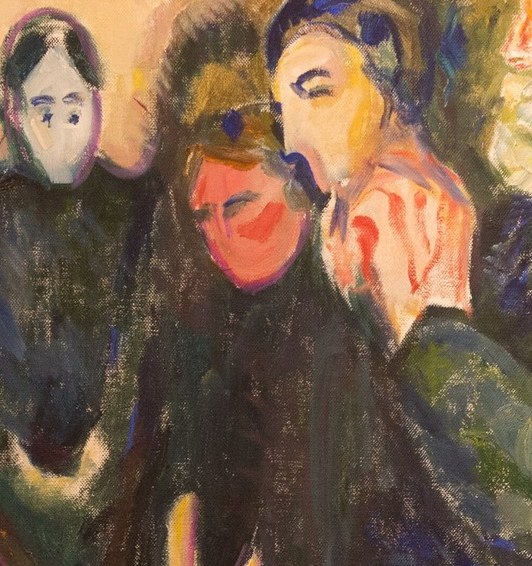
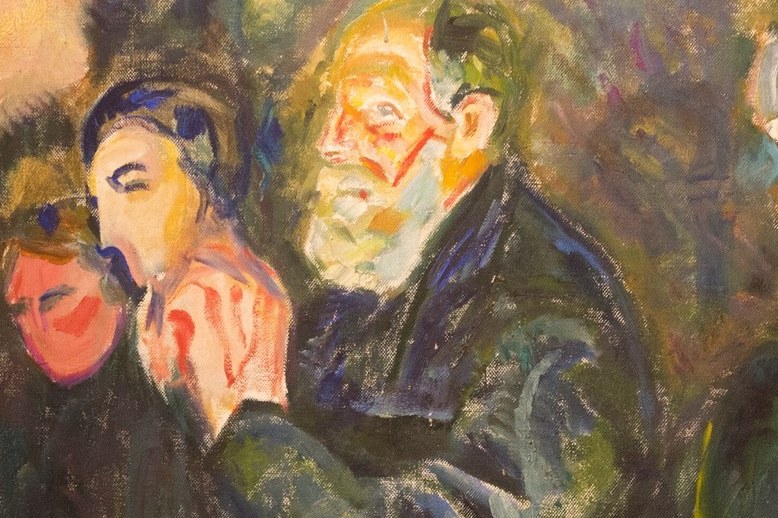
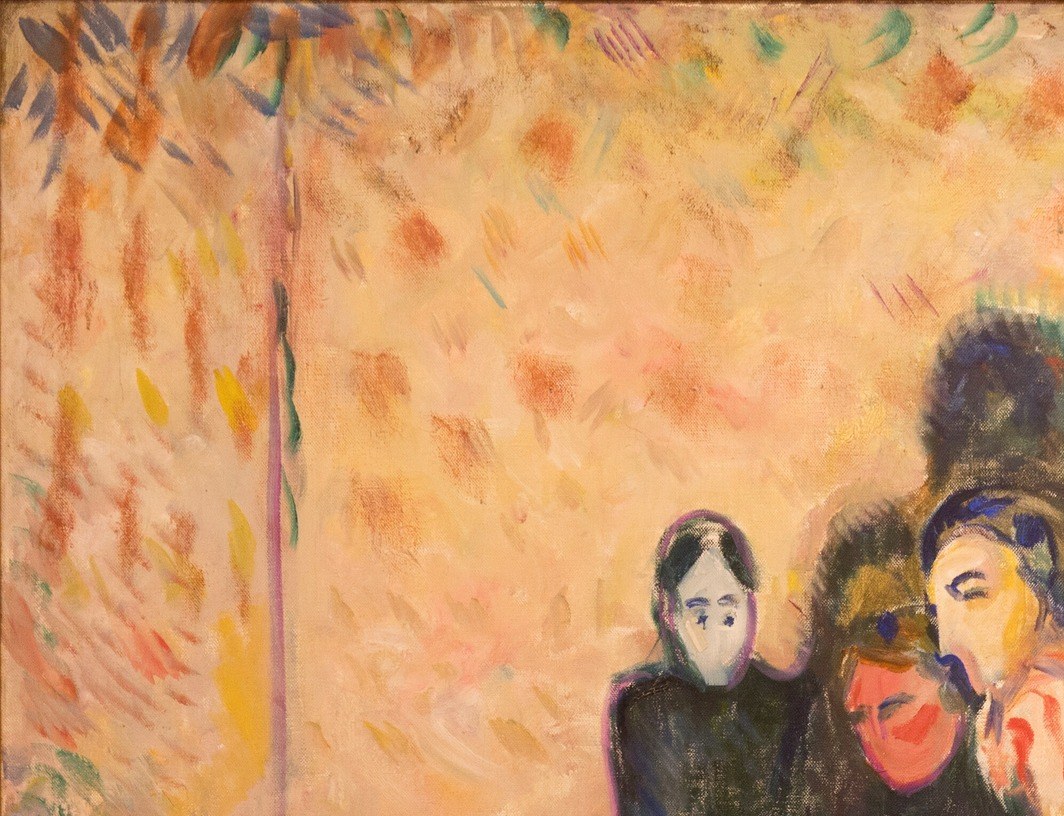
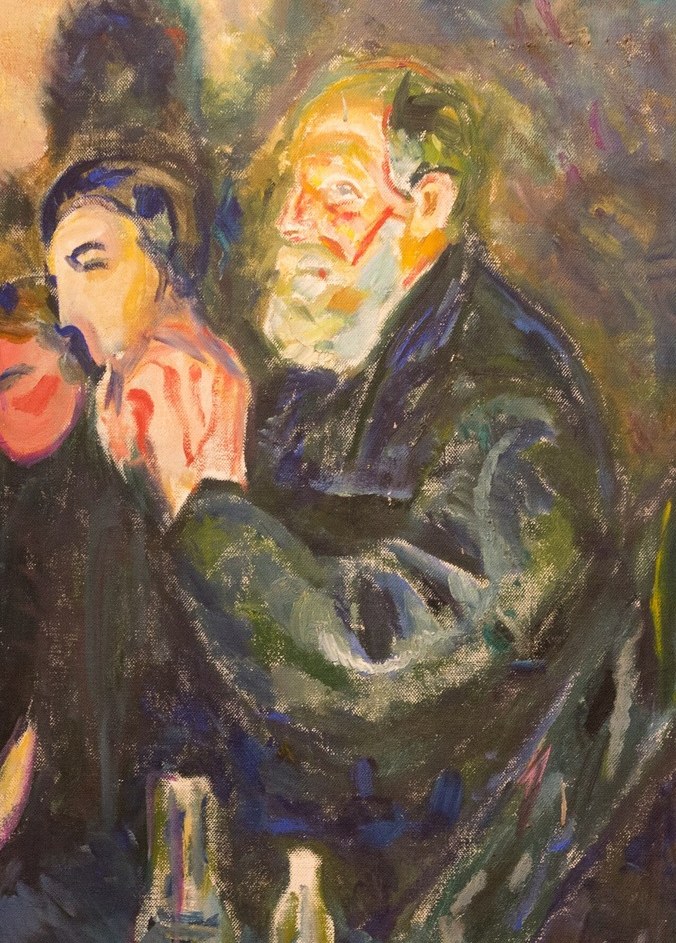
In this work, four figures are seated together, their expressions conveying introspection or discomfort. But look closely at the background. The dark, swirling shadows on the wall are not just abstract forms.
Munch, who developed a style he called 'soul painting', often depicted internal psychological states. These shadows, alongside the disorienting patterned wallpaper, act as a visual manifestation of unseen presences or the oppressive weight of the characters' shared emotional turmoil.
The raw, unblended brushstrokes and clashing colors further intensify this urgent emotional landscape.
Details
Transcript
This painter often explored profound emotional states. The figures convey a shared sense of introspection or discomfort. Notice the dark, swirling shapes on the wall behind them. They suggest unseen presences, or the weight of emotion. The artist called his personal style 'soul painting'.