Desdemona (The Song of the Willow) by Théodore Chassériau
This is Desdemona (The Song of the Willow) by Théodore Chassériau, painted in 1849 and held at The Metropolitan Museum of Art. The painting captures a pivotal moment from Shakespeare's Othello, with Desdemona preparing to sing the melancholic Willow Song, a song that foreshadows her tragic fate.
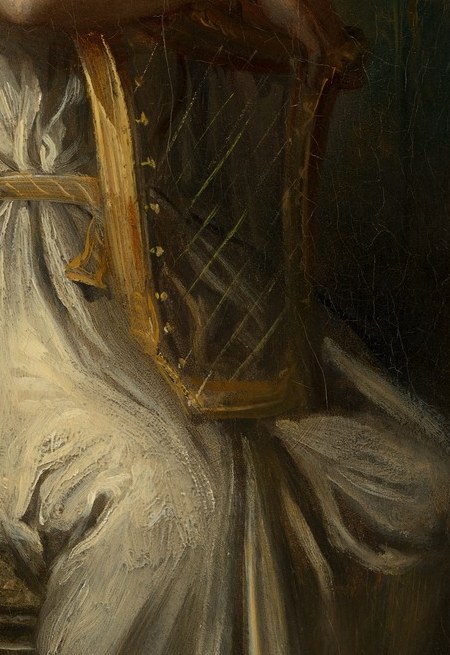
Look at the lyre, the instrument of her lament. Notice Desdemona's hand on her head, conveying weariness and a plea. Her face is etched with foreboding and inner turmoil. Even the flickering candle flame seems to symbolize a fleeting moment of peace before the inevitable tragedy.
Chassériau, a French Romantic painter, created this work as part of a series illustrating Shakespeare's Othello, showcasing his deep engagement with literary narratives. The dramatic use of light and shadow emphasizes Desdemona's luminous white dress against the dark background, heightening the emotional intensity characteristic of Romantic art.
This scene is a powerful premonition, a visual prophecy of Desdemona's doomed future.
Details
Transcript
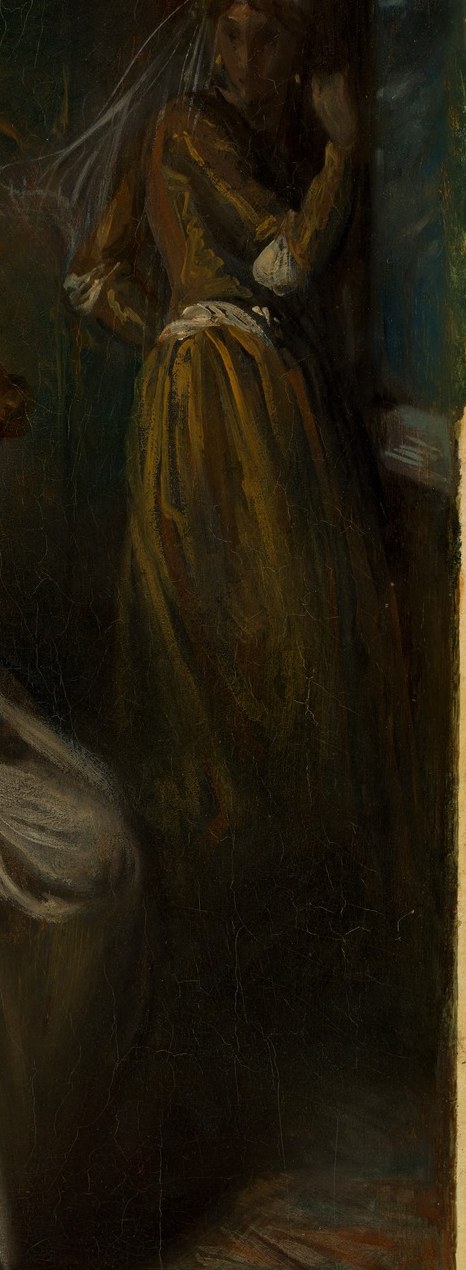
Her song is called the Willow Song. The lyre notes the song's lament. Her hand shows weariness and plea. The shadowed figure watches her. Her face conveys foreboding and turmoil. The candle flame flickers low. This scene foreshadows her tragic end.