壺天聚樂圖|Merry Gatherings in the Magic Jar by Gong Kai
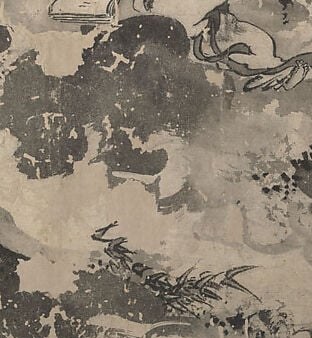
Merry Gatherings in the Magic Jar, an ink-on-paper handscroll painted in 1639 by the Song loyalist Gong Kai, lives in the collection of the National Palace Museum in Taipei. At first glance, it is a serene vision of literati leisure: tiny scholars cluster beneath pine trees, raising cups of wine as mist drifts through the valley. The loose, quick brushstrokes make the whole scene feel caught in a single fluid moment.
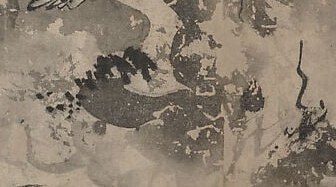
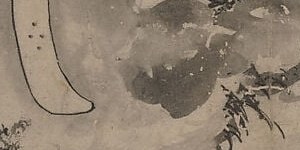
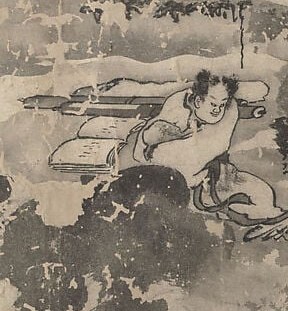
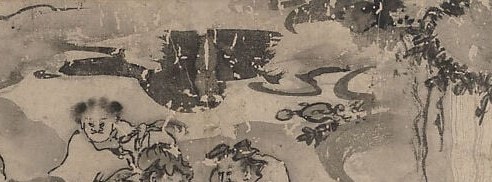
Look closely at the scholar figures near the center left and the second group hidden near the far right margin. A handscroll is designed to be unrolled slowly, like reading a story, so these hidden figures reward a patient eye. The mist itself is a non-mark, a deliberate blankness on the paper that creates depth and distance without a single stroke of ink.
Gong Kai was born under the Southern Song and lived to see the Mongol conquest. He refused to serve the Yuan government, choosing instead a life of principled poverty. A painting like this was not just a landscape. It was a political statement. The title references the Daoist myth of a magic jar that contains an entire transcendent world, a place hidden in plain sight from the authorities. For Gong Kai, these gatherings were that jar: a real but invisible community of Song loyalists.
Every brushstroke here carries a dual weight. It is a depiction of a party, but it is also a record of survival. What hidden worlds do we build for each other today?
Details
Transcript
This looks like a leisurely gathering of scholar friends. Wine, poetry, and mountain air. A perfect retreat. But the man who painted this was born under Mongol rule. Gong Kai refused to serve the new Yuan dynasty. These gatherings were acts of quiet defiance. The title holds the clue: the 'Magic Jar.' In Daoist myth, a jar holds an entire hidden world. A safe dimension, concealed from an empire’s watch.