War Dance of the Apachees by Catlin, George
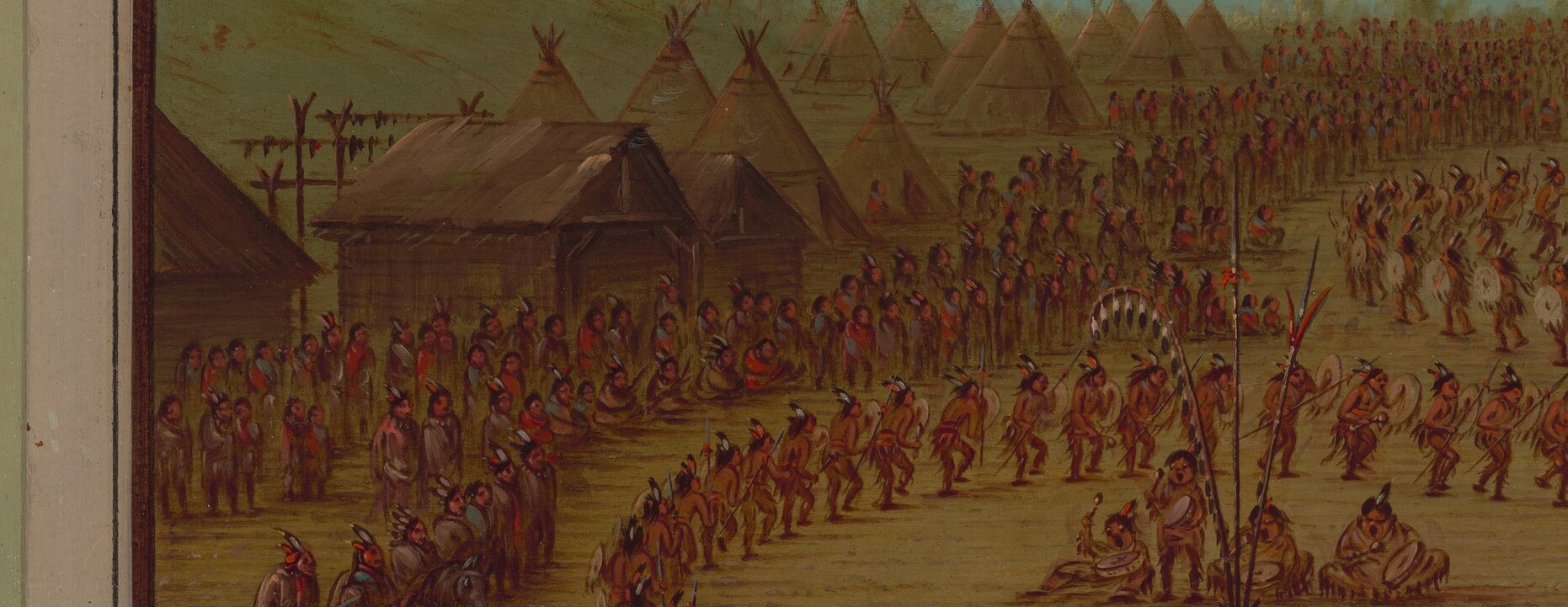
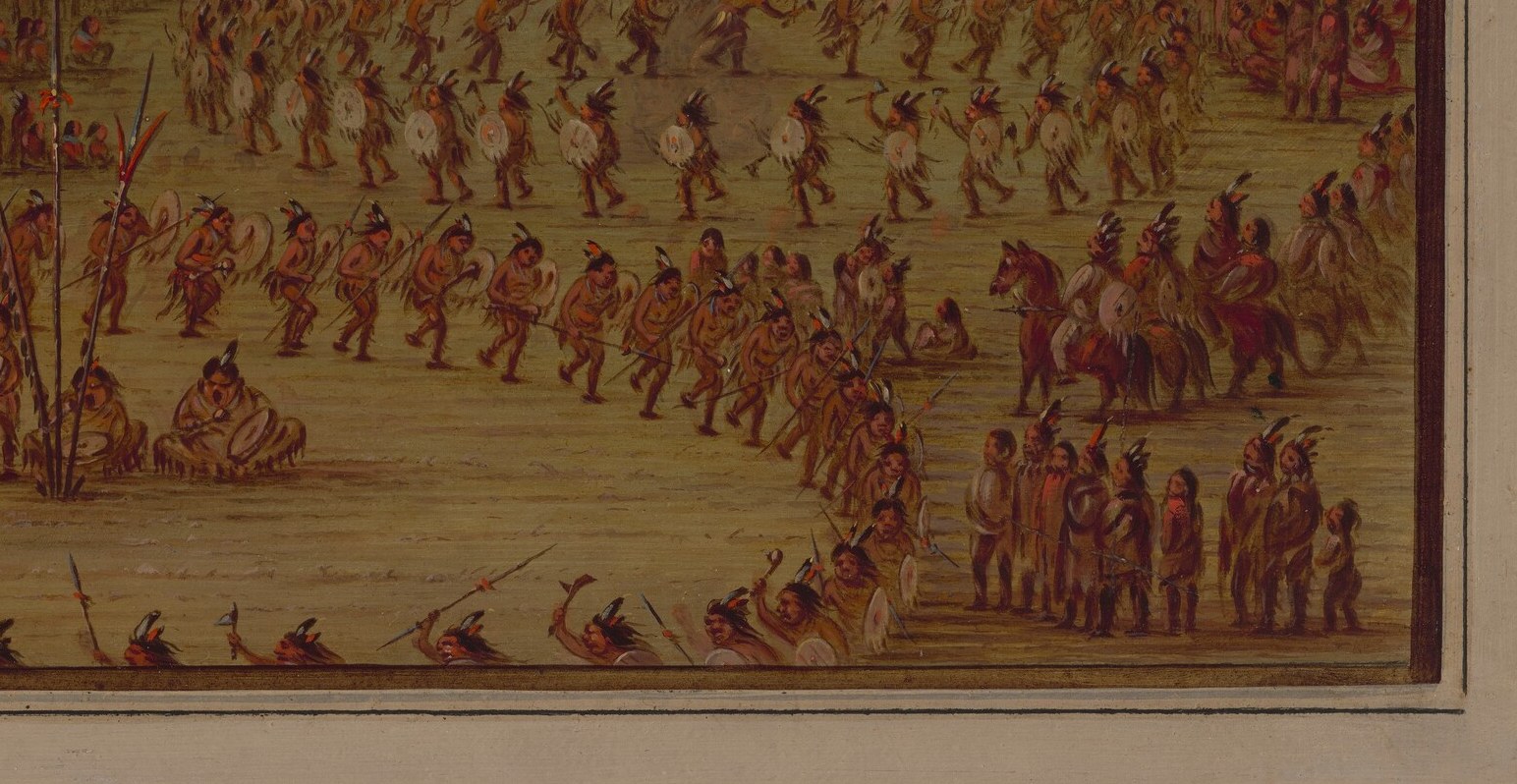
George Catlin, a lawyer-turned-painter, dedicated his career to documenting Native American life. This painting, *War Dance of the Apachees*, created between 1855 and 1869, captures a ceremonial gathering of Apache dancers with remarkable detail, now housed in a prominent collection.
Observe the circular formation of the dancers, their elaborate feather headdresses, and the intricate attire suggesting animal skins. The figures on horseback and the distant tipi village provide a rich context for this vibrant communal event, set against a dramatic, cloud-filled sky.
Catlin made five expeditions to the American West in the 1830s, producing an extensive body of work that recorded the cultures of Plains and Southwest Indians. His straightforward, narrative style, characteristic of folk art, aimed to document rather than dramatize, offering an invaluable visual record of indigenous traditions during the frontier era.
This painting is a testament to Catlin's ambition to preserve a visual history of a disappearing way of life. What details in the dance capture your attention most?
Details
Transcript
In the 1830s, this artist began documenting Native American life. He made five expeditions, painting thousands of portraits and scenes. Here, Apache dancers move in a ceremonial circle. Their attire includes animal skins and feathered adornments. This work captures the vitality of Apache ceremonial life. It records indigenous tradition in the mid-nineteenth-century frontier era.