Bridge over a Cascade by Hubert Robert
Hubert Robert's "Bridge over a Cascade" (c. 1750) is a masterful depiction of nature's enduring presence. The painting showcases his skill in creating idealized landscapes, often blending architectural elements with natural beauty. Robert was known for his "capricci," imaginative scenes of ruins that emphasized the passage of time and the resilience of the natural world.
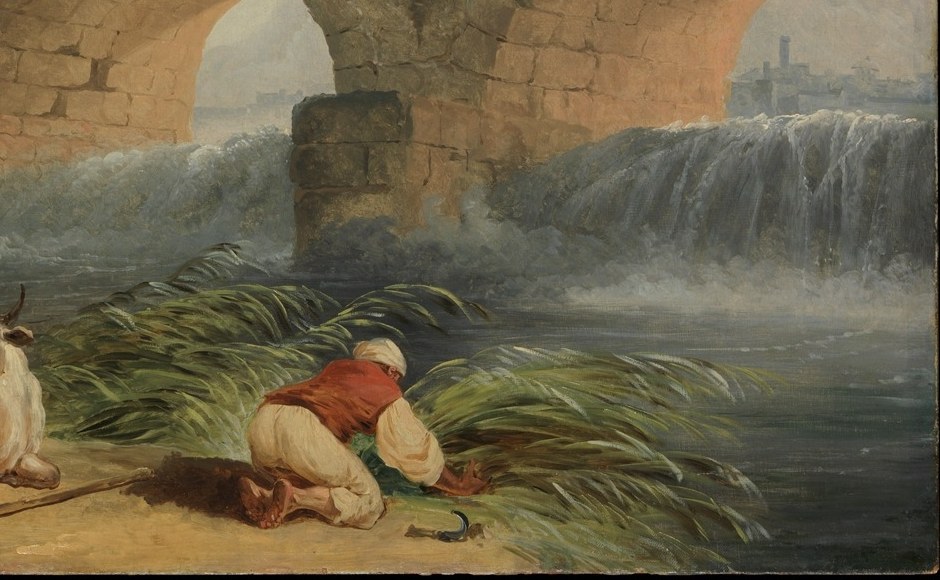
Observe the grand stone bridge, a symbol of human ambition, positioned over a dynamic waterfall. Notice the classical medallion on the bridge, a nod to ancient civilizations. Yet, the scene is dominated by the raw power of nature, with the cascading water and the lush trees suggesting an environment that will outlast human creations.
Hubert Robert, a French painter of the Romantic era, often used his art to convey philosophical ideas. His frequent depictions of ruins were not merely decorative but served as meditations on history, memory, and the inevitable decay of human endeavors contrasted with the perpetual cycles of nature. This painting, part of the Rococo movement, offers a contemplative view of this timeless theme.
Through the interplay of solid architecture and flowing water, Robert invites us to consider what truly endures. The lasting impression is one of nature's quiet, persistent triumph over artifice.
Details



Transcript
A stone bridge meant to last forever. But nature's waterfall erodes its base. This medallion hints at Rome's grandeur. Yet Rome itself is now just ruins. The artist painted ruins often. His pictures show nature's lasting power. This cow will rest here after you leave. Nature's cycles continue, indifferent.