Maddalena Cattaneo by Dyck, Anthony van, Sir
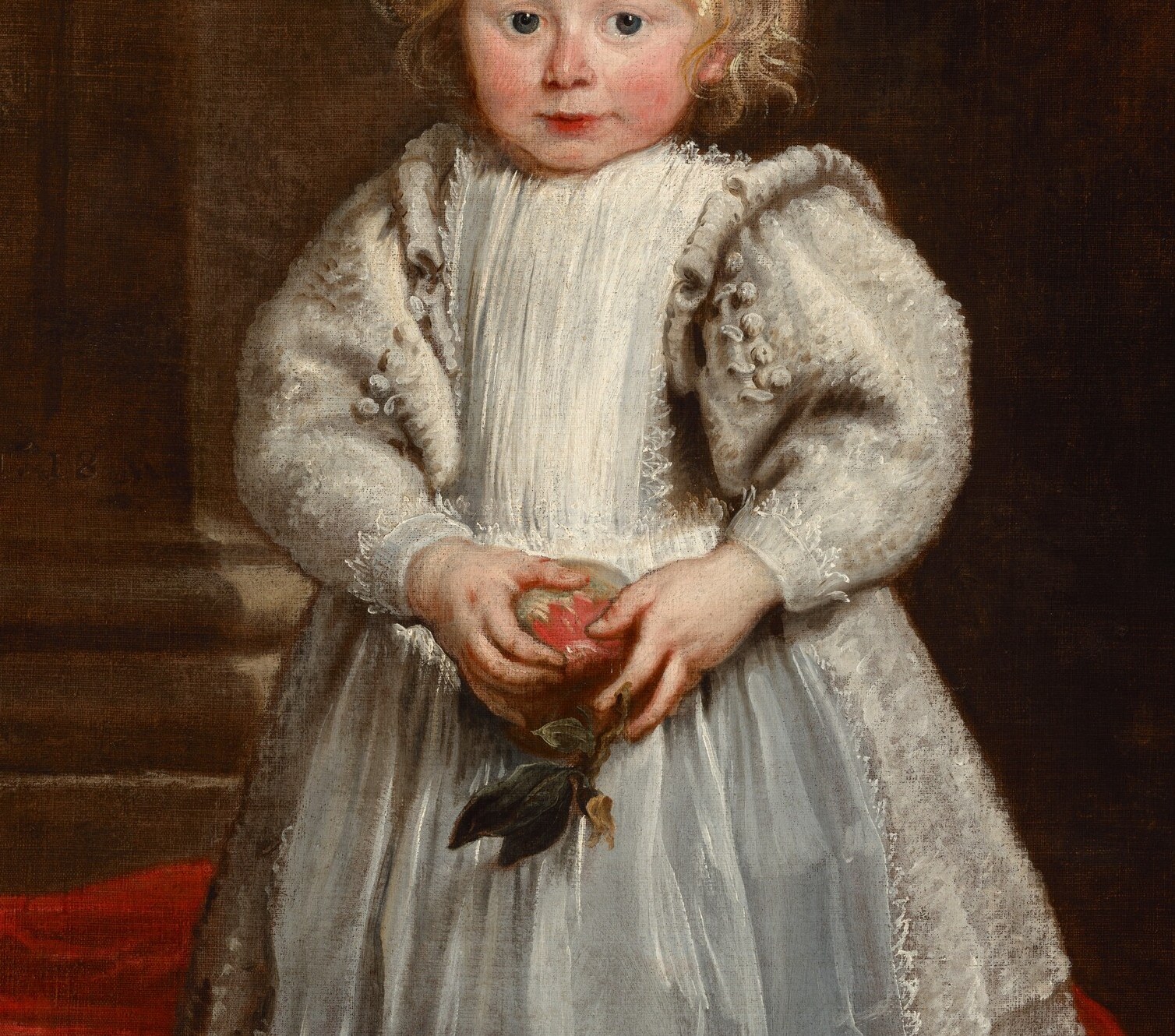
Anthony van Dyck painted Maddalena Cattaneo in Genoa in 1623, when she was perhaps three or four years old. She had already been promised in marriage.
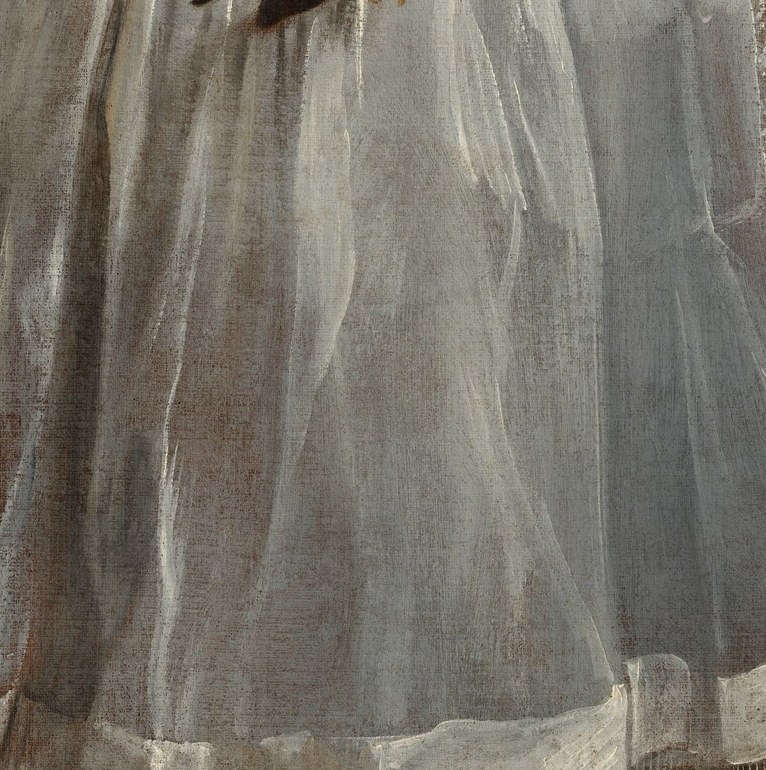
Start with the white satin dress. Van Dyck was a virtuoso of silk, he painted its cool, pearly sheen better than almost anyone, and Genoa’s noble families paid him handsomely to prove it. Then look at the lace cuffs. Flemish bobbin lace was so wildly expensive to import into Italy that its presence on a child’s sleeves tells you exactly where the Cattaneo family sat: at the very top.
The gold trim at the hem and the red stage-curtain behind her are all props of power, but the real message is in her hands. A small pink rose. In Genoese aristocratic portraiture, a girl holding a rose was code for purity and, almost unbelievably to modern eyes, marriageability. Maddalena was barely out of infancy, and yet a political and financial alliance was already being arranged through her.
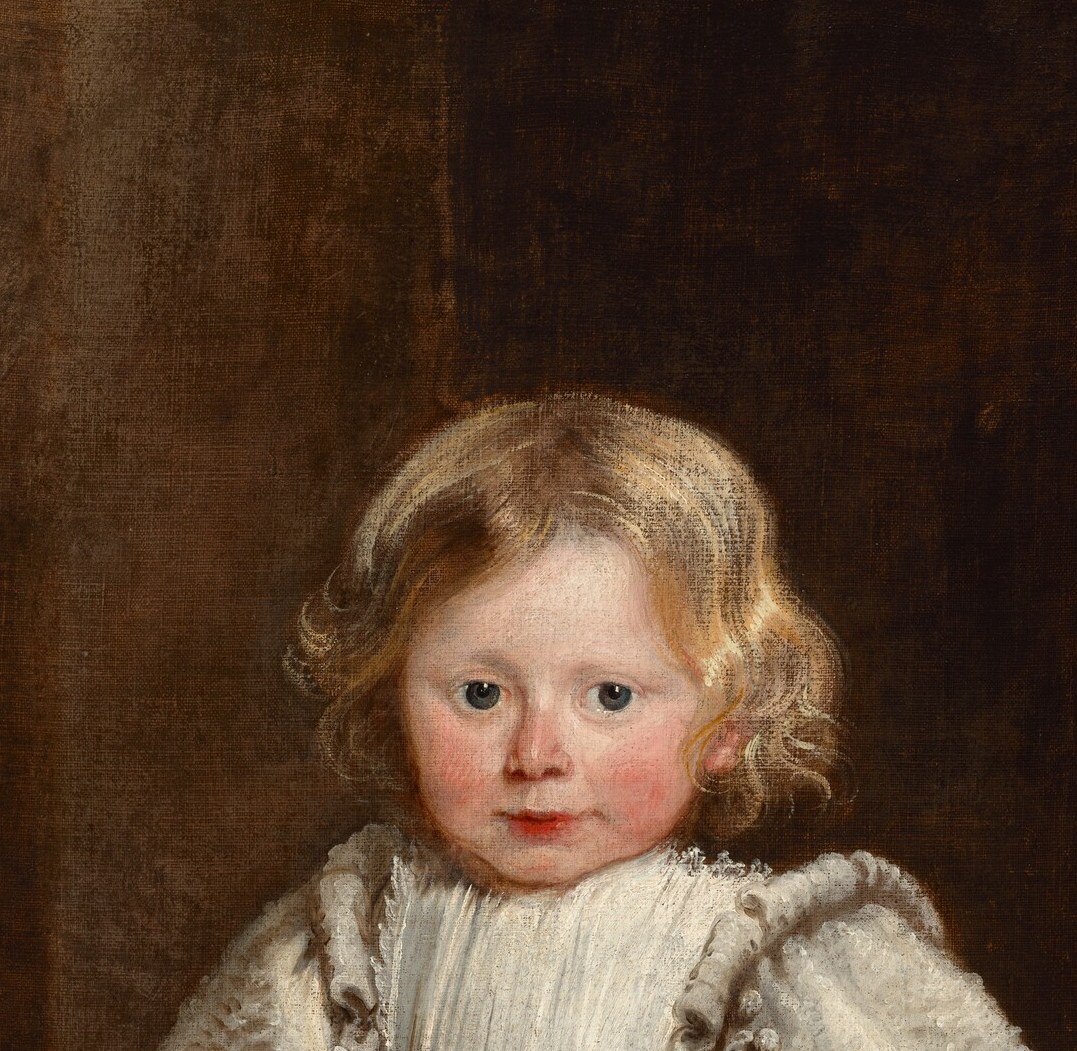
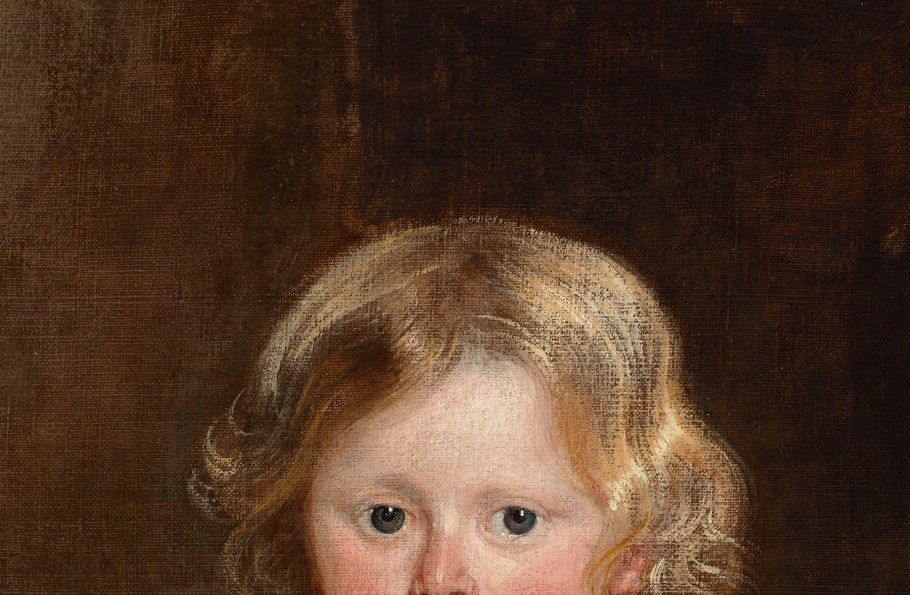
Van Dyck gave this tiny, composed girl a steady, almost unnervingly direct gaze. She meets your eyes from across four centuries. The painting hangs in the National Gallery of Art, Washington, and it still works exactly as it was designed to: a toddler in a fortune’s worth of silk, and the future of two dynasties resting on her small shoulders.
Details

Transcript
She is barely old enough to stand still. The dress is white satin. Genoa, 1623. That sheen is van Dyck’s calling card. Her family were bankers. The gold trim proves it. Now look at what she is holding. A single rose. For a toddler, that meant a marriage alliance. A dynasty was already being built around this small girl.