Portrait of a Woman by Gerard ter Borch
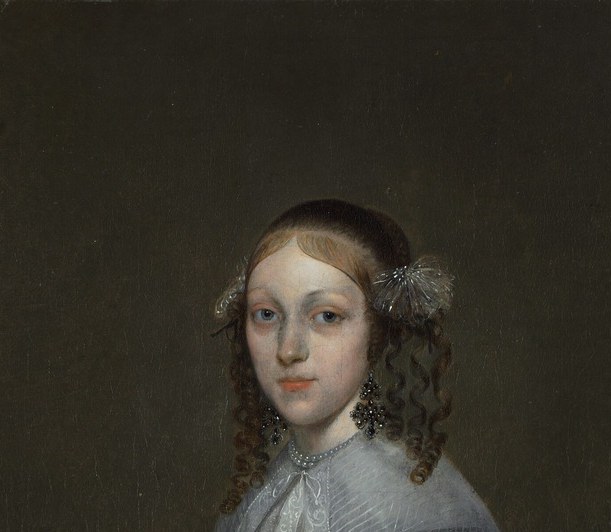
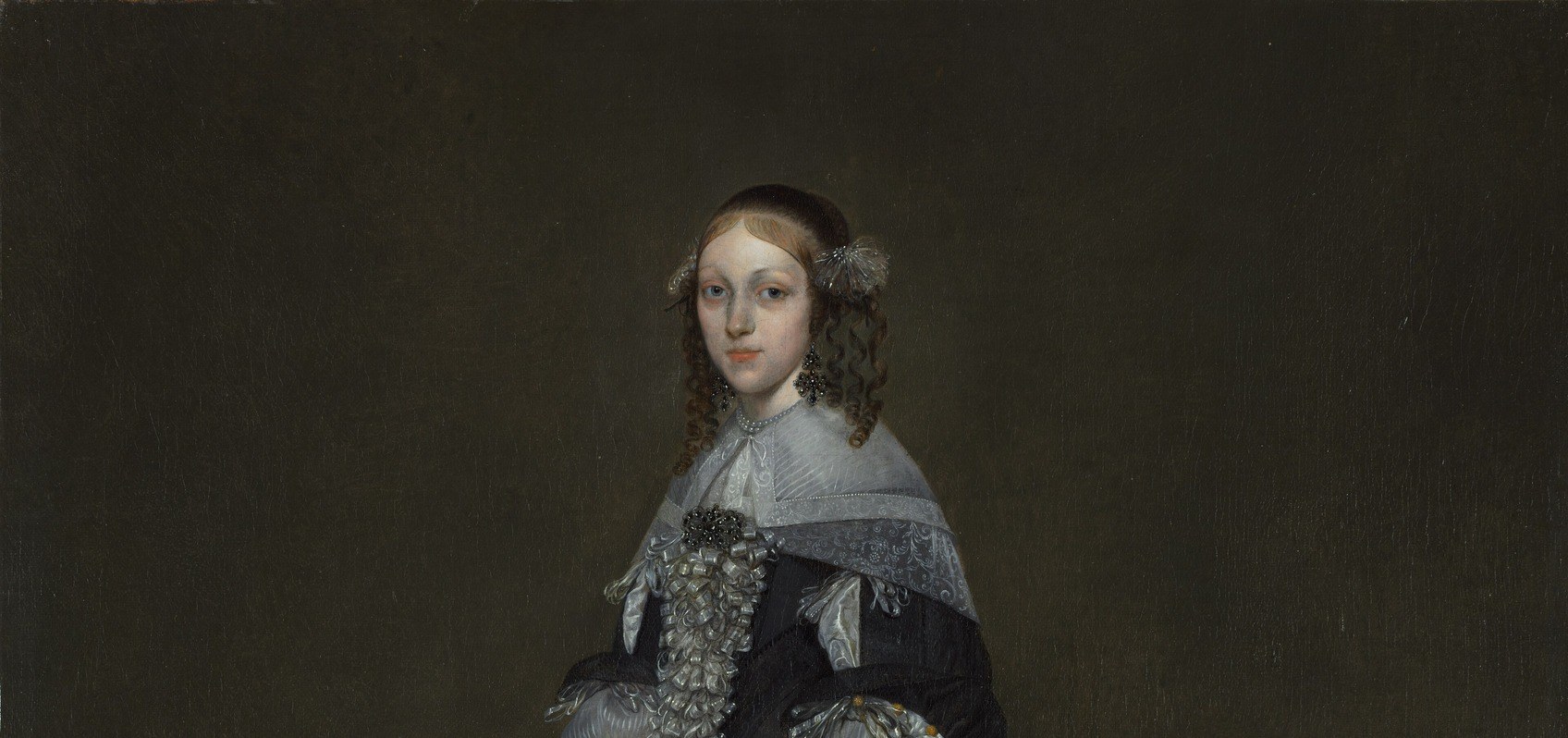
This is Gerard ter Borch's Portrait of a Woman, painted around 1665. For centuries, the painting you see here did not exist, or rather, it was hidden under a layer of dark paint applied by the artist himself.
Look at the background now. The red tablecloth on the left and the red upholstered chair on the right were completely obscured by overpaint. What you saw instead was a plain, dark, empty space behind the woman. The brilliant white underskirt and the cast shadow on the floor were all that broke the darkness.
Ter Borch was one of the Dutch Golden Age's most celebrated painters, known for his exquisite rendering of satin and his quiet, psychologically rich interiors. He influenced Vermeer. But he was also a businessman. A later owner of this portrait apparently found the detailed background too busy or out of fashion and commissioned the artist himself to simplify it. Ter Borch complied, painting over his own meticulous work.
The overpaint was not detected and carefully removed until the twentieth century, restoring the composition to its original state. It is a strange kind of art crime, the artist as the one who willingly vandalized his own masterpiece. What do you think that says about the relationship between a painter and a patron in the 1600s?
Details



Transcript
This woman has been stared at for over 350 years. But for a long time, no one saw the real painting. Someone had painted over this entire background. The red chair, the tablecloth, both were completely hidden. The culprit was not a thief. It was the painter himself. Gerard ter Borch often altered his own finished works. A later owner wanted a simpler backdrop. Ter Borch obliged. The overpaint was only removed in the twentieth century.