Scenes of Witchcraft: Evening by Salvator Rosa
Salvator Rosa's "Scenes of Witchcraft: Evening," painted in 1640, is a dramatic oil painting now held at The Cleveland Museum of Art. This early Baroque work by the Italian artist is known for its brooding, mystical atmosphere and dramatic use of light and shadow.
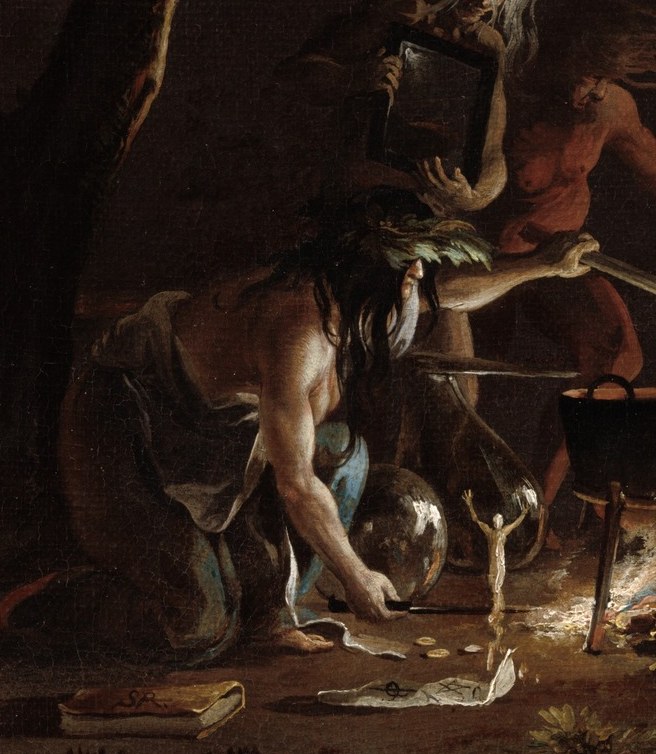
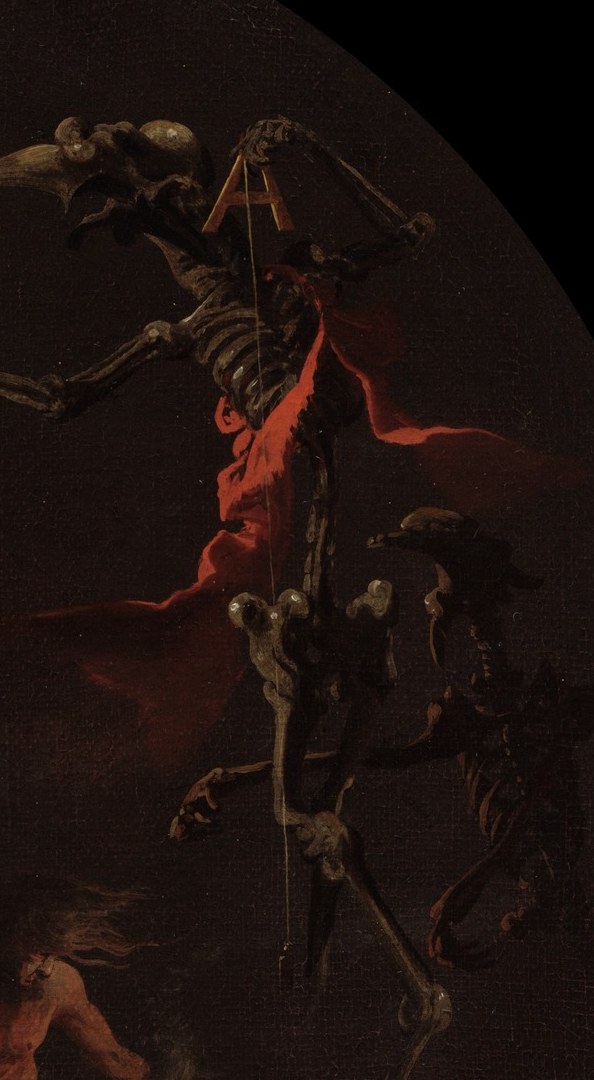
The painting draws viewers into a nocturnal ritual where a kneeling figure tends a fire and a bubbling cauldron. Look for the open book on the ground, hinting at forbidden knowledge, and the skeletal figure holding a lantern, illuminating the macabre scene.
Rosa was not only a painter but also a poet and satirist, known for his unique interest in wild landscapes and supernatural themes. He often chose obscure subjects, setting his work apart from his contemporaries. This painting exemplifies his fascination with the occult and the sublime.
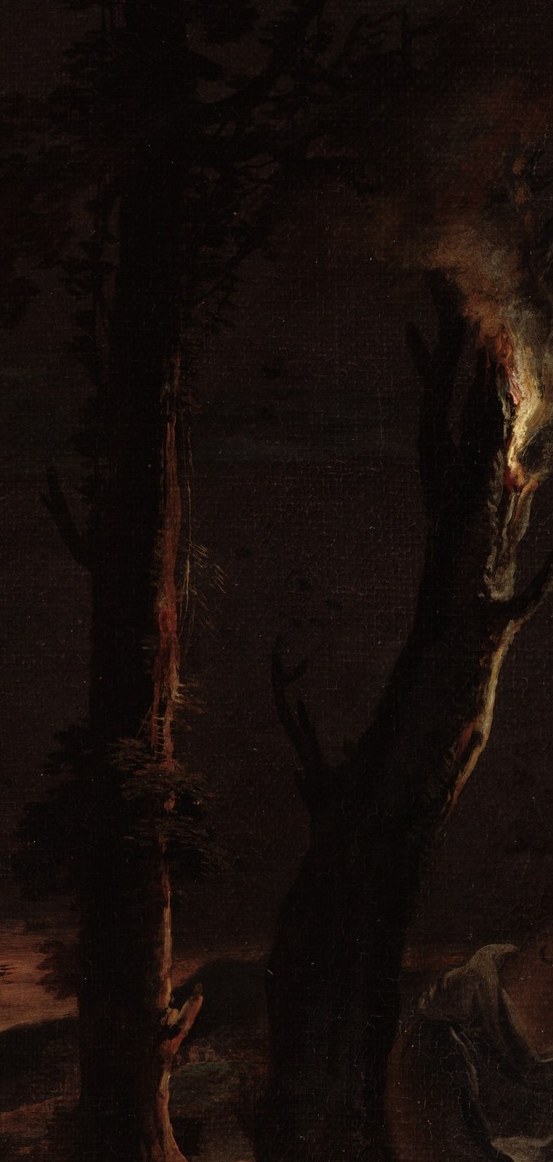
But the real surprise lies in the background: small, indistinct figures gather in the shadows, suggesting a larger, hidden world beyond the immediate ritual. What other secrets might this dark painting hold?
Details
Transcript
This 1640 painting captures a nocturnal ritual. A kneeling witch tends a fire and stirs a bubbling cauldron. An open book on the ground suggests forbidden knowledge. A skeletal figure holds a lantern, guiding the scene. The painter Salvator Rosa loved wild, untamed subjects. But look closely, hidden in the shadows of the background. Other indistinct figures gather, hinting at more to this dark world.