An Ojibbeway Village of Skin Tents by Catlin, George
George Catlin, a former lawyer, dedicated his life to documenting Native American cultures on the American frontier. His painting, *An Ojibbeway Village of Skin Tents*, from 1861, now at the National Gallery of Art, Washington, is a testament to this mission, preserving a glimpse into a way of life he feared would disappear.
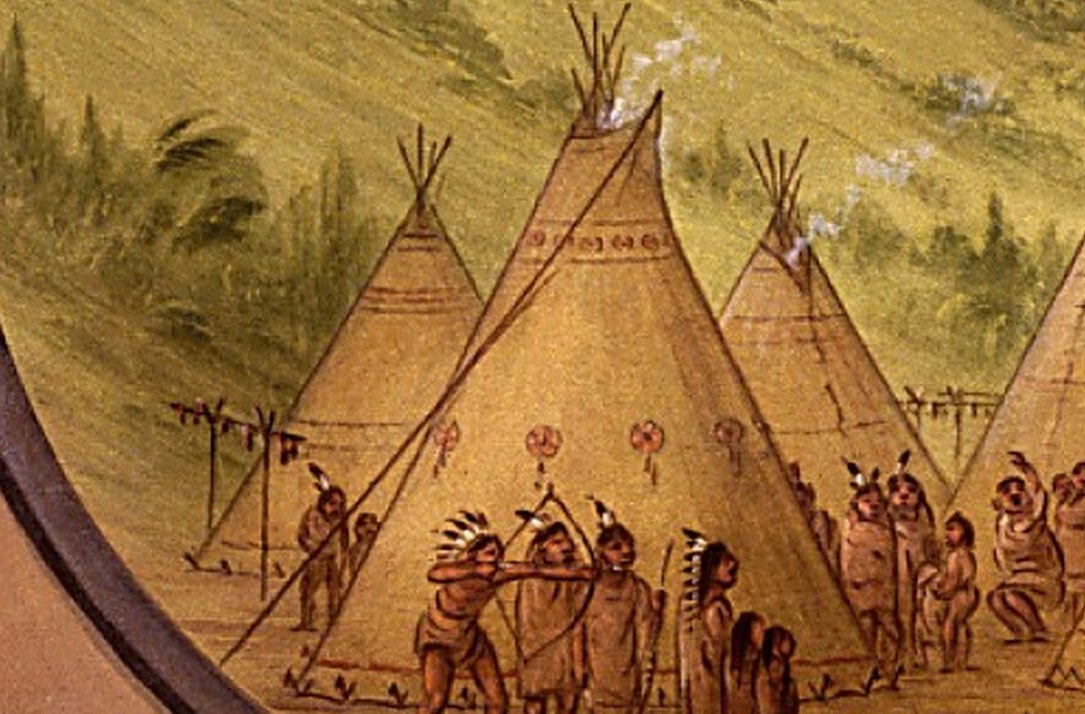
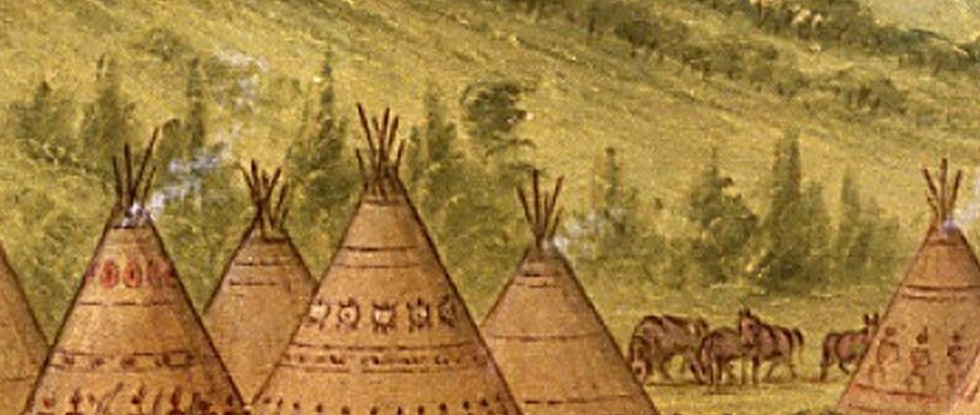
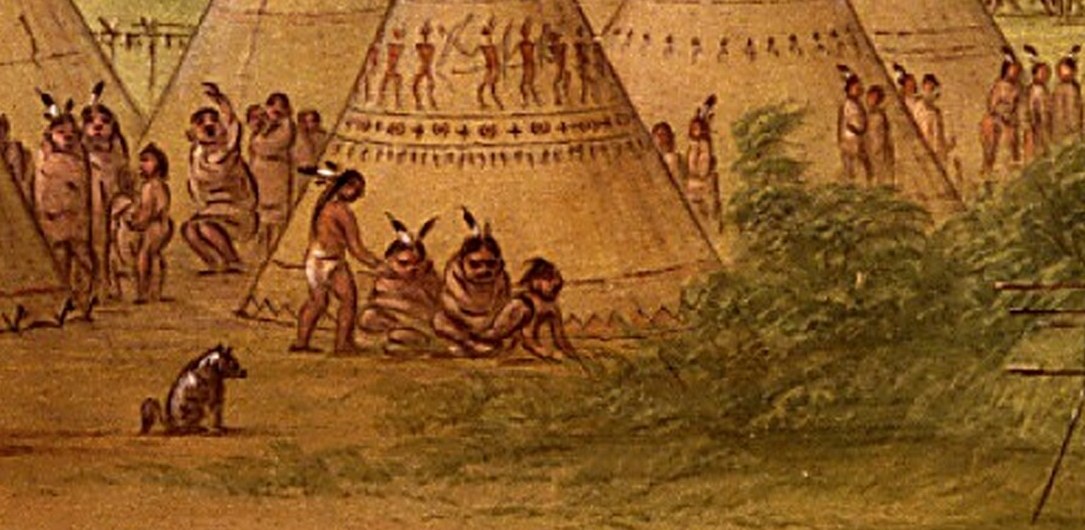
Catlin’s methodical approach is evident in the details. Notice the prominent shield on a stand, a clear symbol of defense and cultural practice. The geometric patterns on the central teepee are not just decoration, but expressions of identity and artistry. Even the wisps of smoke from the fires speak of daily rituals and domestic warmth.
Created after his extensive travels in the 1830s, this work reflects Catlin's desire to record Indigenous societies before the profound changes brought by westward expansion. He used oil on card to capture fine details and a smooth finish, focusing on natural light and earthy tones.
What other subtle details do you notice that tell a story?
Details
Transcript
This painter, a former lawyer, documented Native American life. He aimed to preserve cultures before they vanished. Look closely at the shield, placed prominently on a stand. It’s a symbol of defense, a guardian for the village. Even the intricate designs on this teepee are cultural expressions. The quiet smoke suggests domestic life, hearth, and home. He captures a world carefully, before it changed forever.