Lady with a Fan by Dyck, Anthony van, Sir
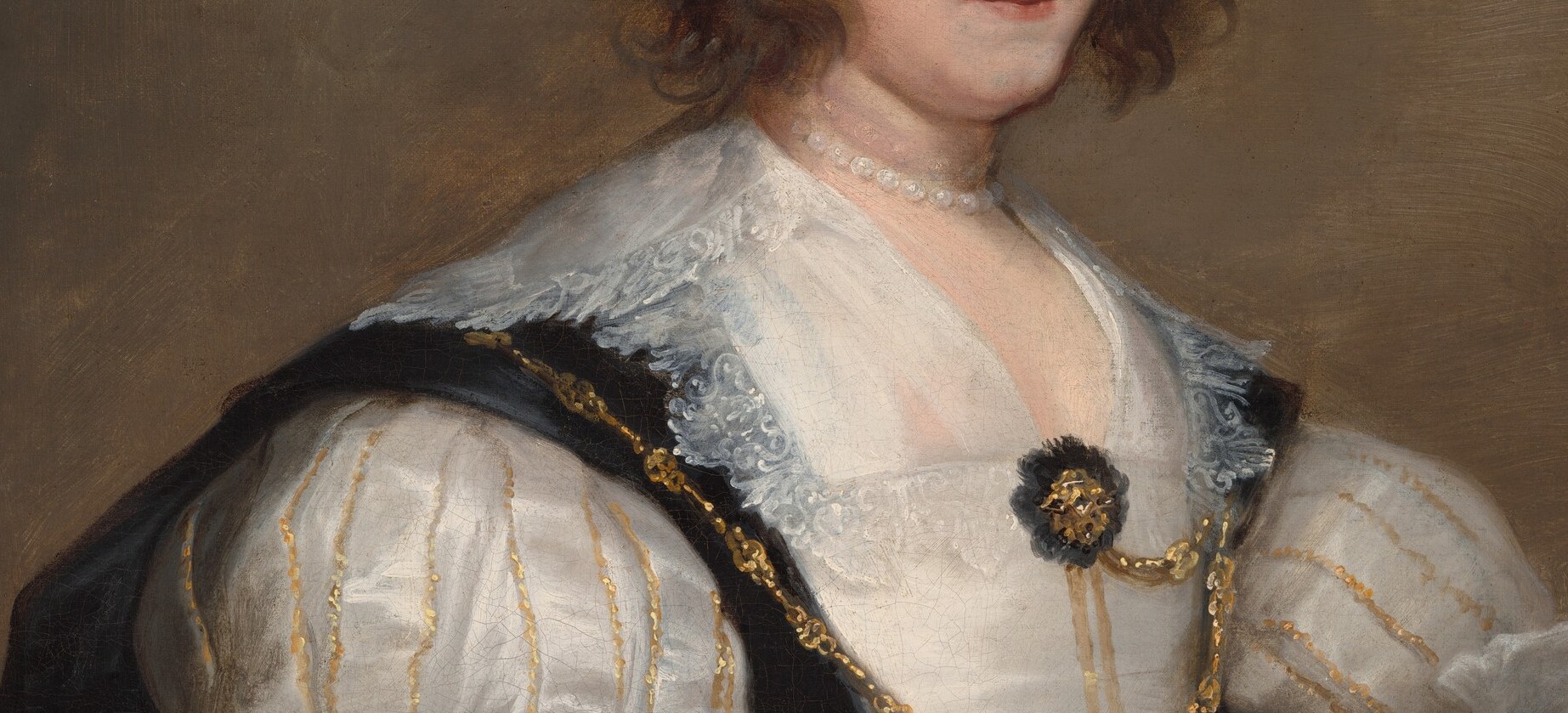
Lady with a Fan, painted by Anthony van Dyck around 1628, hangs in the National Gallery of Art in Washington as a masterclass in silk. The sitter is unidentified, her gaze direct, but the real biography here is painted in her sleeves.
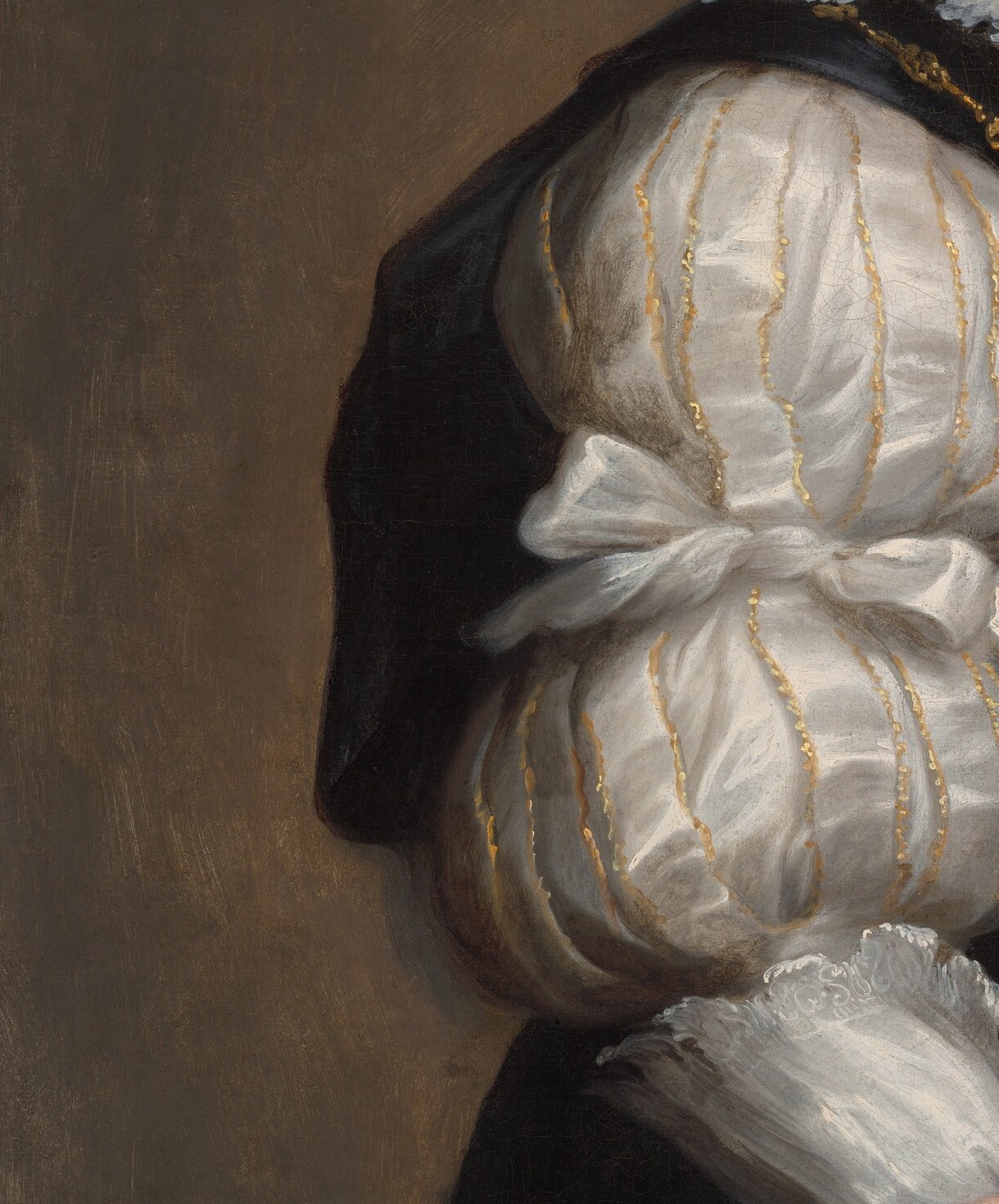
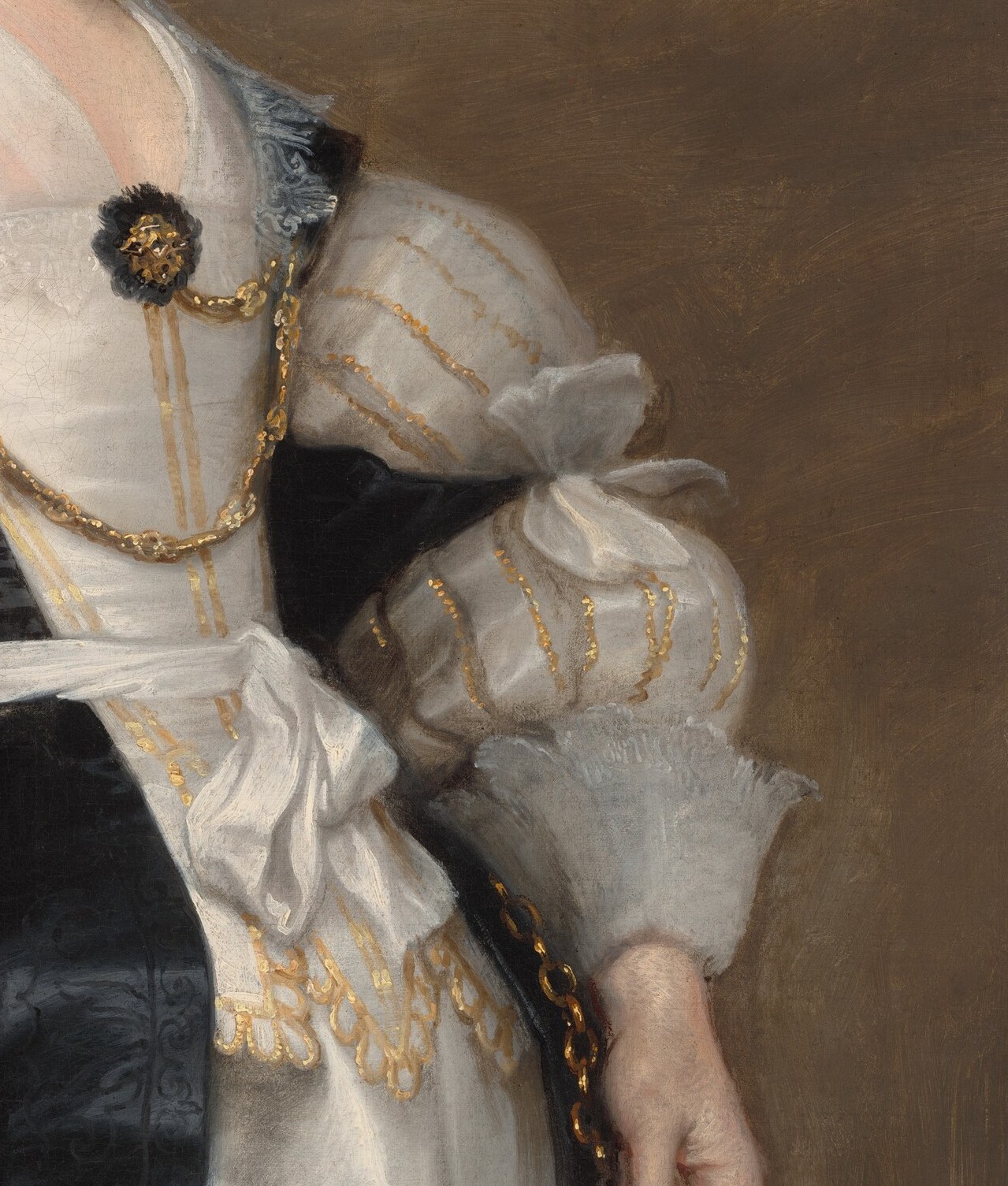
The sleeves are the painting's center of gravity: billowing white satin that seems to throw off light. Look at the fold on the left arm where the highlight goes from cream to near-white. That transition is not one stroke. Van Dyck built it in transparent oil glazes over a pale grey ground, so the canvas itself contributes the luminosity.
Van Dyck was born in 1599 to a wealthy Antwerp silk merchant. He grew up handling luxury textiles and understanding exactly how they catch and break light. By 1628, when this was painted, he had returned from six years in Italy absorbing Titian's color and had become the most sought-after portraitist north of the Alps. The black velvet beside the sleeves is equally calculated: a deep, warm brown-black that absorbs light completely, making the white beside it detonate.
Next time you see a van Dyck, look at the hands. He gave as much attention to the fingers resting on a fan as to the face. They are the same project: proving that oil and canvas can feel more alive than the room you are standing in.
Details


Transcript
An unknown woman. She meets your eye and will not look away. These sleeves are a trap. The eye goes straight to them, and that is the point. Van Dyck was the richest silk merchant's son in Antwerp. He knew that silk is not white. It is grey, cream, and umber catching light. He built the folds in thin glazes. The canvas beneath glows through the paint. The black velvet beside it is not black. It is deep brown, swallowing the light whole. One substance absorbs. The other reflects. The gap between them makes the light.