La Salle Crossing Lake Michigan on the Ice. December 8, 1681 by Catlin, George
George Catlin's 1848 oil on canvas, *La Salle Crossing Lake Michigan on the Ice, December 8, 1681*, captures a specific moment from early American exploration, emphasizing human resilience against natural elements. Catlin, an American lawyer-turned-artist, specialized in documenting Native American life and frontier landscapes, though this work depicts an early European explorer’s journey.
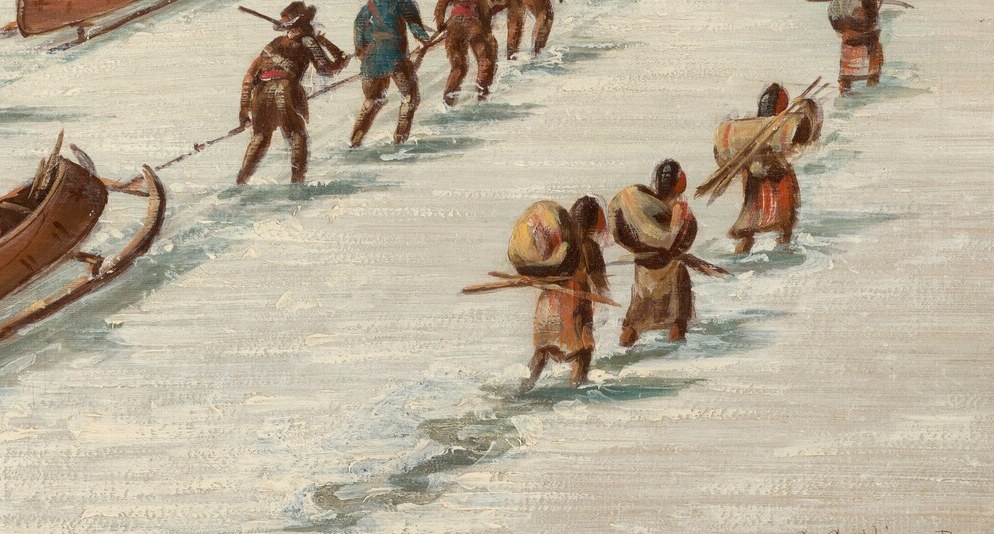
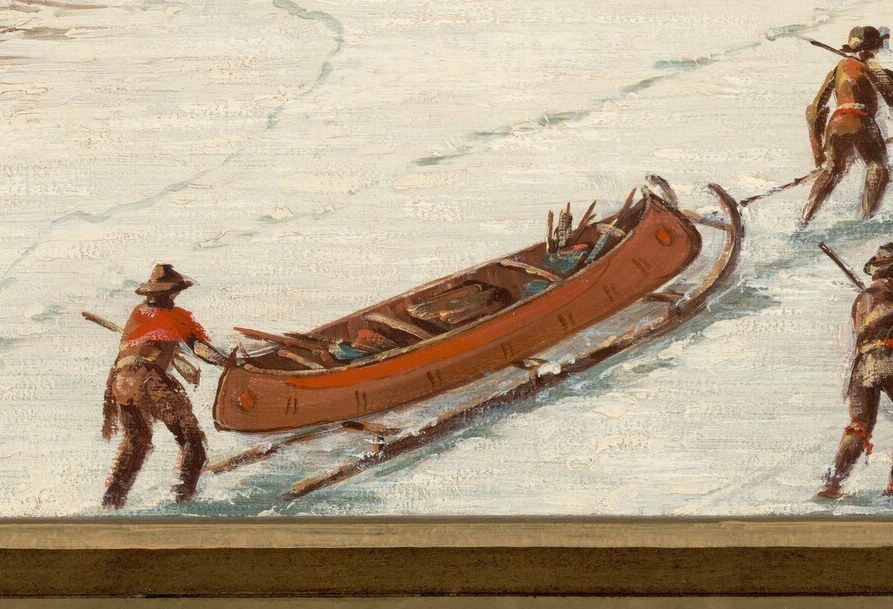
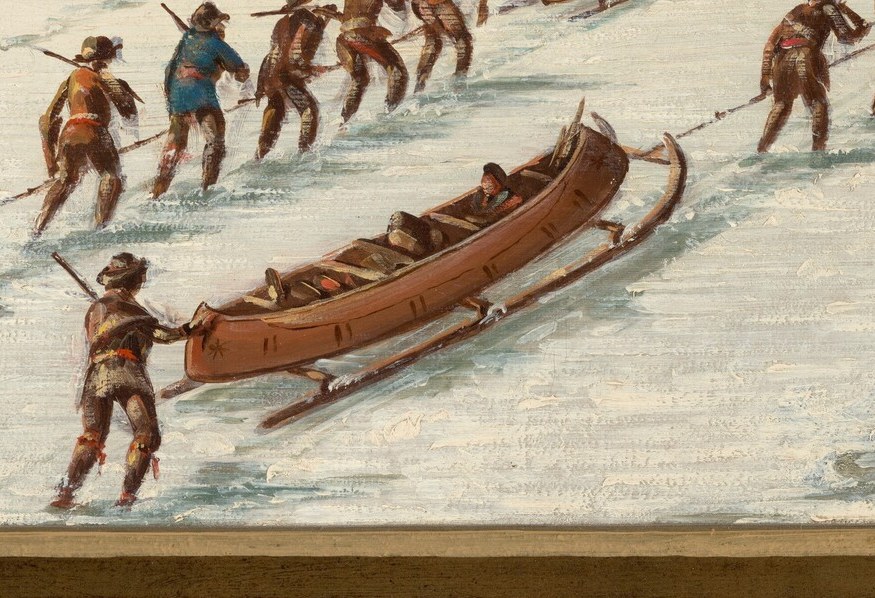
Look closely at the figures pulling the sled-mounted canoes across the treacherous ice. Their straining forms highlight the immense physical effort and challenging logistics of La Salle's journey across the frozen expanse of Lake Michigan in December 1681.
This painting aligns with Catlin's broader artistic practice of creating narrative-driven scenes based on historical accounts, even when focusing on European figures. It reflects a wider interest in the foundational stories of the American continent.
What does this scene tell us about the spirit of early exploration?
Details
Transcript
December, 1681. Explorer La Salle crosses frozen Lake Michigan. He led men and canoes, pulled on sleds, for hundreds of miles. These straining figures show the immense physical effort required. This painter often documented Native American life and frontier landscapes. But here, he captures a narrative of human resilience against the elements. The determined lead figure embodies this challenging journey.