Landscape by Schamberg, Morton Livingston
Morton Livingston Schamberg's "Landscape," painted around 1912, is a stunning example of early American modernism, now held at the Philadelphia Museum of Art. Rather than aiming for photographic realism, Schamberg captured the vibrant energy of the natural world through bold, expressive brushwork.
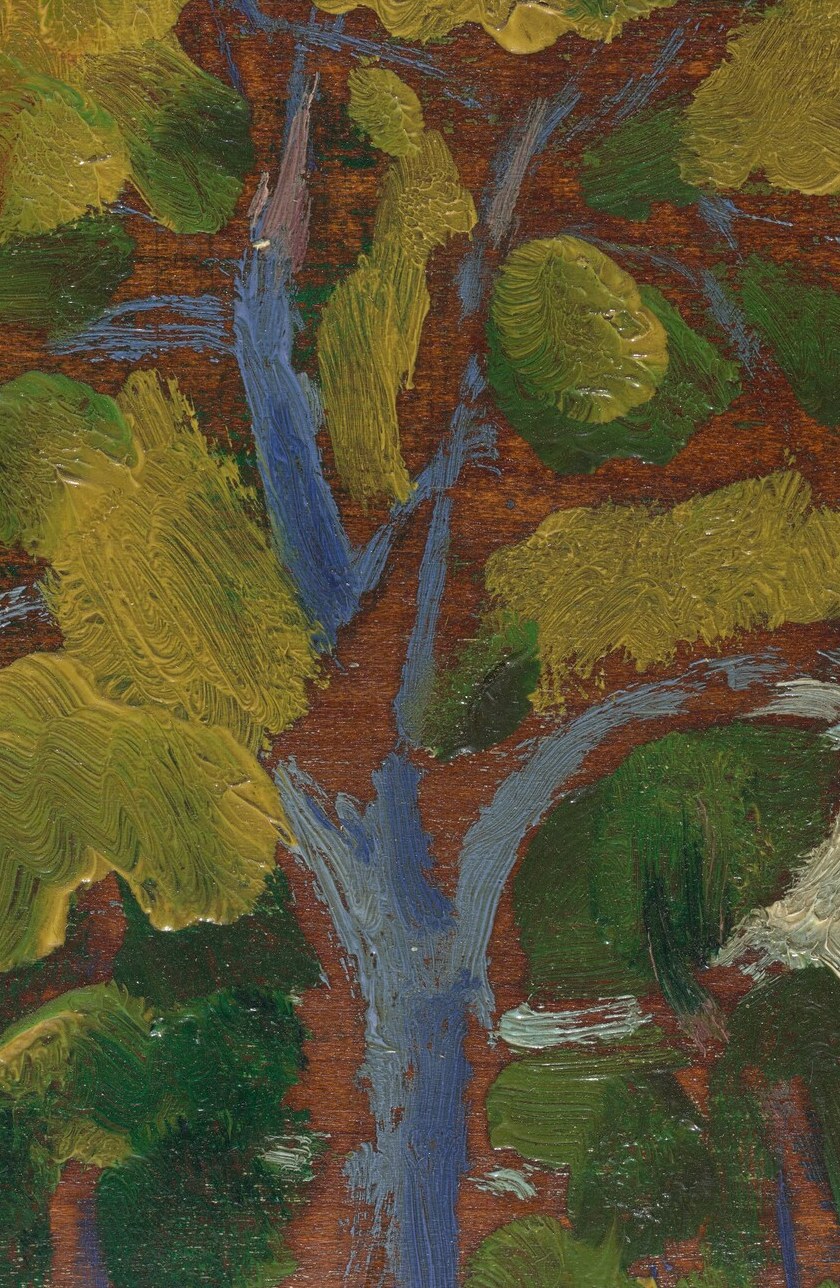
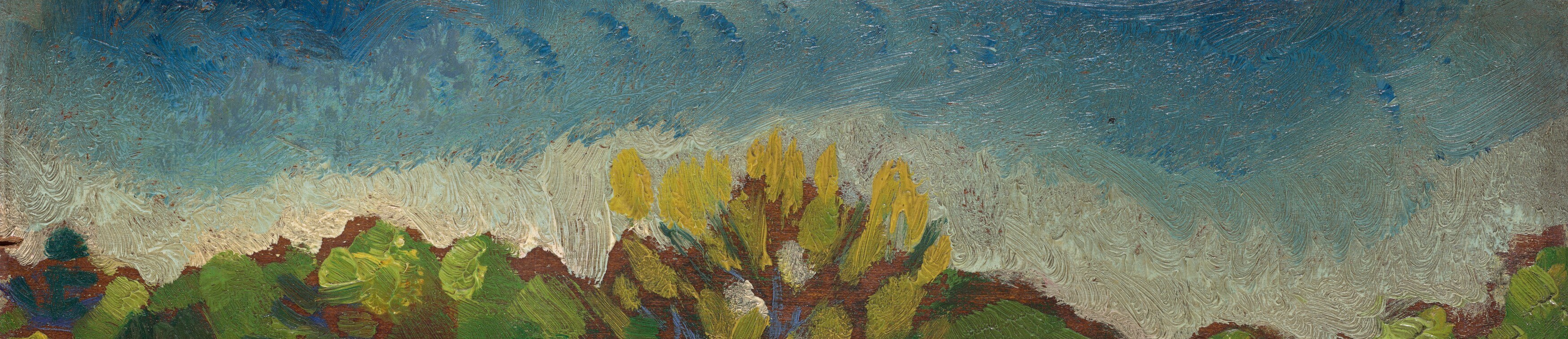
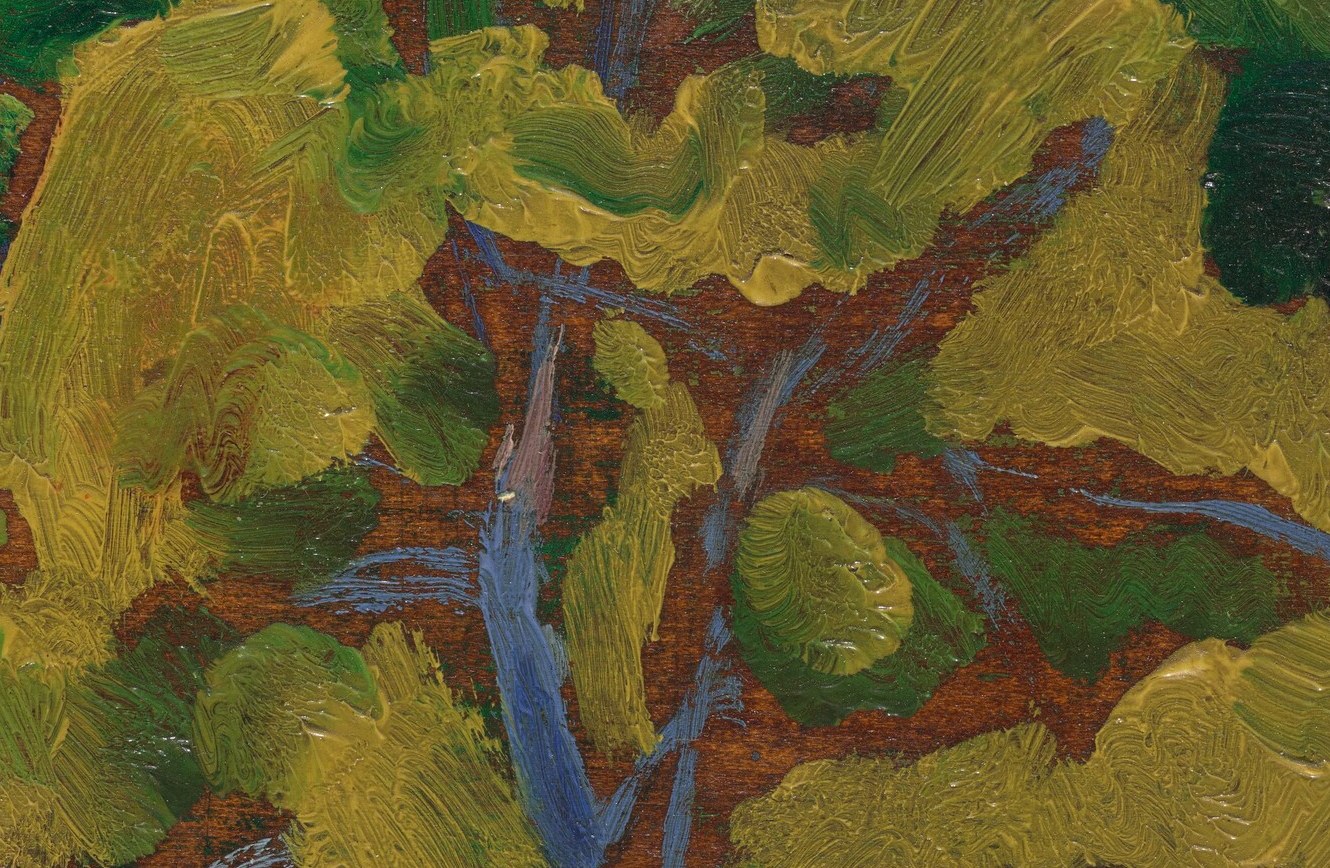
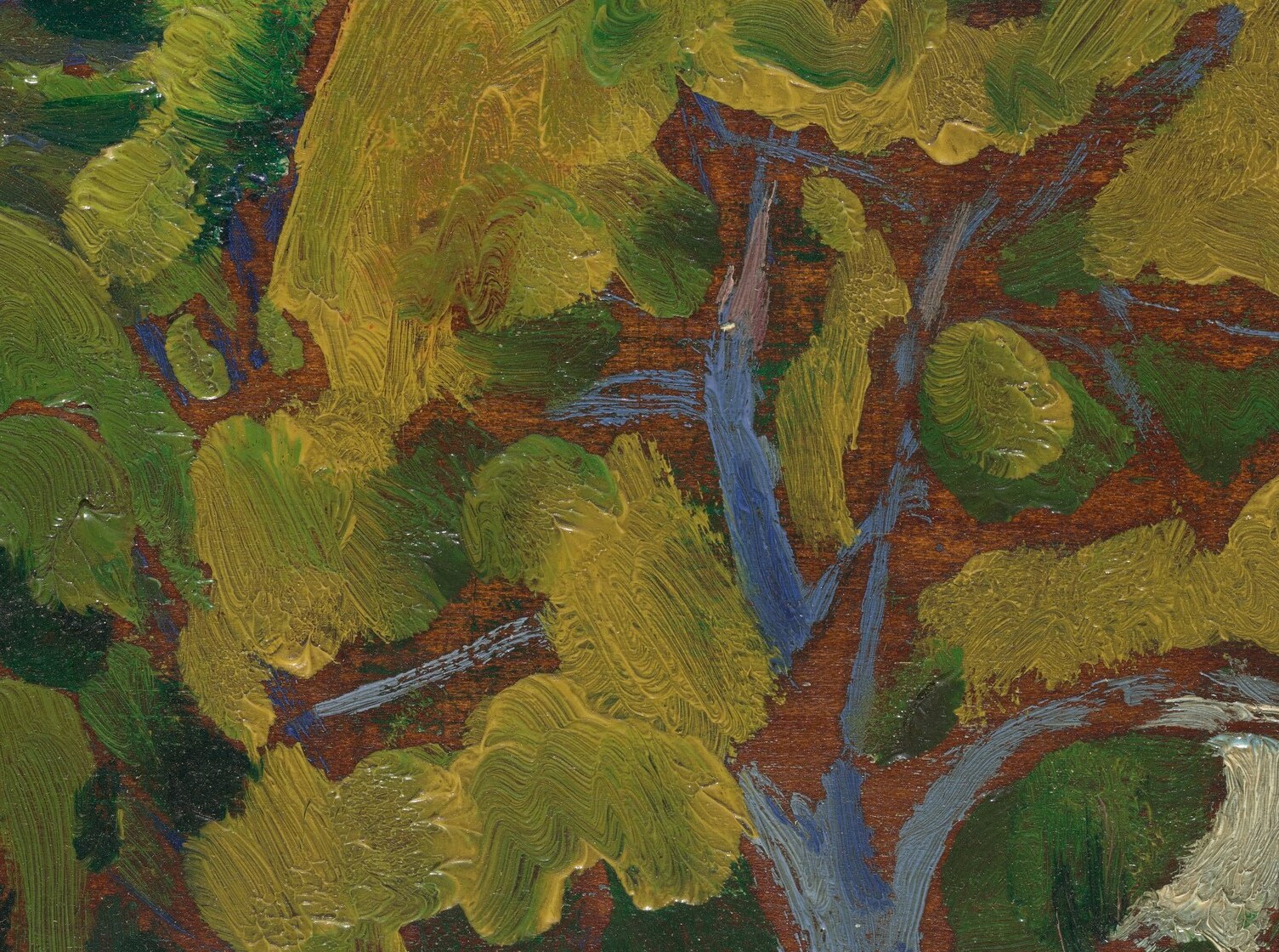
Notice how the artist builds forms with thick, visible strokes, especially in the central tree trunk and the textured foliage. The sky, with its energetic and distinct marks, highlights the materiality of the paint itself.
Schamberg was a pioneering figure, exploring cubist techniques and industrial subjects, but even in this pastoral scene, his innovative approach shines through. This painting shows his embrace of new ways to interpret and render the world around him.
What do you notice first about his brushwork?
Details
Transcript
This painter saw nature, not as a photograph, but as pure energy. He built up the forms with thick, visible brushstrokes. Look closely at the sky, painted with energetic, distinct marks. His brushwork creates a sense of movement and raw texture. Every stroke is a deliberate act, emphasizing the paint itself. He was an early American modernist, embracing new ways to paint.