Maria Luisa of Parma (1751–1819), Later Queen of Spain by Laurent Pêcheux
View the artwork: Maria Luisa of Parma (1751–1819), Later Queen of Spain →
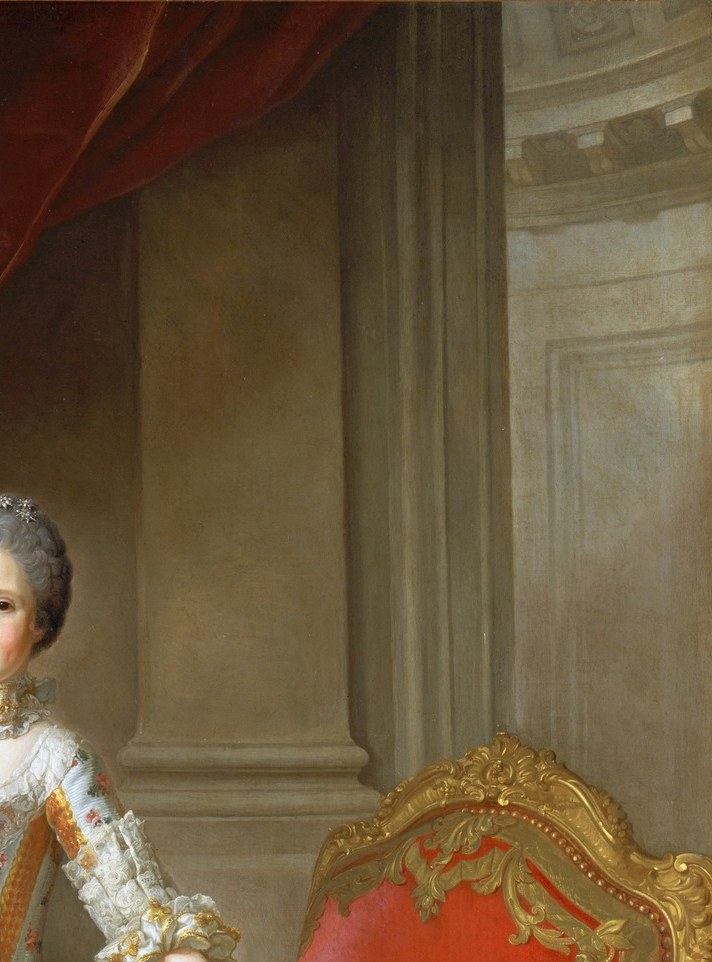
This is Laurent Pécheux's portrait of Maria Luisa of Parma, painted in 1765. She was about fourteen years old here, and she would later become Queen of Spain. The painting lives at the Galleria Nazionale di Parma.
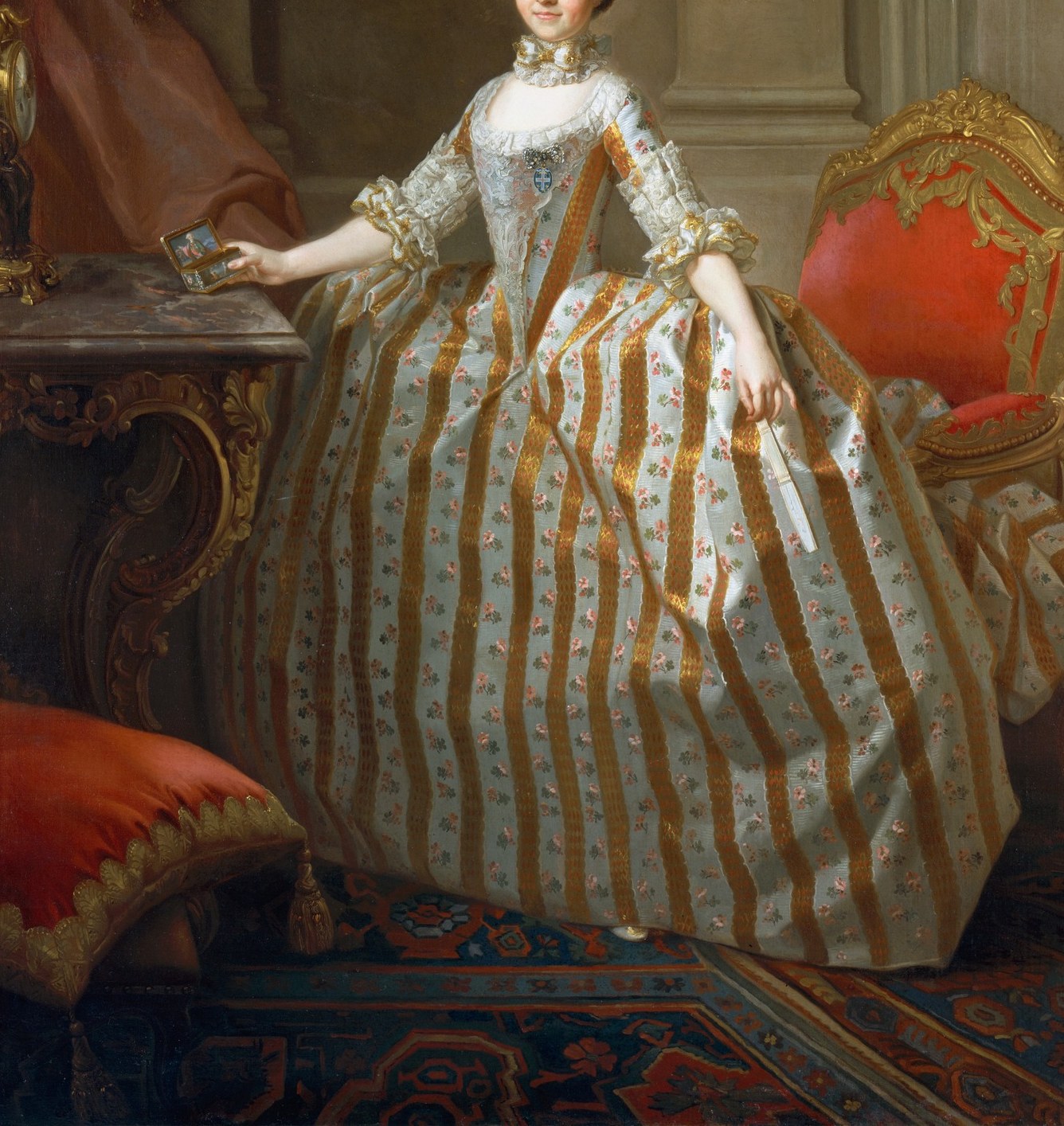
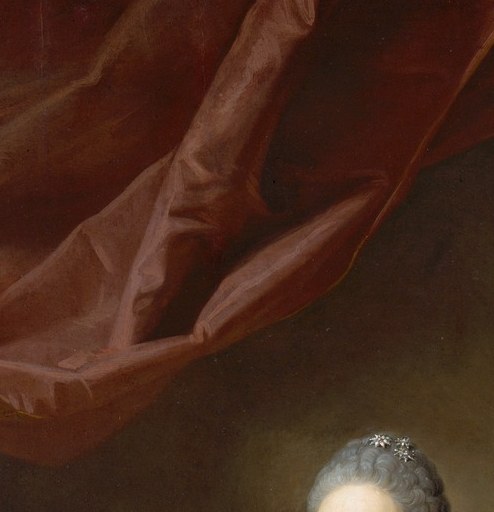
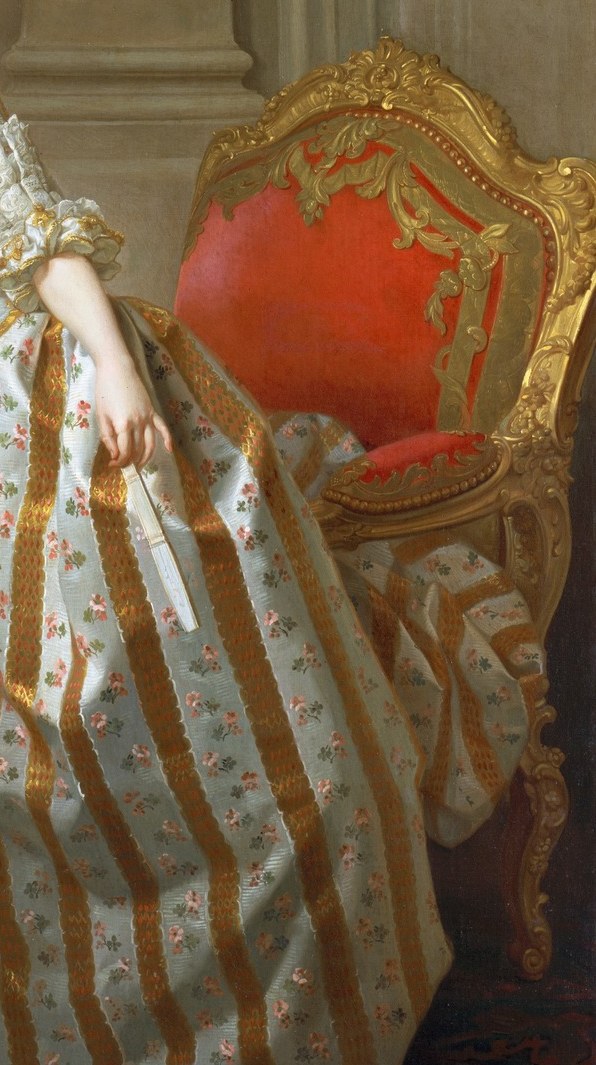
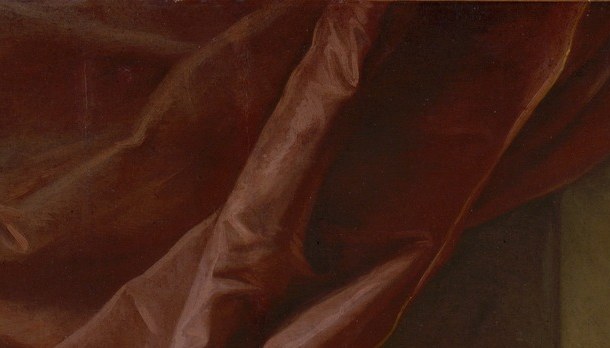
The first thing you notice is the striped silk gown. Pécheux painted every gold stripe catching light differently, a deliberate show of textile wealth. The red curtain, the gilded armchair she stands beside but does not sit in, the marble-topped table: nothing here is accidental. Each object makes a claim about her station.
But the small detail that rewards close looking is the box in her right hand. It is a snuffbox or a bonbonnière, a portable luxury object that at the Farnese court signaled precise rank. The materials and the permission to carry it were governed by strict codes. The box is easy to overlook inside the vast dress, but it is the most intimate object in the portrait.
Pécheux was a French-born painter who worked in Rome and northern Italy in a Neoclassical style. He rendered the textures here meticulously: polished marble, crimson velvet, and that astonishing silk. The girl in the painting stares at us with an adolescent directness, knowing, as we now know, what she would become.
#arthistory #portrait #frenchneoclassical
Details
Transcript
She stares at you, barely fourteen years old. Everything around her was painted to prove her rank. The gold-striped silk alone was a declaration. But look at her right hand. She is holding something small. A decorative box: a snuffbox or a bonbonnière. At the Parma court, only certain ranks could carry gold boxes. She would become Queen of Spain. The box already knew.