Artwork
Maria Luisa of Parma (1751–1819), Later Queen of Spain
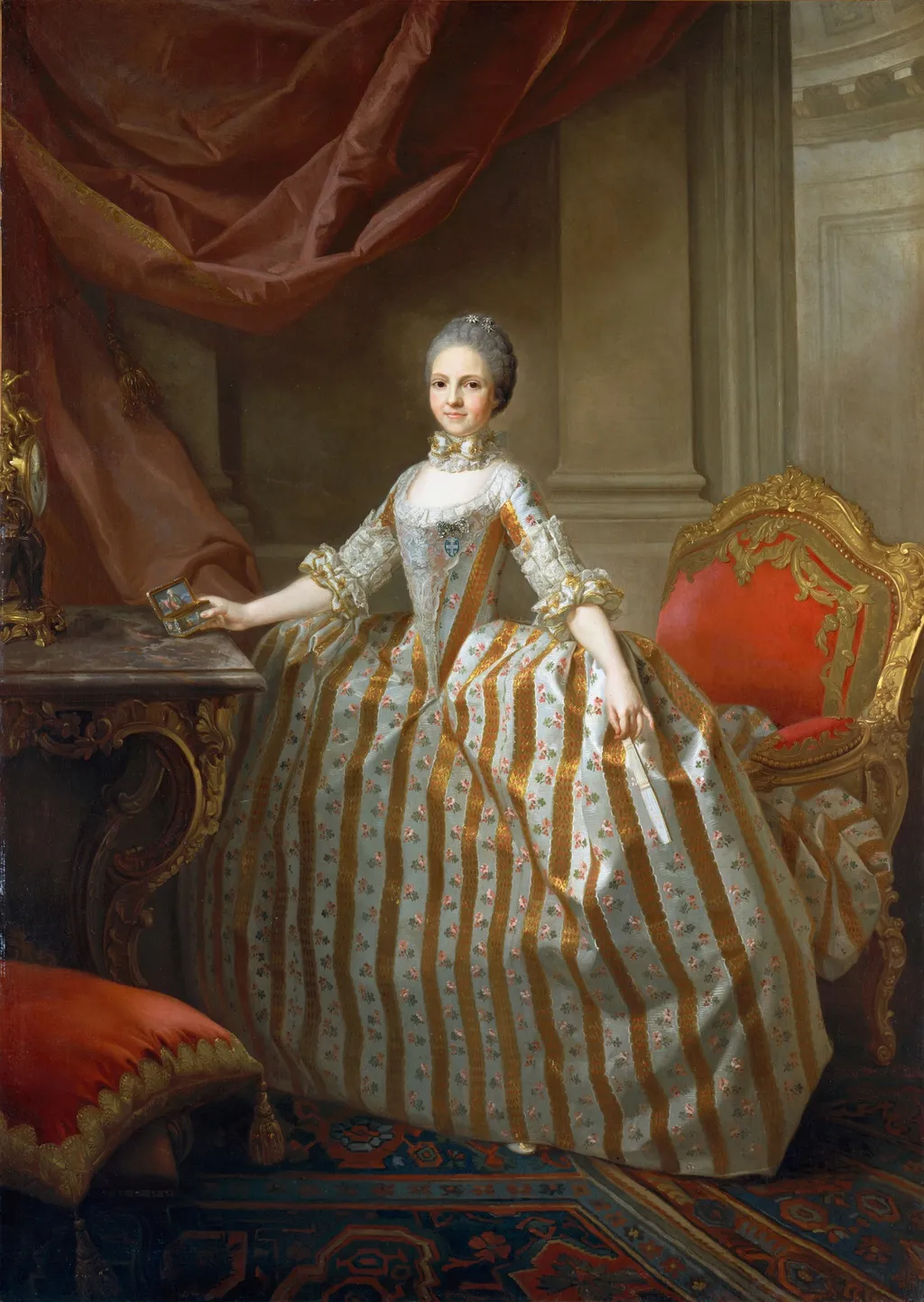
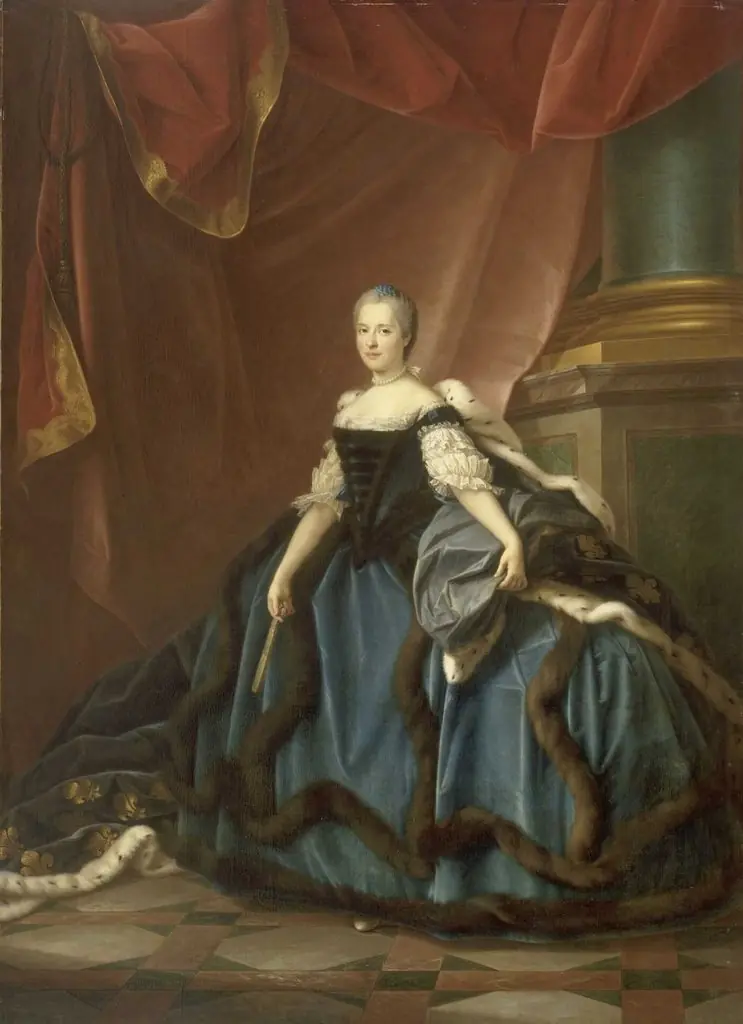
Maria Luisa of Parma (1751–1819), Later Queen of Spain is an oil painting by the Rococo painting artist Laurent Pêcheux. It dates from 1765 and is held in the collection of the Metropolitan Museum of Art. This oil painting depicts Maria Luisa of Parma, who would later become Queen of Spain.
About this work
Subject & Meaning
The painting portrays Maria Luisa of Parma, later Queen of Spain, in a pose that combines aristocratic dignity with personal markers of identity.
The painting portrays Maria Luisa of Parma, later Queen of Spain, in a pose that combines aristocratic dignity with personal markers of identity. She is rendered in a richly embroidered dress with lace trim, seated on an upholstered chair, and surrounded by attributes including a pannier, a decorative casket, and a jeweled brooch, all documented in the work's description. These elements function as visual symbols of her noble lineage, marital status, and role as a royal figure within the Spanish court.
Executed by Laurent Pêcheux in 1765 using oil on canvas, the portrait underscores the sitter's elevated social position and the ceremonial expectations of queenship.
Technique & Style
Executed in oil paint on canvas, this large-scale portrait measures 230.8 cm in height and 164.5 cm in width, a substantial format befitting its royal sitter. The work is classified as a painting within the portrait genre, with the canvas support providing a stable ground for the layered oil medium. Among the depicted elements recorded in the catalogue are fine details such as lace, a pannier, a chair, a casket, and a brooch, suggesting careful handling of textile textures and ornamental accessories. The painting is held in the collection of the Metropolitan Museum of Art.
History & Provenance
The portrait of Maria Luisa of Parma was executed by the French artist Laurent Pêcheux in 1765, when the sitter was fourteen years old. Pêcheux worked in oil on canvas, producing a full-length portrait measuring 230.8 by 164.5 centimetres. The work was created when Maria Luisa was still a princess of Parma, before her 1765 marriage to the future King Charles IV of Spain, which would eventually make her queen consort.
The painting subsequently entered the collection of the Metropolitan Museum of Art, where it is currently held. No accession number or exhibition history is recorded in the available sources.
Overview
This oil painting depicts Maria Luisa of Parma, who would later become Queen of Spain. Created by Laurent Pêcheux, the portrait presents a young woman adorned in opulent attire, positioned within an elaborately furnished interior. The work serves as a formal representation of a significant figure in European royalty, capturing her appearance and the grandeur associated with her station.
Context
Laurent Pêcheux executed this formal portrait using oil paint, a common medium for capturing the likeness of aristocratic sitters during this period. The artist meticulously rendered the textures of Maria Luisa's elaborate dress and the surrounding decorative elements, from the polished marble to the rich fabric of the curtain. This attention to detail contributes to the overall impression of wealth and refinement characteristic of royal portraiture.
Own this work as a print
Artist & collection
Artist
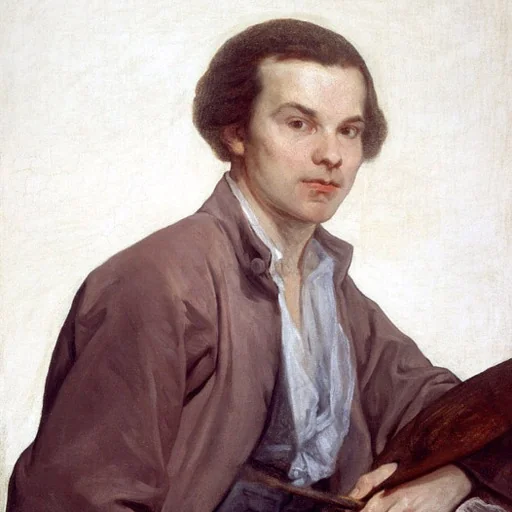
Laurent Pécheux (17 July 1729 – 1821) was a French-born painter, active in Rome and Northern Italy in a Neoclassical-style.

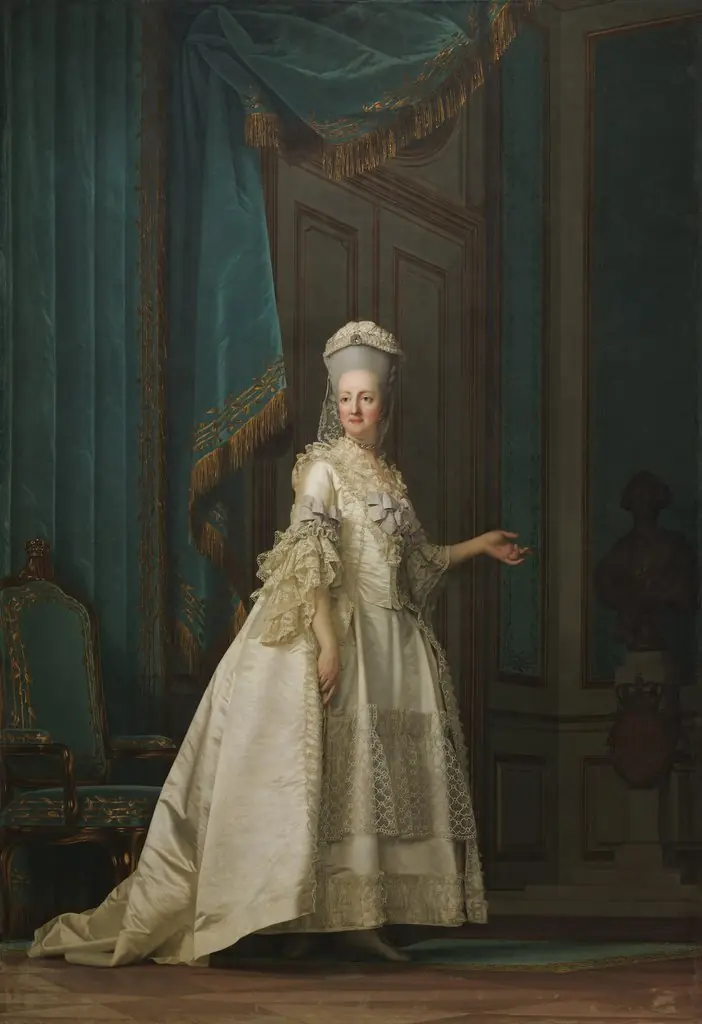 The Queen Dowager Juliane Marie
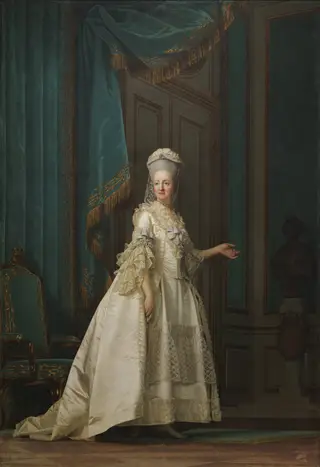 The Queen Dowager Juliane Marie
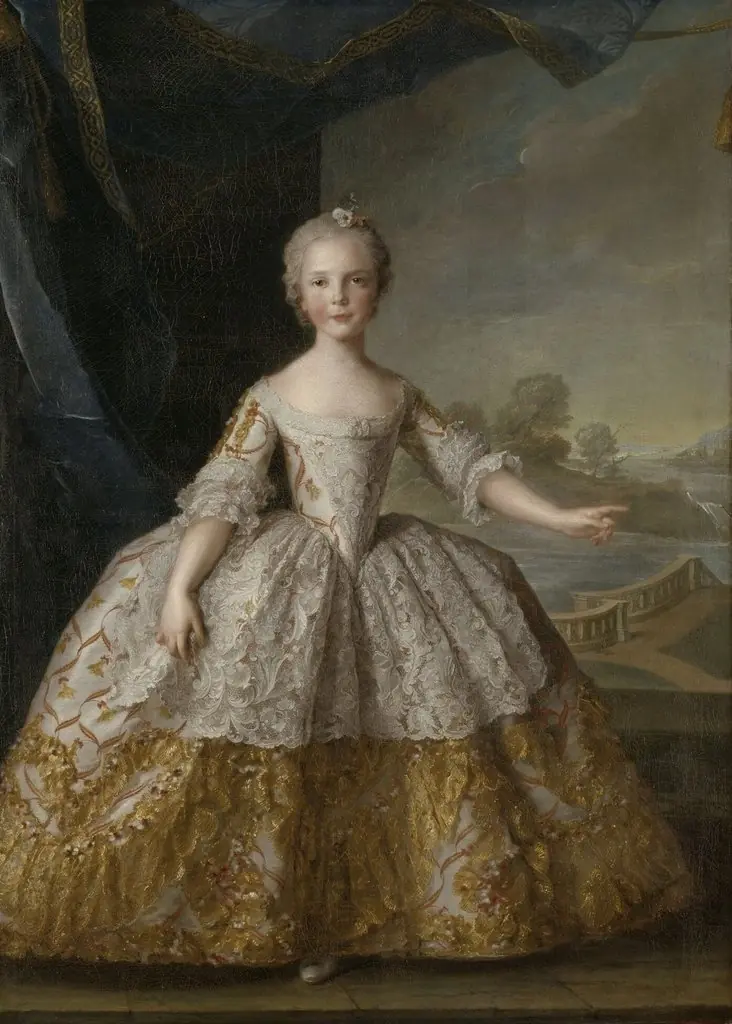 Isabelle de Bourbon, infante de Parme
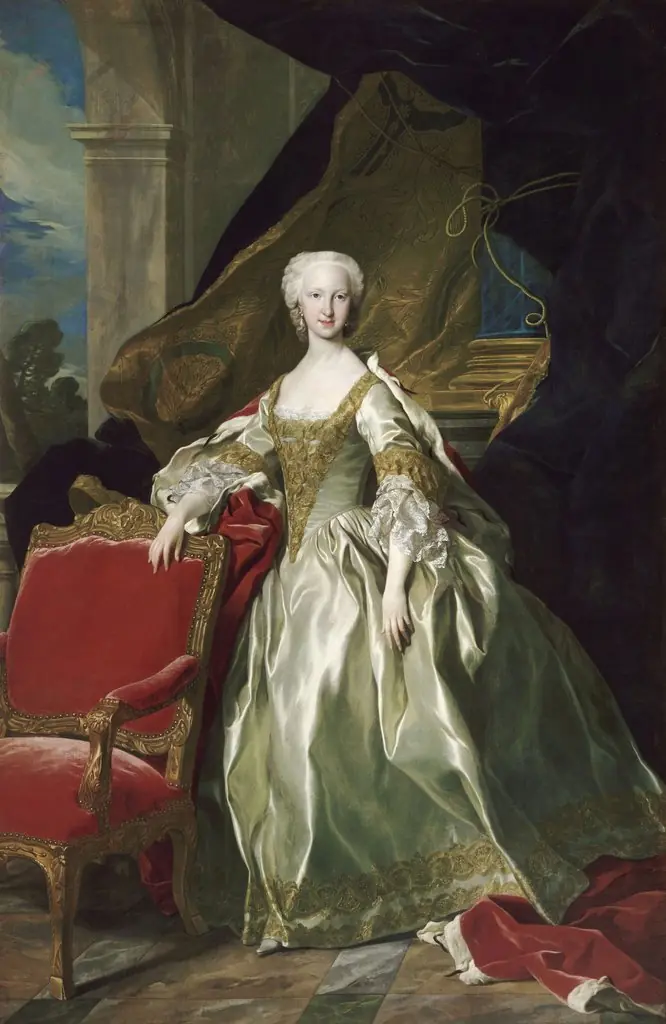 The Infanta María Teresa Rafaela of Spain, future Dauphine of France (1726-1746)
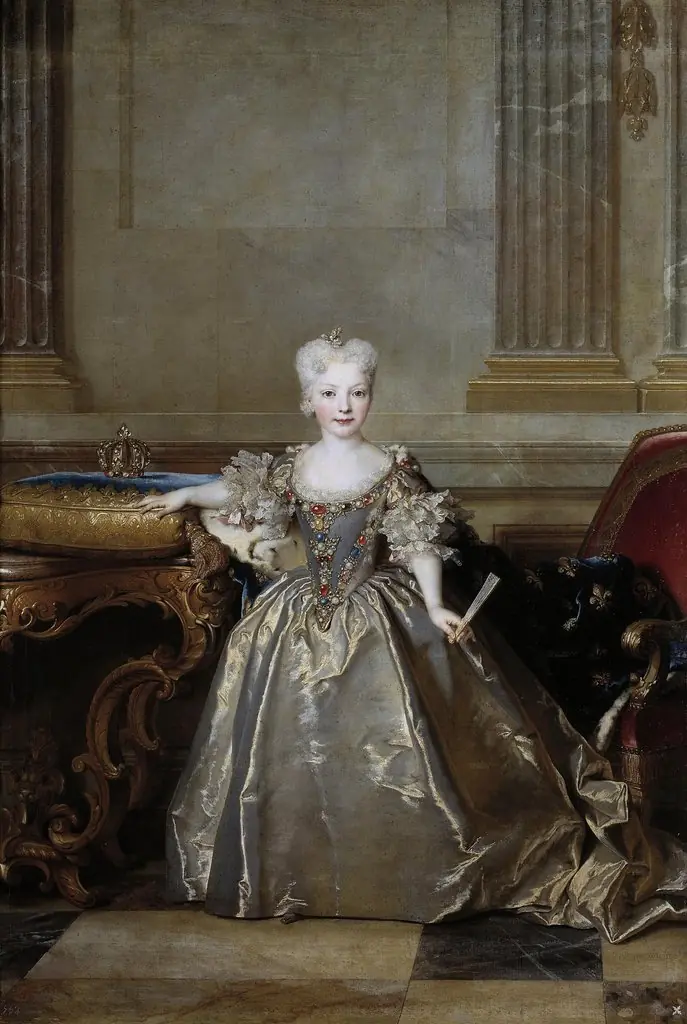 María Ana Victoria de Borbón y Farnesio
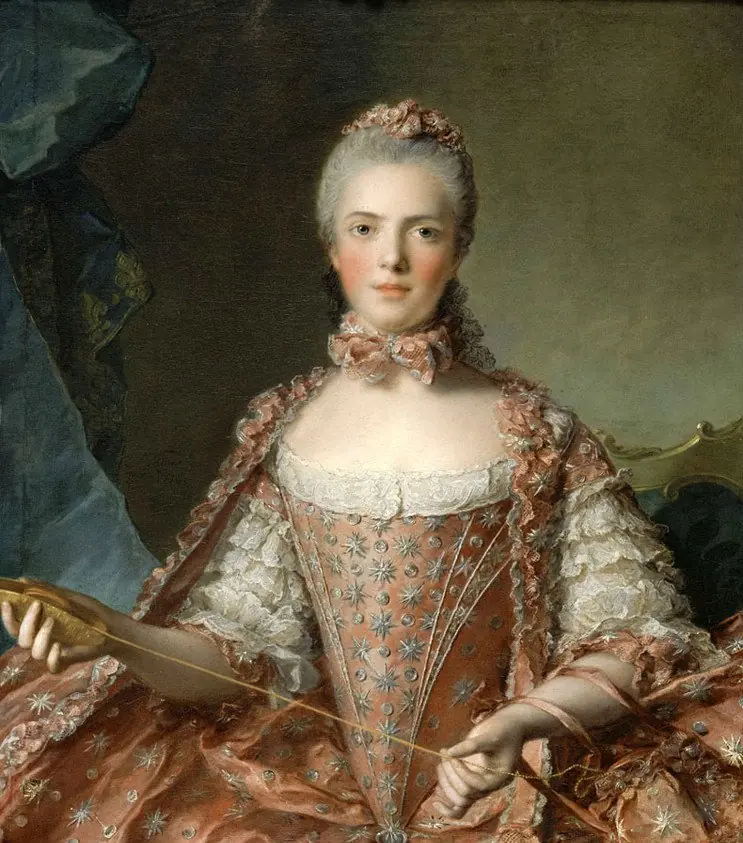 Adélaïde of France Tying Knots
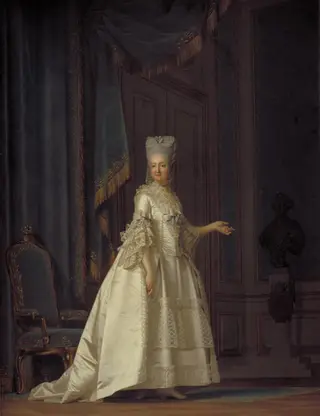 The Dowager Queen Juliane Marie of Denmark
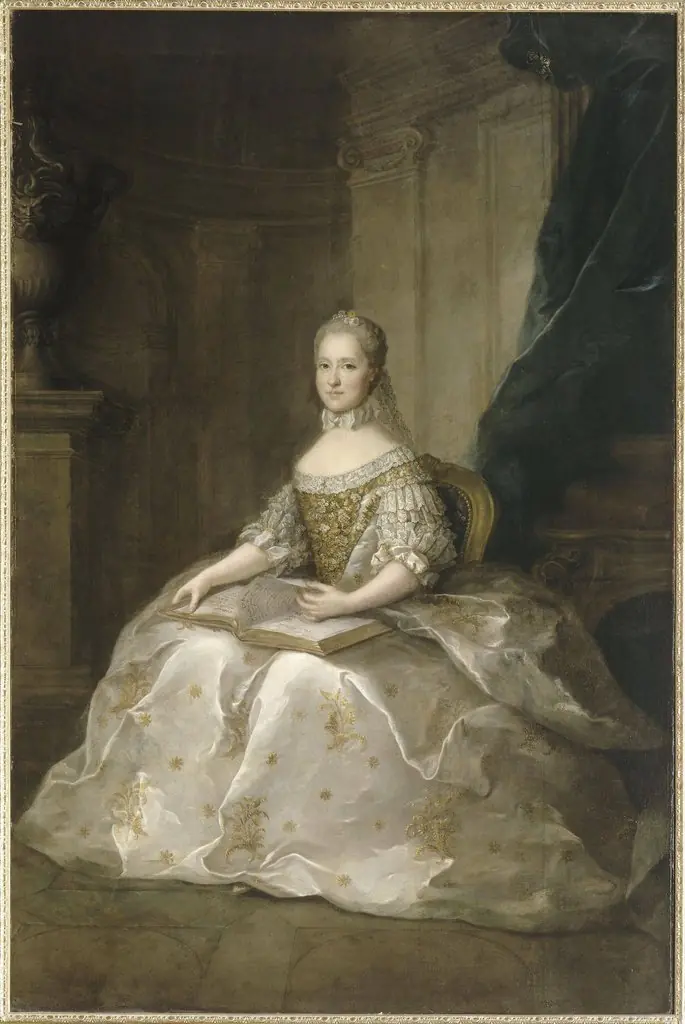 Portrait of Maria Josepha of Saxony (1731–1767), Dauphine of France
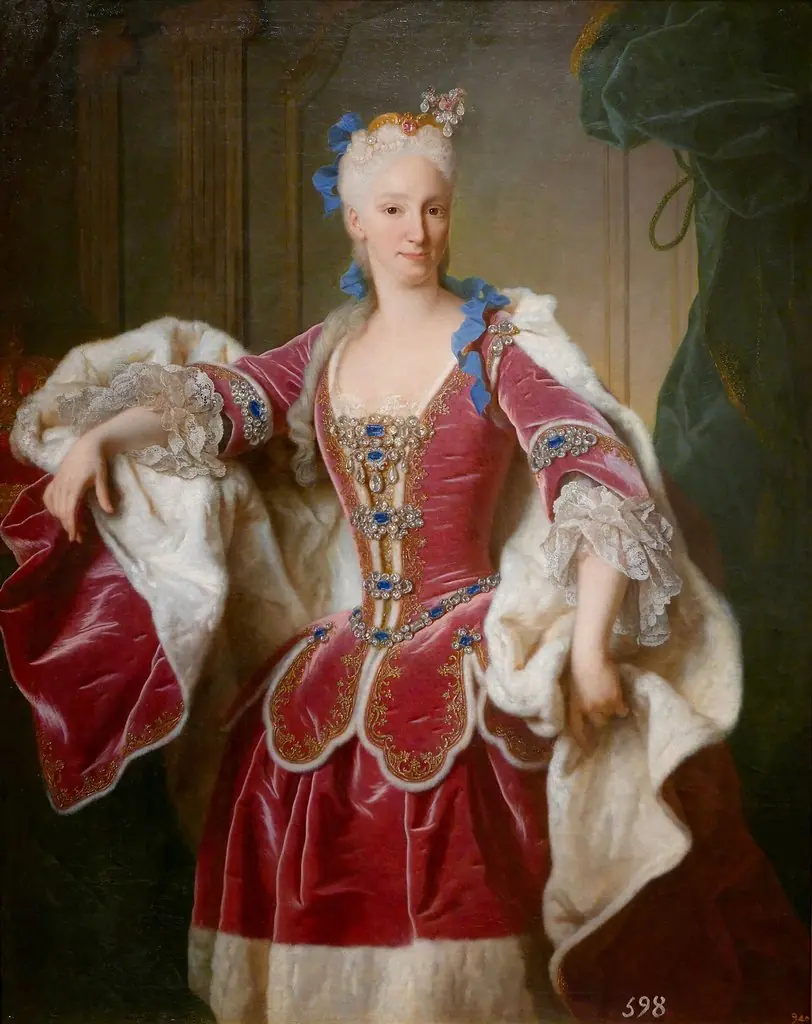 Elisabeth Farnese, Queen of Spain
 Marie-Josephus of Saxe