The Muses Urania and Calliope by Vouet, Simon
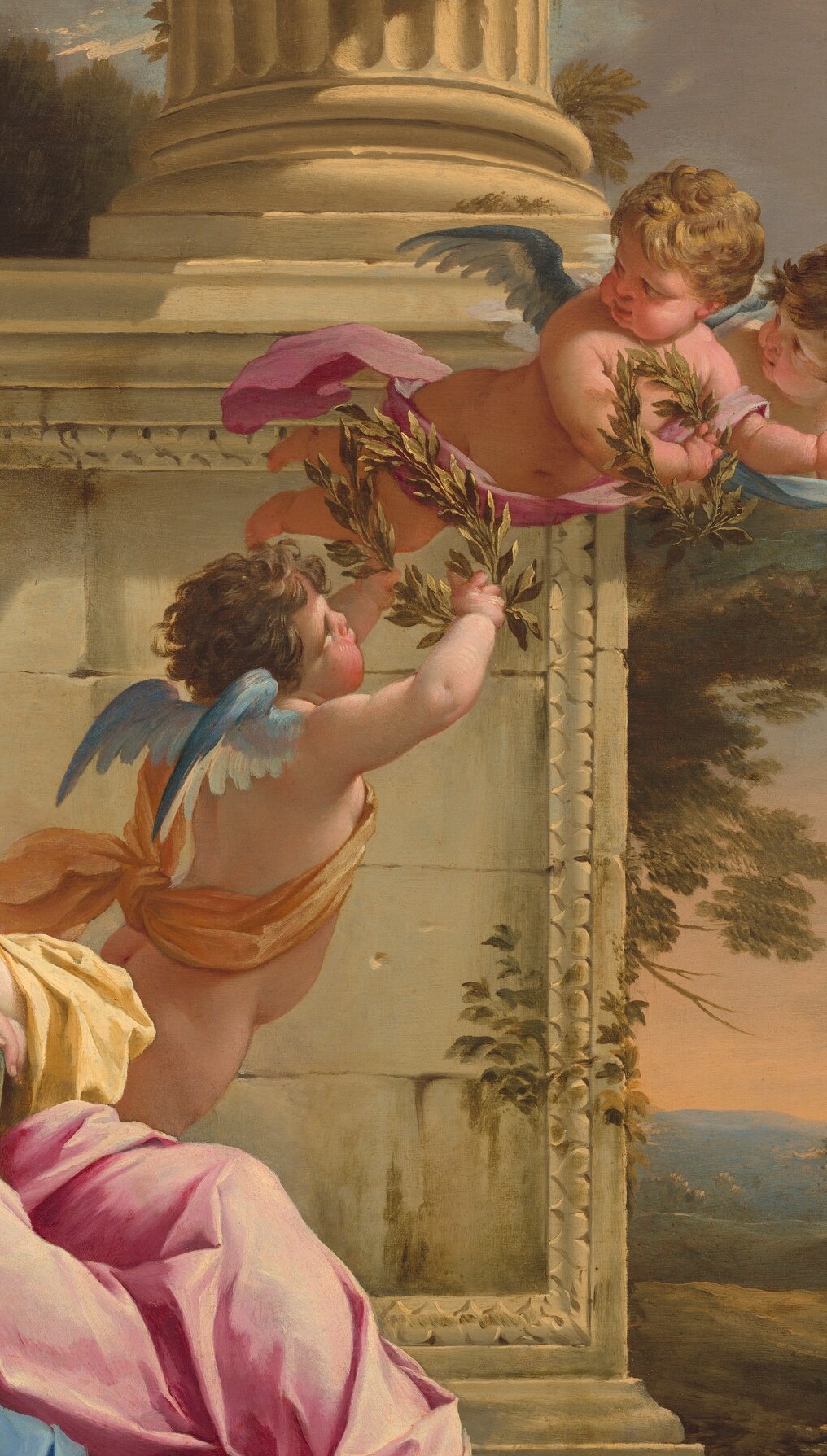
Painted around 1634, "The Muses Urania and Calliope" by Simon Vouet, held in a private collection, showcases the artist's pivotal role in transforming French art.
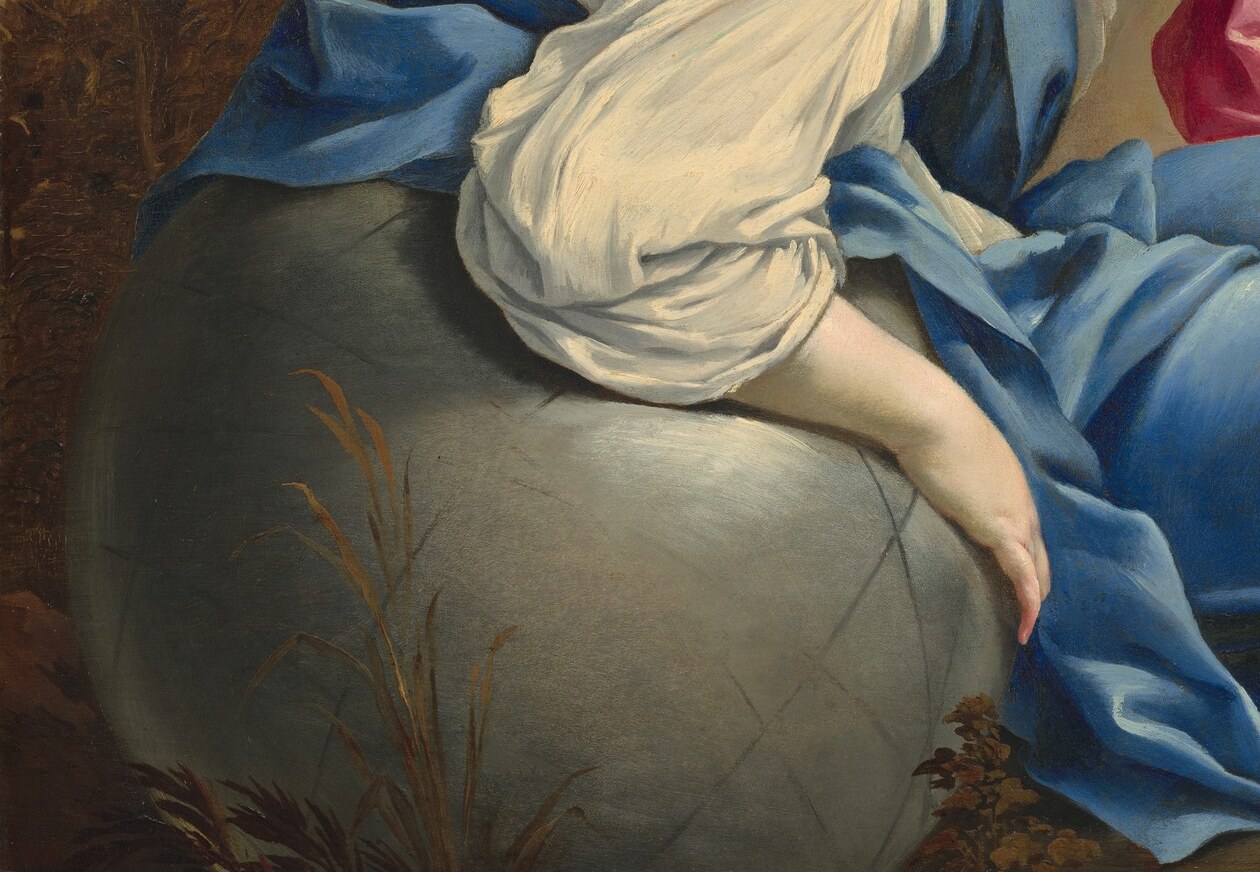
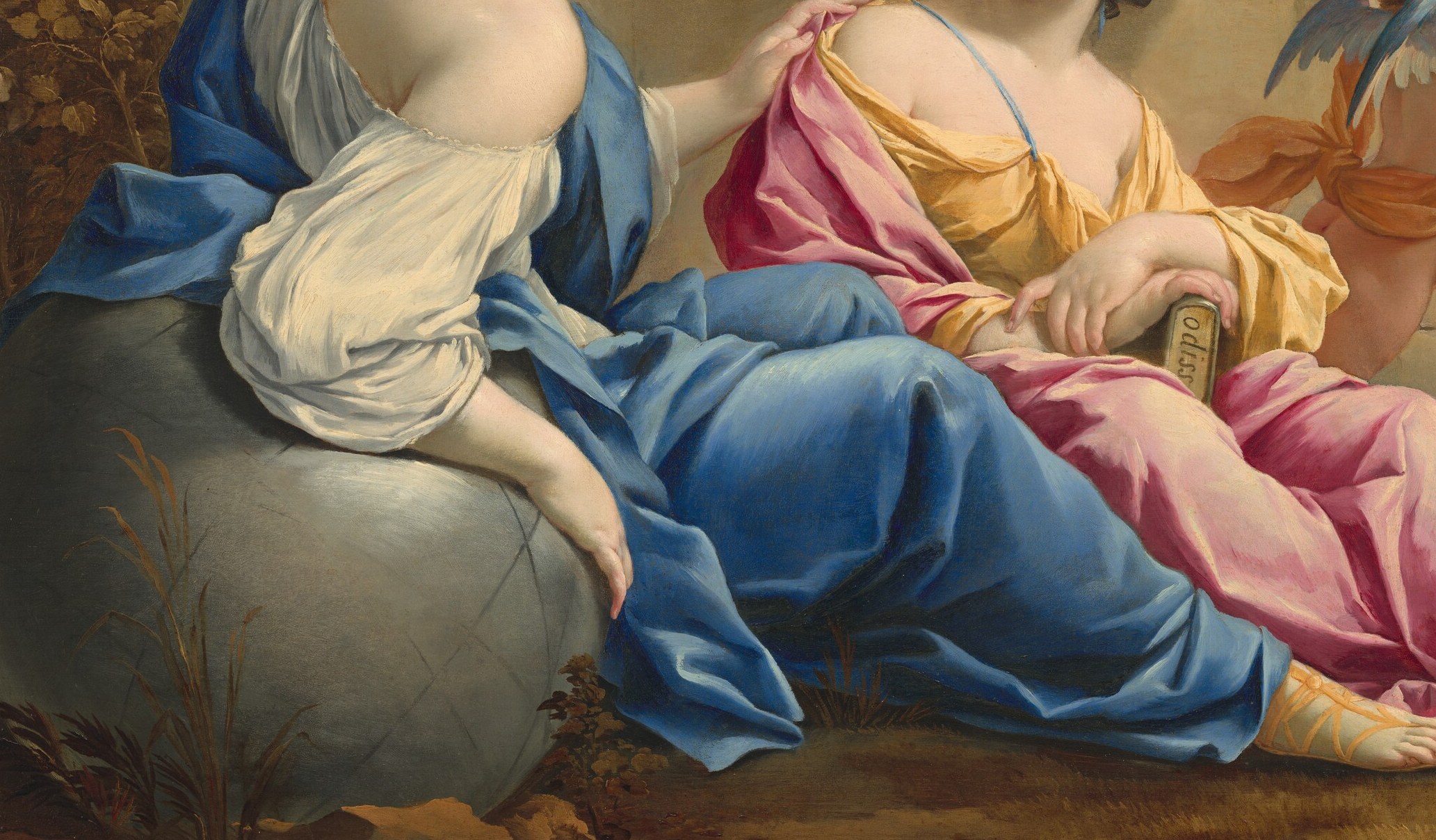
Vouet, a leading French painter of the early 17th century, introduced the dynamic compositions, rich colors, and dramatic lighting of the Italian Baroque style to France after his return from Rome. This particular oil on wood painting depicts Urania, the Muse of astronomy, identified by her celestial globe, and Calliope, the Muse of epic poetry, with her book referencing Homer's Odyssey.
Upon his return to France in 1627 at King Louis XIII's request, Vouet became the premier painter at court. He and his studio created numerous religious and mythological works, portraits, and decorative schemes, immensely influencing the aesthetic direction of Parisian painting.
Which of these muses do you find more compelling?
Details
Transcript
In the 1630s, this French painter introduced Italian Baroque to Paris. He became King Louis XIII's premier painter, shaping French art. This is Urania, the Muse of Astronomy, with her celestial globe. The dramatic lighting and rich drapery are hallmarks of his style. Her direct gaze belongs to Calliope, Muse of epic poetry. The book mentions Homer's Odyssey, her domain.