Women Picking Olives by Vincent van Gogh
This is Vincent van Gogh's "Women Picking Olives," painted in December 1889. It is not a crime scene, but it was made inside one, or what felt like one to him. Van Gogh painted this while a voluntary patient at the asylum of Saint-Paul-de-Mausole in Saint-Rémy-de-Provence, seven months after committing himself following a series of breakdowns.
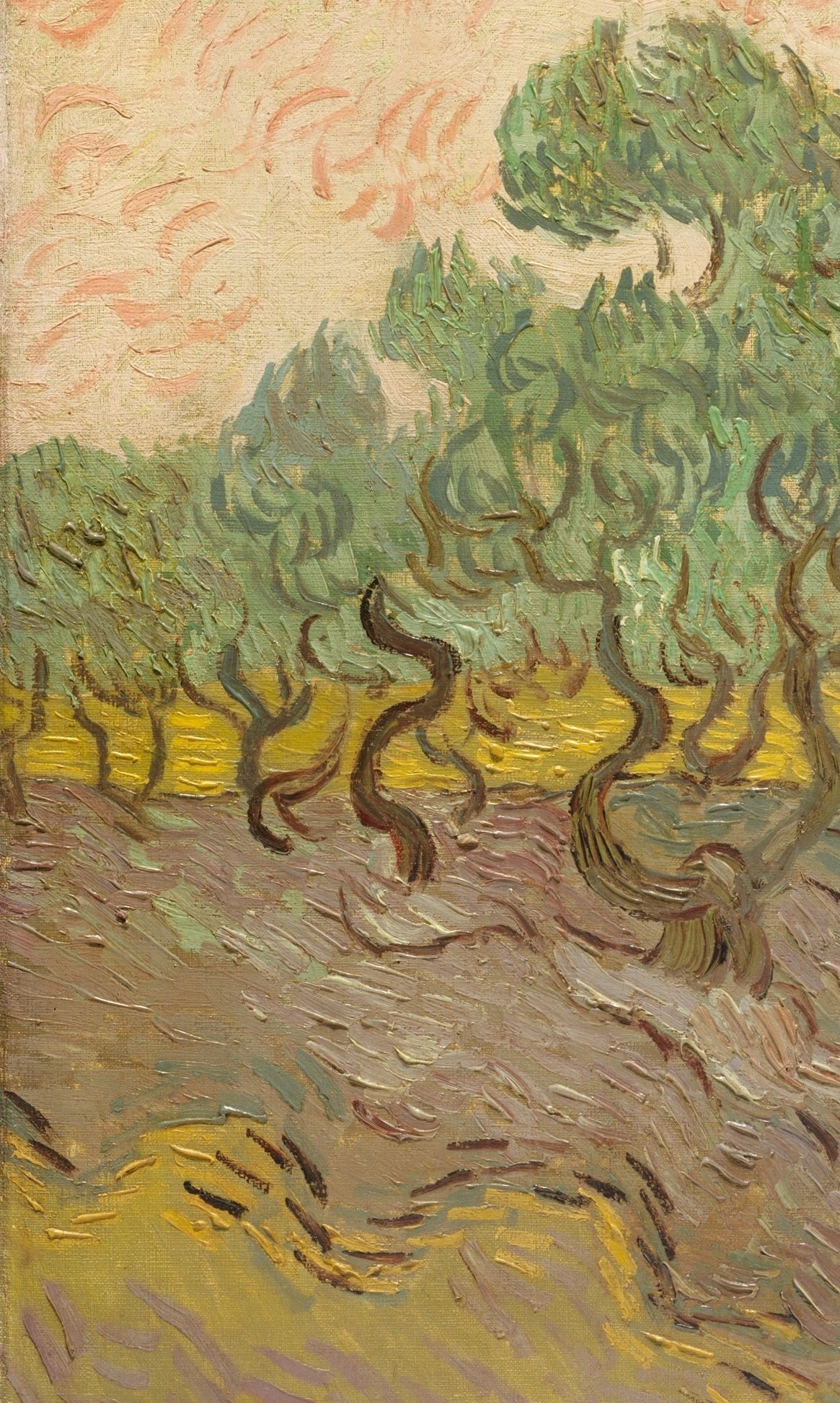
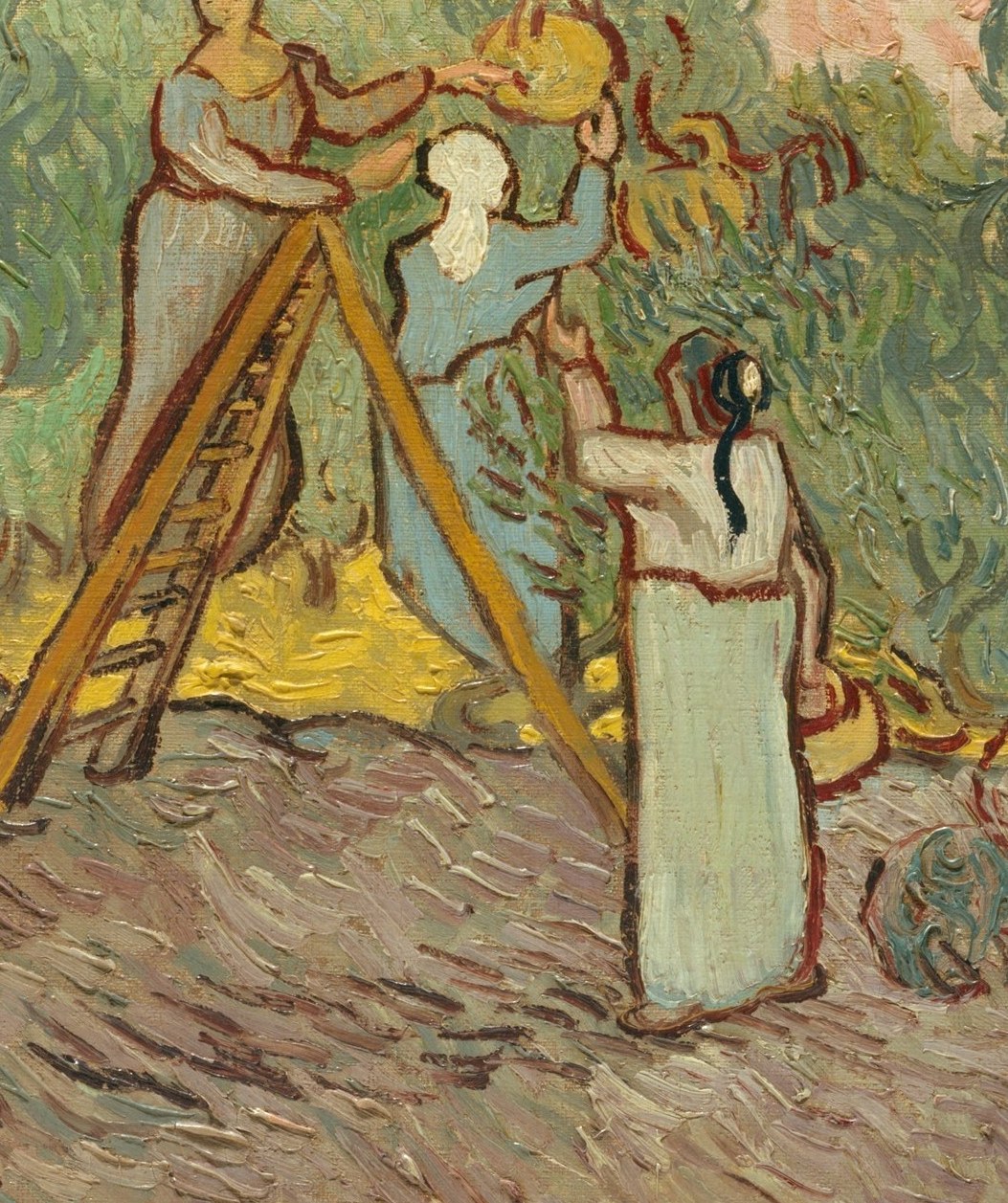
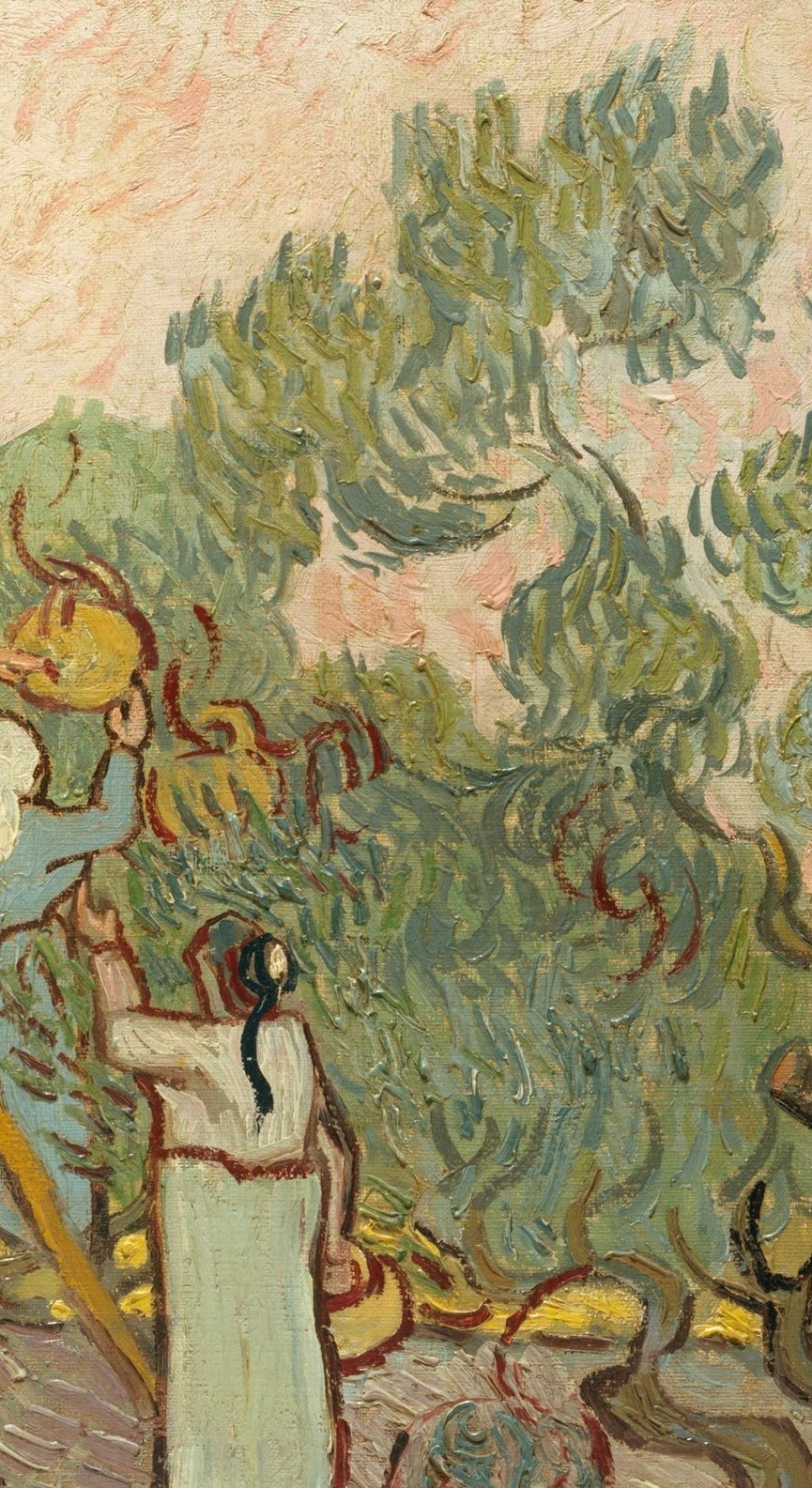
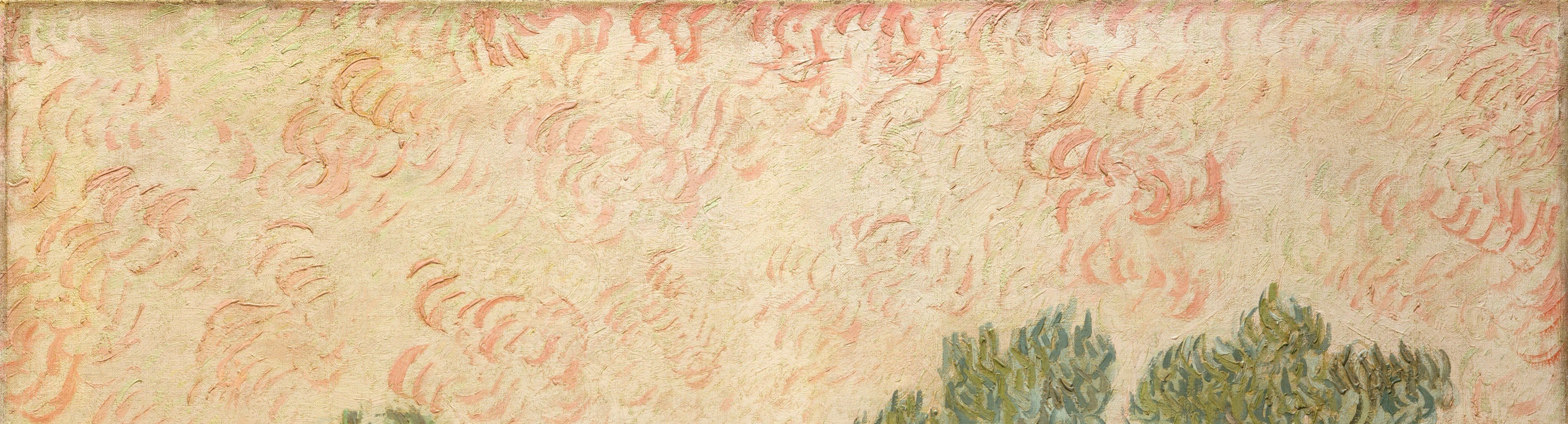
Look at the ladder. It is the only straight line in a painting built entirely from curved, writhing brushstrokes. The three women, one climbing, one standing, one crouched, form a complete cycle of harvest labor. But the olive trees themselves are the main characters: gnarled, contorted, painted with the same loaded, turning strokes as the sky. Van Gogh wrote that he felt the olives were alive, like people, and he painted them with a sympathy that borders on self-portraiture.
His window faced the olive grove, and he painted it fifteen times that autumn. "Women Picking Olives" is one of three versions he made of this particular composition. He sent it to his brother Theo in Paris, along with a letter describing the "violet and yellow" harmony he saw. The painting now lives at the Metropolitan Museum of Art.
He saw the women working and saw himself in the trees. The painting is quiet not because the world was quiet for him in 1889, but because he chose to make something orderly and tender inside it.
Details

Transcript
December 1889. Van Gogh has been in an asylum for seven months. He paints the grove outside his window, but not as a still life. Three women harvest olives. The work is calm, absorbed, unbroken. This ladder is the only straight line in the entire painting. Everything else, the trees, the sky, even the ground, is in motion. He painted the olive trees as companions. Survivors, like him.