Landscape with Goatherd by John Singer Sargent
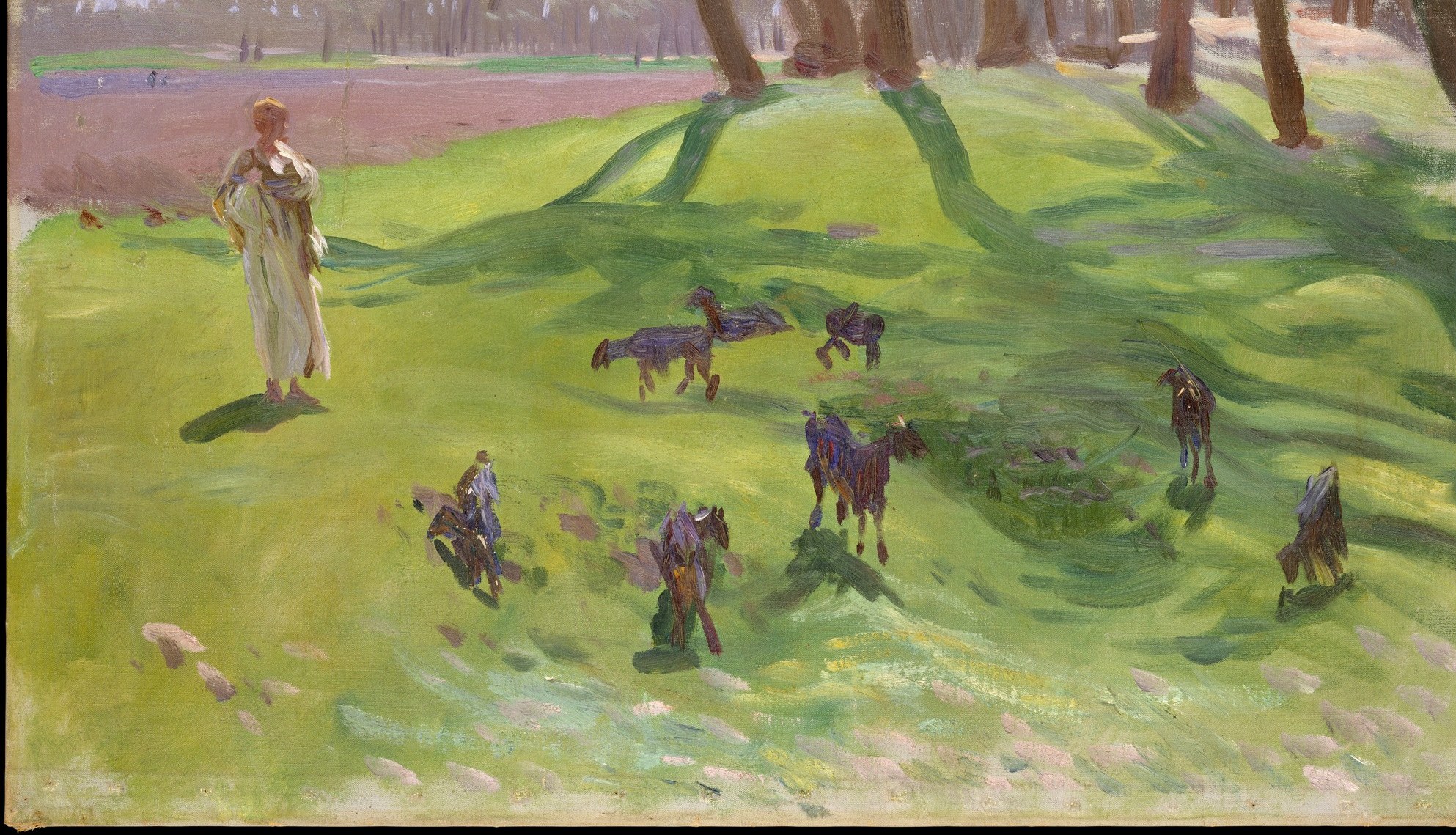
This is John Singer Sargent's 'Landscape with Goatherd,' painted in 1890. Sargent is famous for his portraits of aristocrats, but in the early 1890s he fled the pressure of his London studio and traveled to Egypt. The result is a series of quiet, sun-drenched landscapes that almost no one knows.
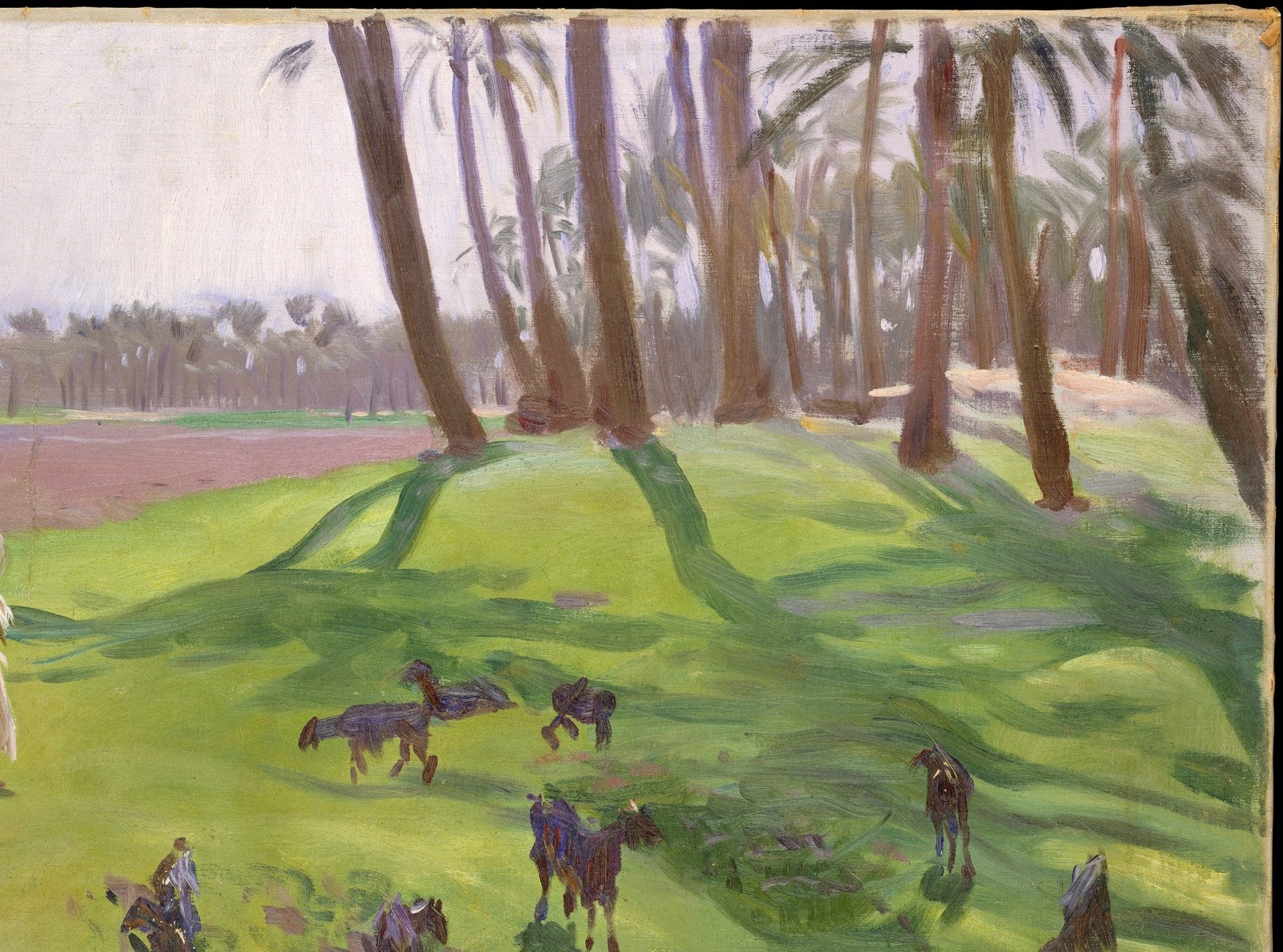
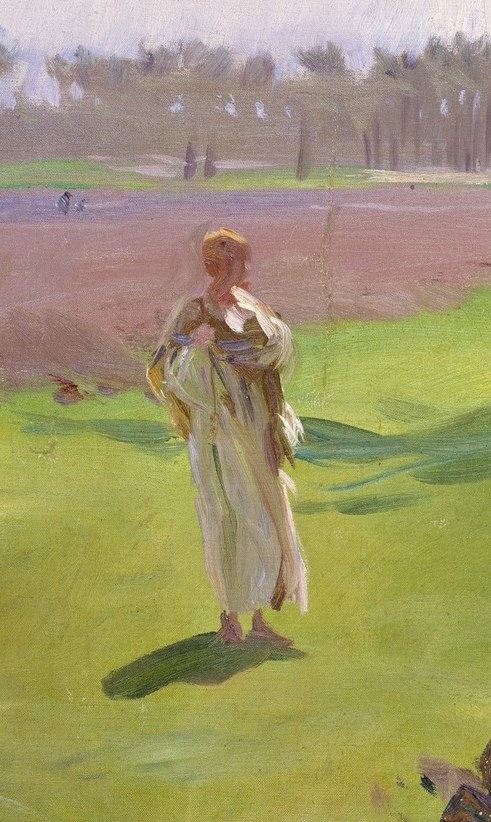
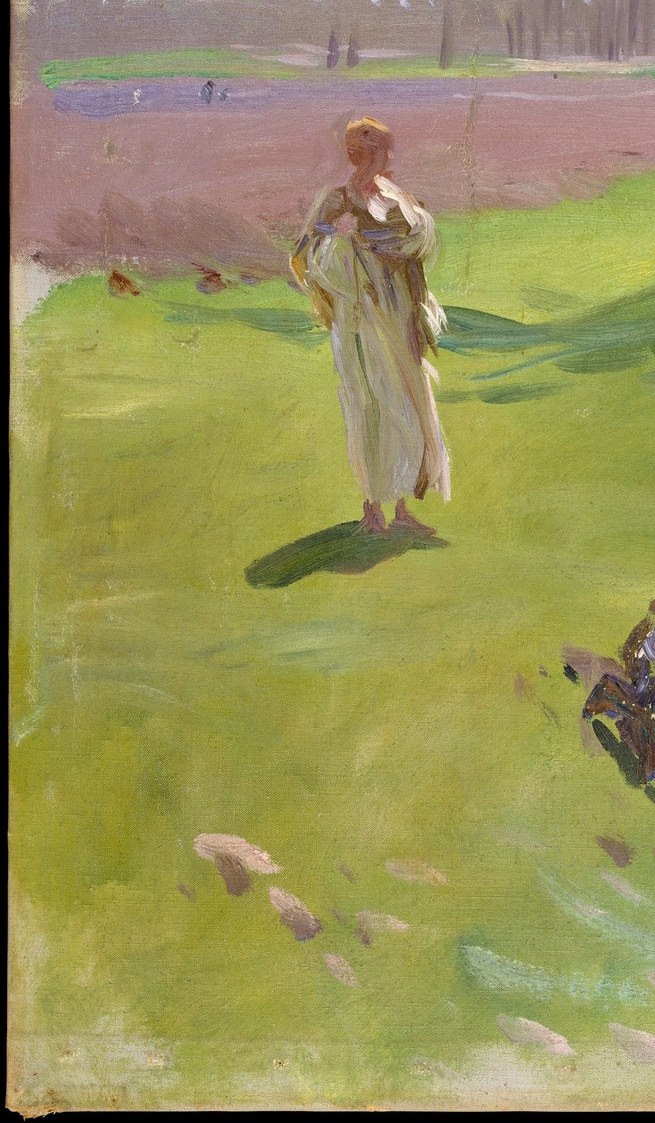
The first thing to see is the light. Those long blue-green stripes raking across the grass are not a trick of the eye; they are the shadows of date palms, rendered as abstract bands of color. Look at the goatherd's own shadow stretching away from her feet. Sargent has made the human figure part of the light pattern, not separate from it.
Sargent was a painter of extraordinary technical facility who could define a face with a single loaded brushstroke. Here he turns that skill on the landscape itself. The grass in the foreground is thick, dragged impasto. The palm fronds dissolve into loose gestural marks against a pale, bleached sky that reads as genuine midday heat. Through the trees, violet rectangles signal the irrigated fields of the Nile delta.
The painting is a working scene. There are small figures among the goats at the lower right, easy to miss. The goatherd stands watchful but still. This is a real place, a real afternoon, recorded by an American who could paint anything he wanted and chose this.
Details

Transcript
Look past the figure. The light is the real subject. Egypt, 1890. John Singer Sargent, the great portraitist, has fled his London studio. He travels to the Nile delta and paints the working afternoon. Those violet strips are irrigated fields. And these long blue shadows? That's the heat you can see. Sargent drags thick paint across the canvas so the grass itself feels alive. A fleeting afternoon on a working farm, fixed in oil forever.