Spring Woods by Henry Ward Ranger
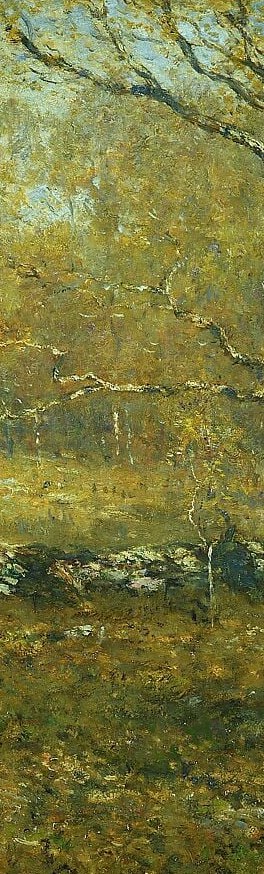
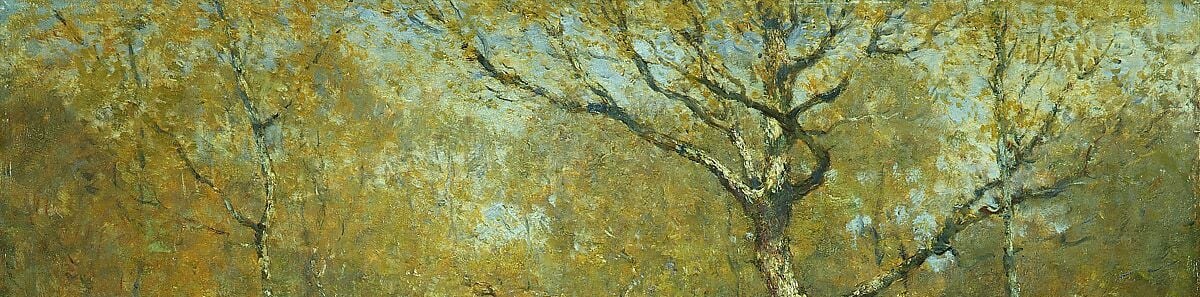
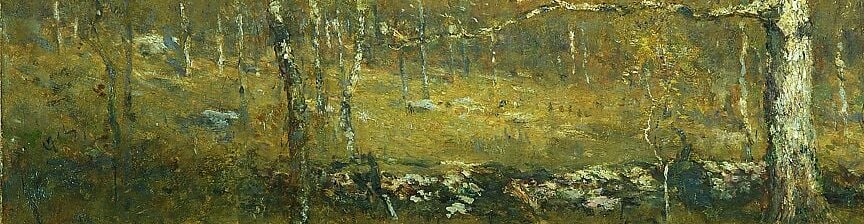
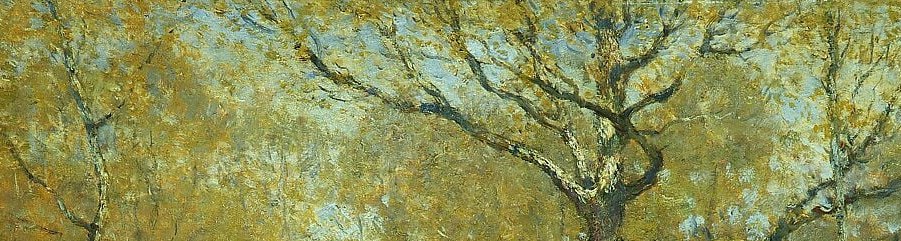
Spring Woods, by Henry Ward Ranger, dates to around 1898 and hangs as a quiet masterclass in looking closely. Painted in Connecticut at the height of the Tonalist movement, it seems at first glance to be a pure celebration of untouched American forest, all warm golds and silvery bark.
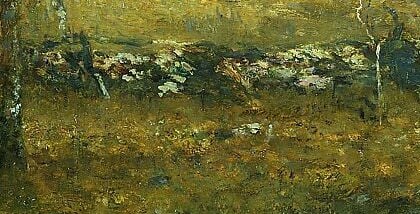
But look into the mid-ground, just above the mossy floor. A low fieldstone wall crosses the entire painting, nearly swallowed by shadow and leaf-litter. It is the quietest possible detail, easy to scroll past, but it changes everything.
That wall is a classic New England fieldstone boundary. It tells you a farmer cleared this land, piled the glacial stones into walls, and worked the soil. By Ranger's time, the farm had failed and the forest had returned, a cycle of human effort and natural reclamation.
Ranger was the leader of the Old Lyme Art Colony, the place where American Impressionism found its footing. But here, he is still a Tonalist, building a world from atmosphere and a single, patient observation. Next time you stand in an eastern wood, check the ground for stones laid in a line.
Details
Transcript
It reads as deep, untouched forest. Henry Ward Ranger built the Old Lyme Art Colony. He painted this around 1898, in Connecticut. Look at the center of the mid-ground. A fieldstone wall crosses the entire painting. A wall means a farmer cleared this field. What looks like virgin wilderness is a farm returning to woods.