Catherine Howard, Lady d'Aubigny by Dyck, Anthony van, Sir
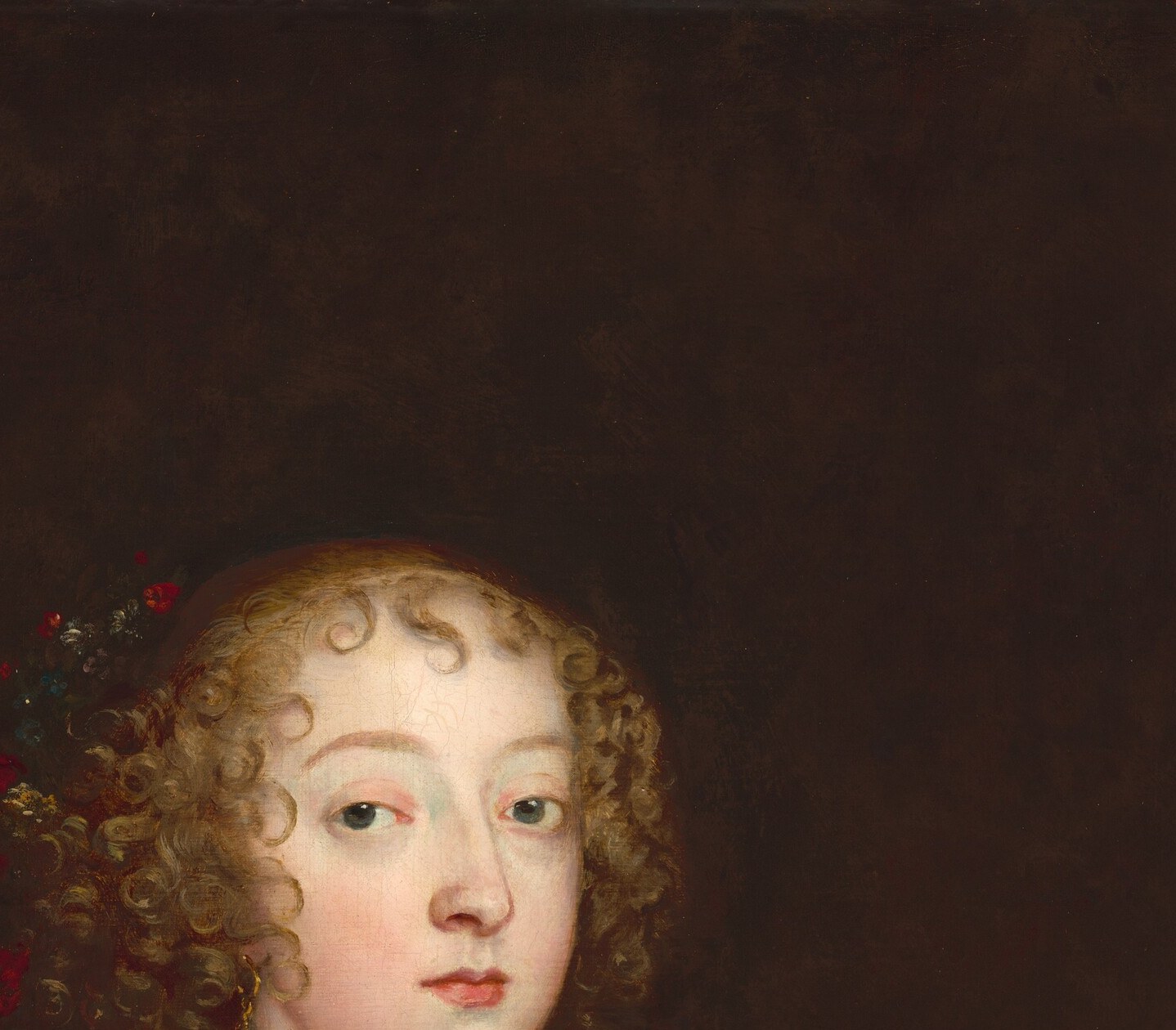
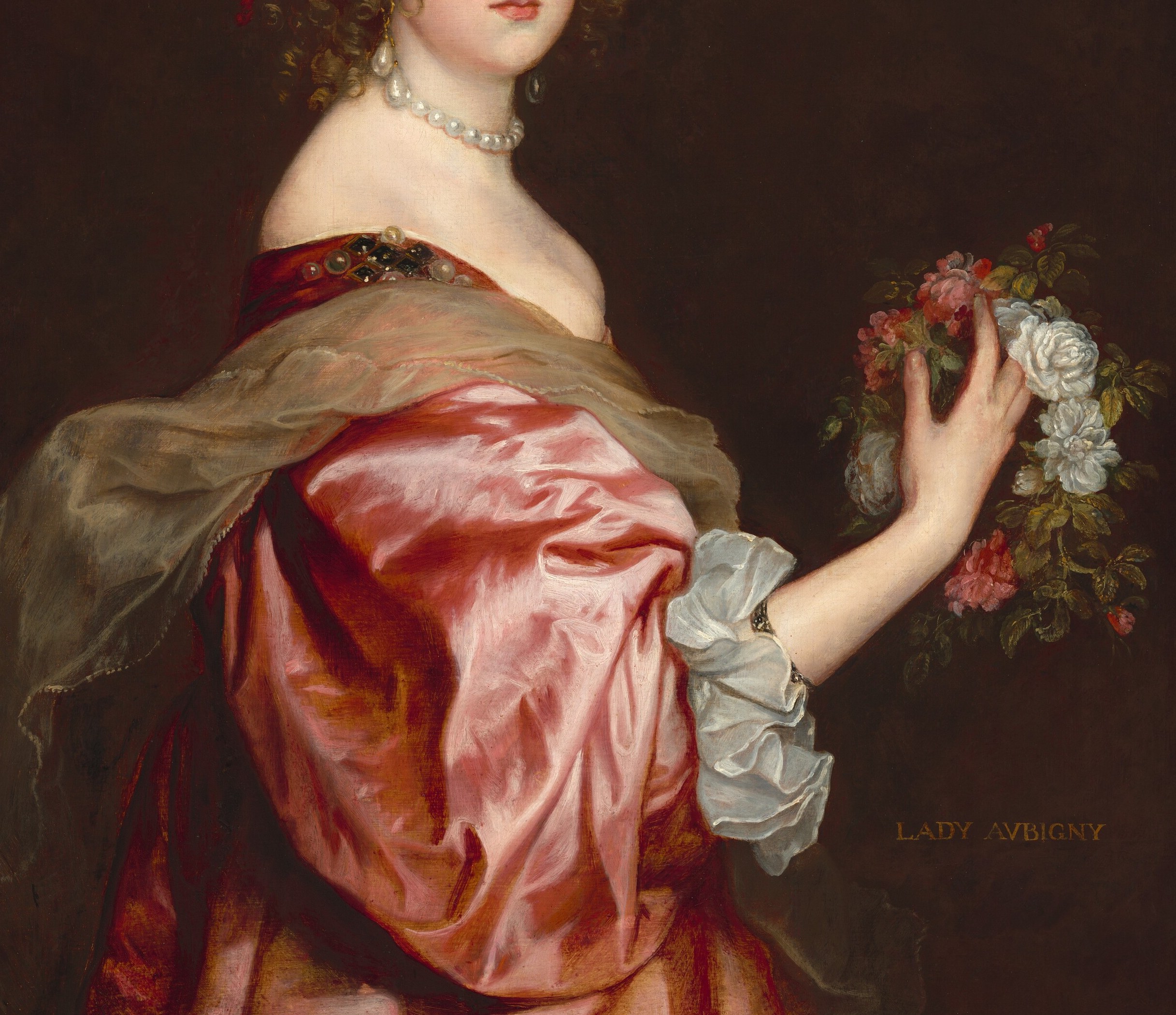
Catherine Howard was around seventeen when Anthony van Dyck painted her, probably in 1638. She had recently married George Stuart, Lord d'Aubigny, the younger brother of the Duke of Lennox. The portrait hangs in a private collection but was long known through engravings.
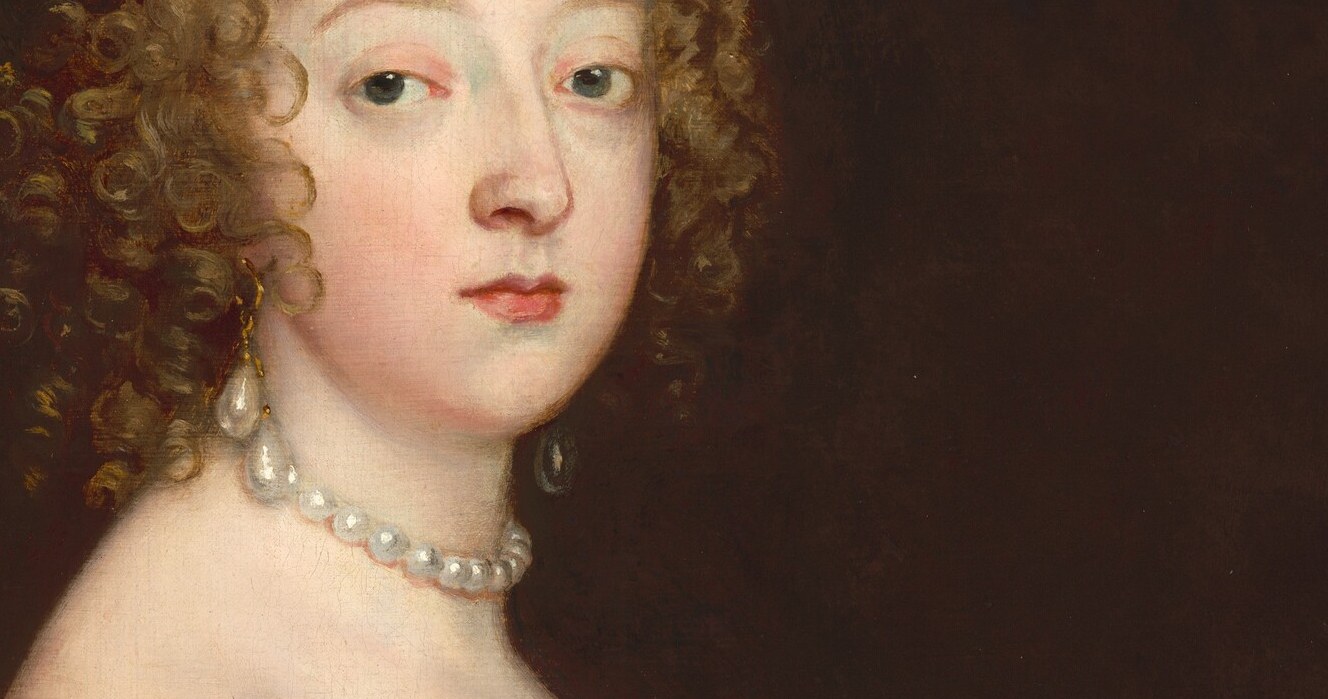
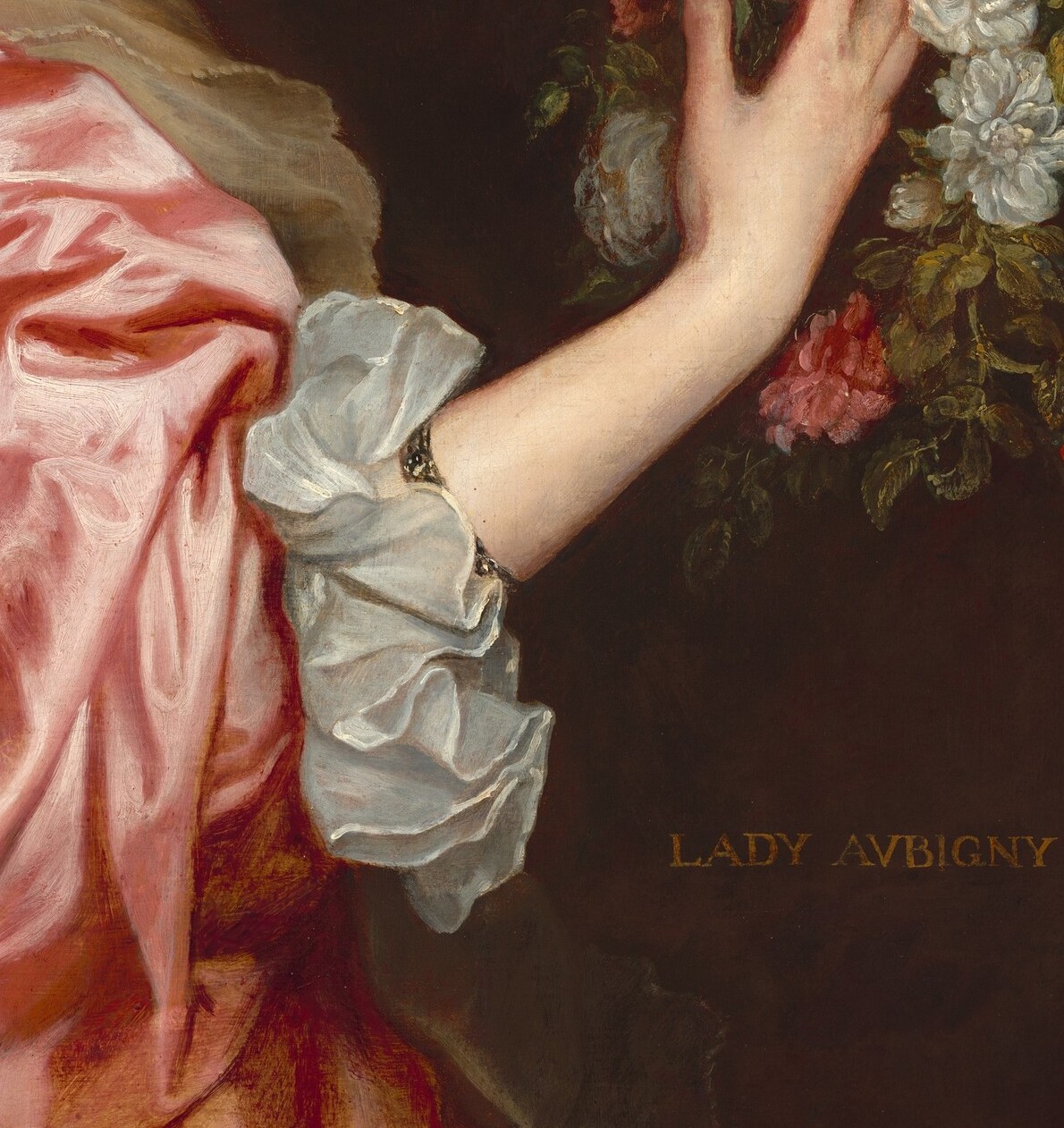
The first thing you notice is her gaze, direct, composed, startlingly present. She wears a brilliant red silk dress with an off-shoulder neckline and a double strand of pearls. Pearls in the 1630s cost more than diamonds, and van Dyck painted every one carefully. In her right hand she holds a garland of roses, which in the language of the time meant both love and the brevity of life.
Catherine knew she carried a hereditary condition, likely a form of porphyria, that would shorten her life. The roses in her hand and the flowers in her hair are not merely decorative. She was a young bride who understood she would not grow old. This portrait, with its unflinching eye contact, was her chance to shape the record.
She died in 1650, around thirty years old. The girl in the red dress is still looking back at you.
Details
Transcript
She was barely seventeen when she sat for this portrait. Newly married to the brother of a murdered duke. Look at how directly she meets your eye. The pearls cost more than the painting itself. In her hand she holds roses, which wilt. She knew she had a condition that would take her young. This portrait was her answer: I was here.