A Woman Holding a Pink by Rembrandt van Rijn
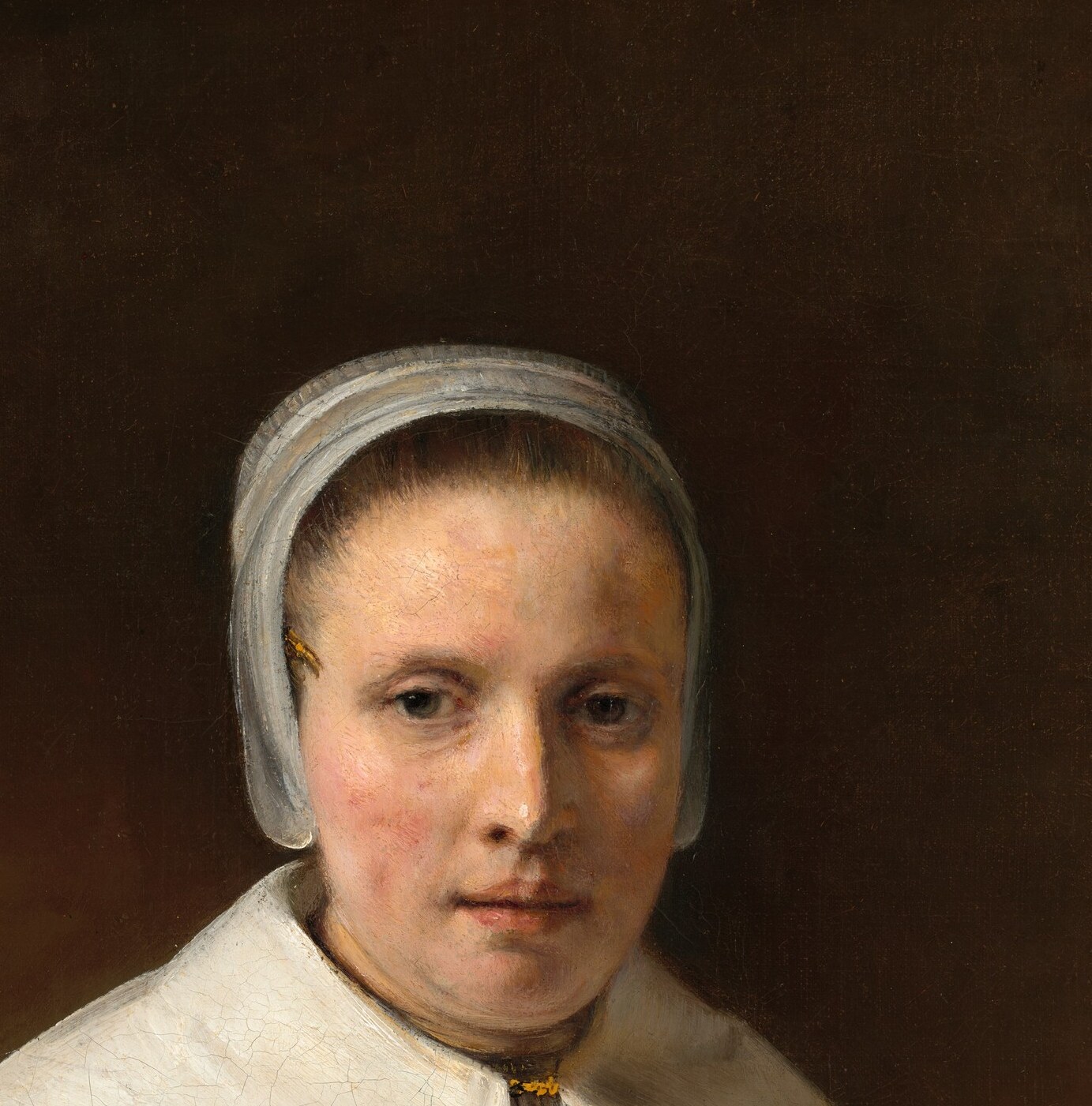
A Woman Holding a Pink is one of Rembrandt's great mid-career portraits, painted in 1656 during Amsterdam's Golden Age. It hangs today in the National Gallery of Art in Washington, D.C.
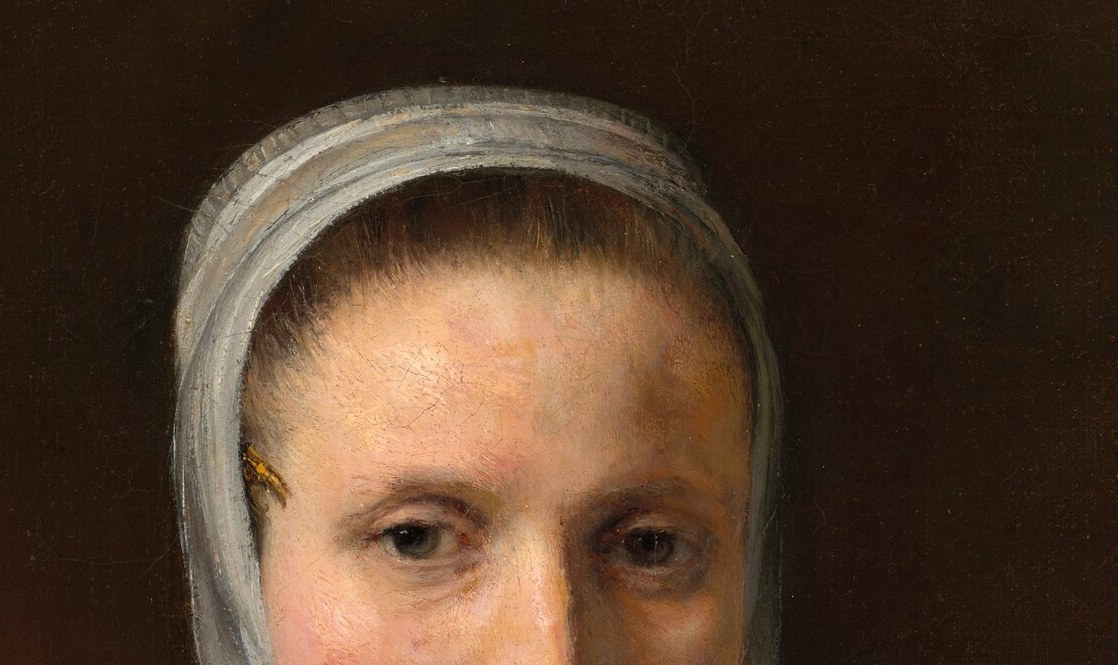
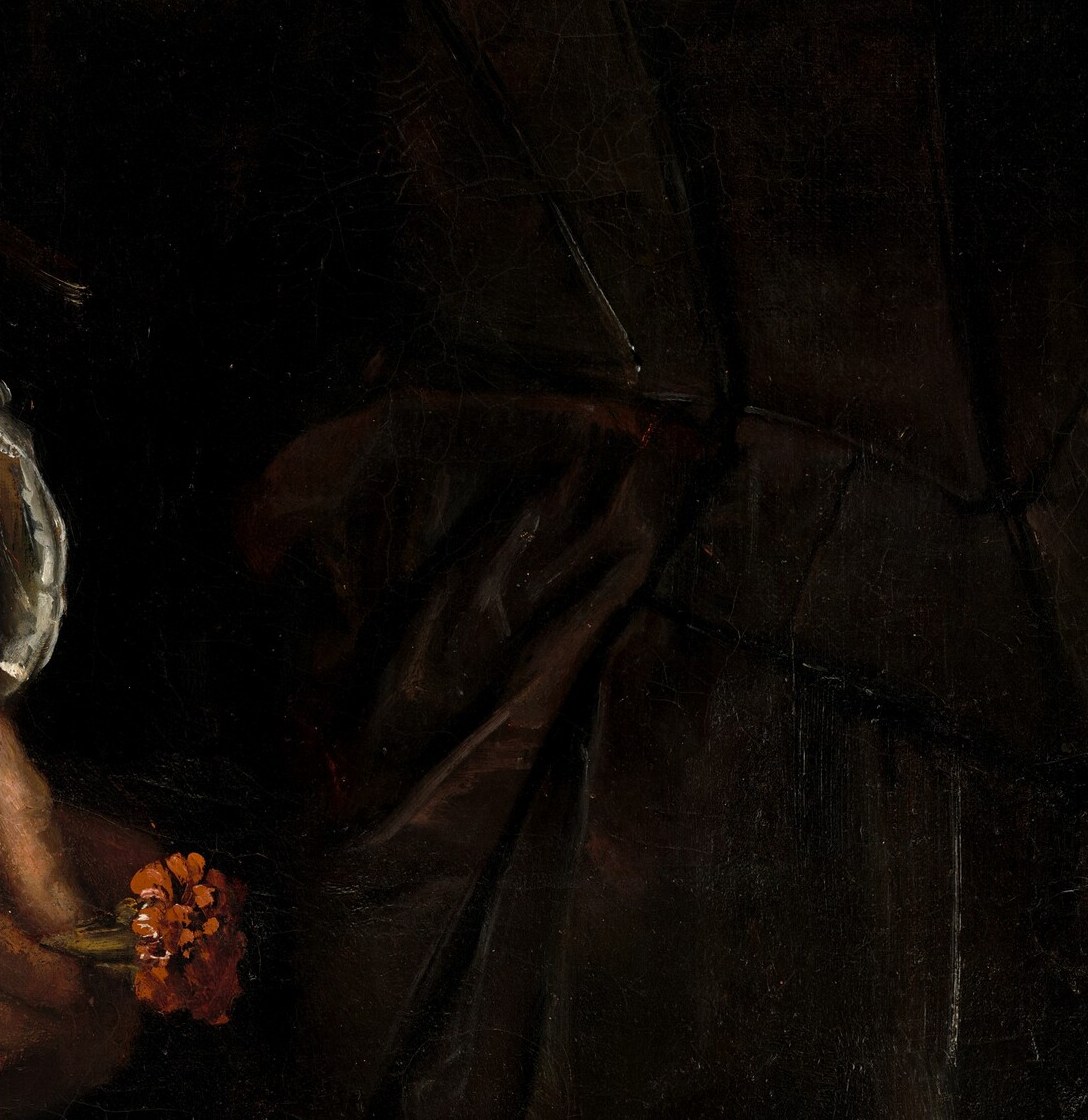
The directness is the first thing you notice. She holds your gaze without apology, her eyes brought to life with the smallest flick of white lead paint. But the real story sits in her right hand: a single pink carnation. It is not accidental, nor is it merely decorative. In the visual language of 17th-century Dutch portraiture, a pink carnation was a betrothal symbol, an object passed between sitters in paired marriage portraits.
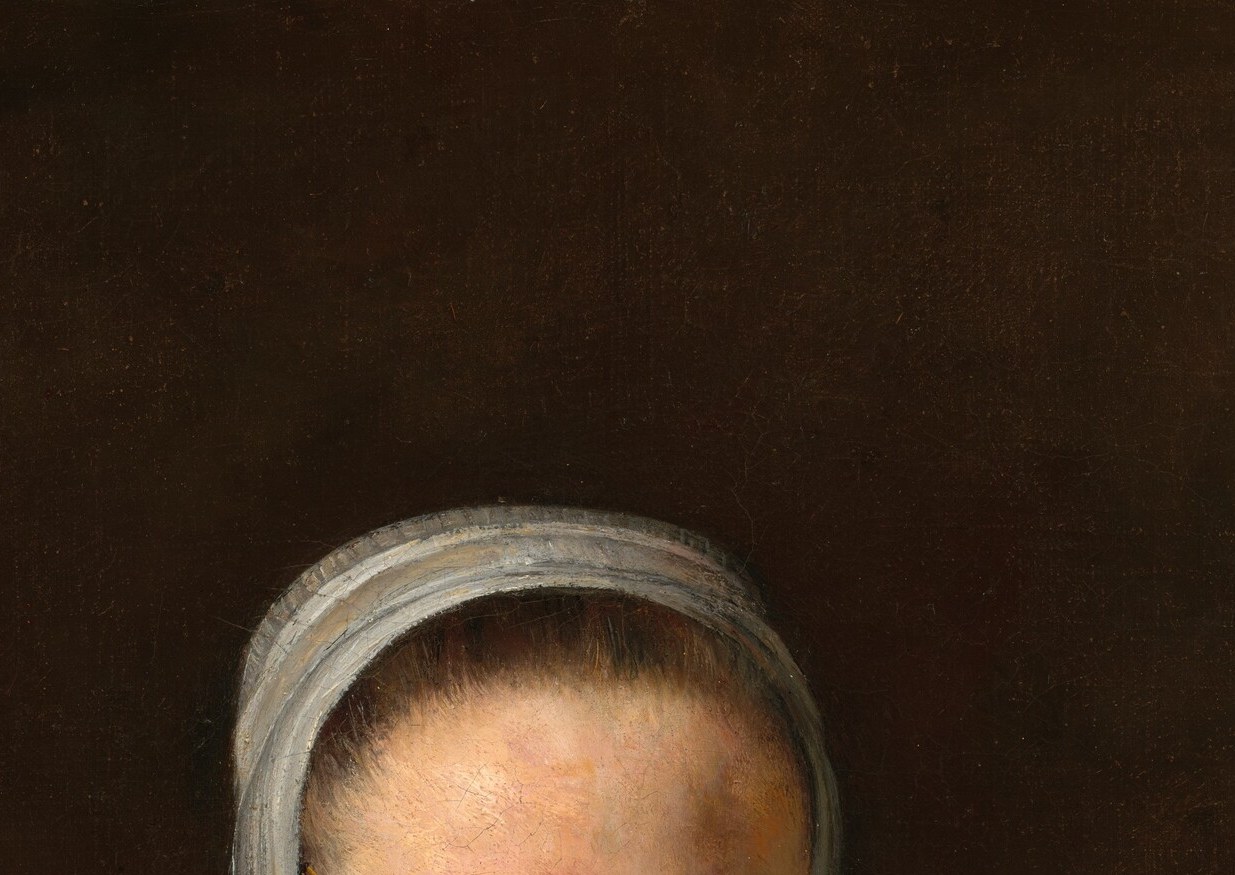
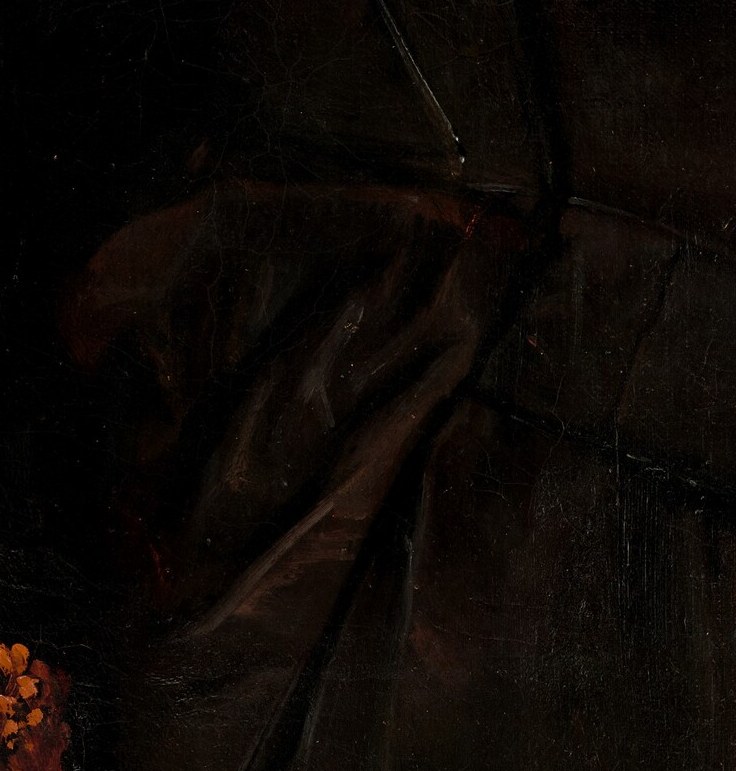
Rembrandt built this canvas around a structural triangle of white: the cap, the collar, and the wrist cuffs guide your eye through an otherwise deeply dark composition. The paint handling is most tactile on her knuckles, where thick impasto strokes model the hand that offers the flower. The low-contrast shadow behind her left shoulder is not empty air but a deliberate chiaroscuro strategy he used throughout his middle period to throw the illuminated face into full relief.
She was never meant to be seen alone. Somewhere, a pendant portrait of her husband almost certainly held the matching flower, though the pair has long since been separated if it survives at all. So the next time you see a small object in a portrait's hands, ask yourself: who is on the other side of this picture?
Details
Transcript
She meets your eyes and does not look away. Rembrandt painted her in 1656, Amsterdam. Her white linen marks her as a respectable woman of the Dutch Reformed Church. Now look at her right hand. A single pink carnation. This is the whole point of the painting. In Dutch pendant portraits, a carnation passed between sitters meant a marriage pledge. She was holding a flower for her unseen husband to complete the pair.