Figures and a Dog in a Landscape by Narcisse Virgilio Díaz
This is Narcisse Virgilio Díaz's "Figures and a Dog in a Landscape," painted in 1852 and now at The Metropolitan Museum of Art. It was made at the height of the Barbizon School, a movement of French painters who left Paris to work in the village of Barbizon and the forest of Fontainebleau. Their work was a direct response to the Industrial Revolution: an insistence that nature and rural life still held meaning that the factories could not provide.
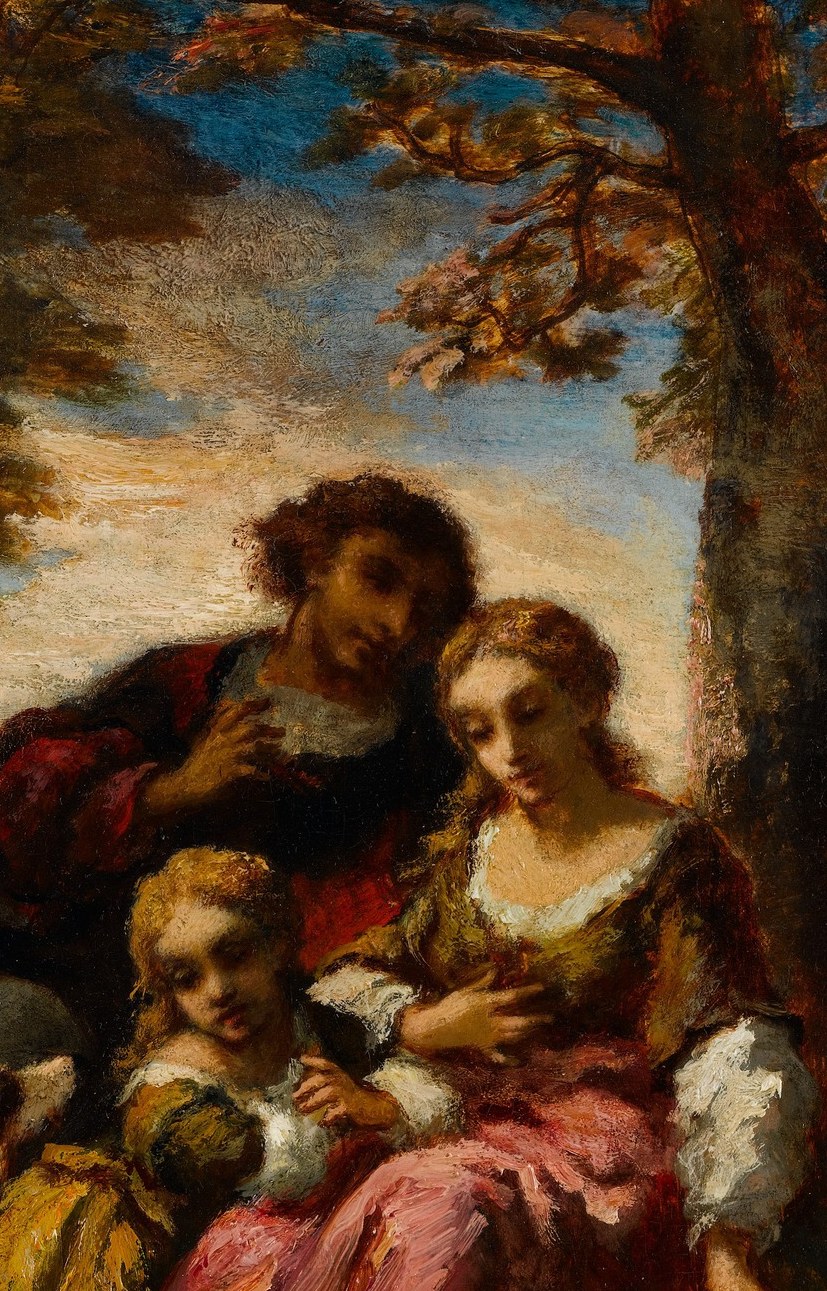
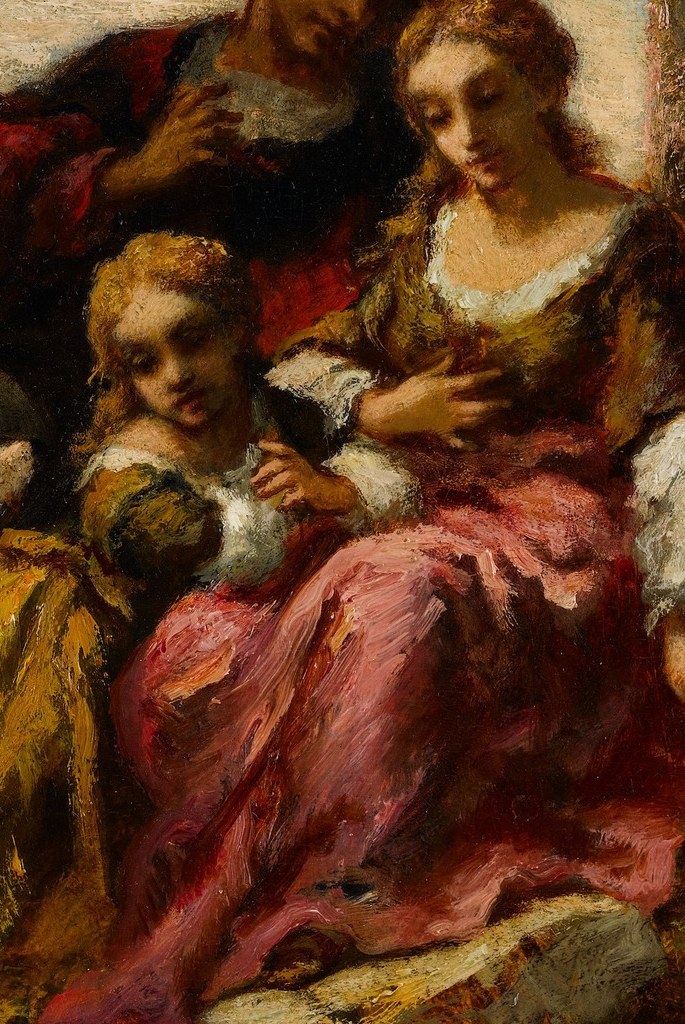
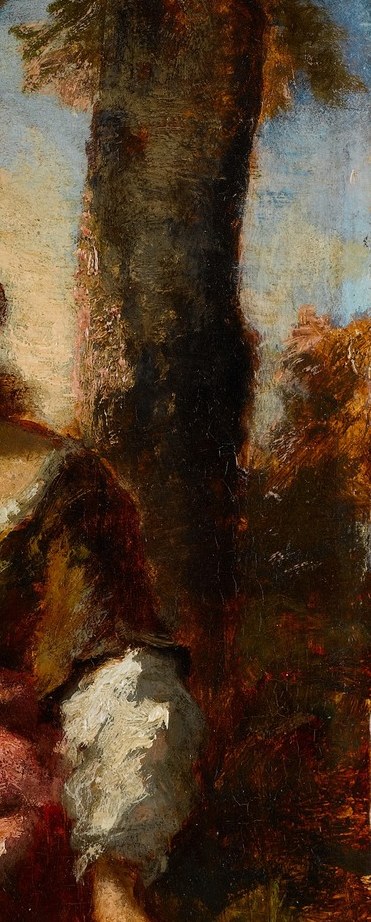
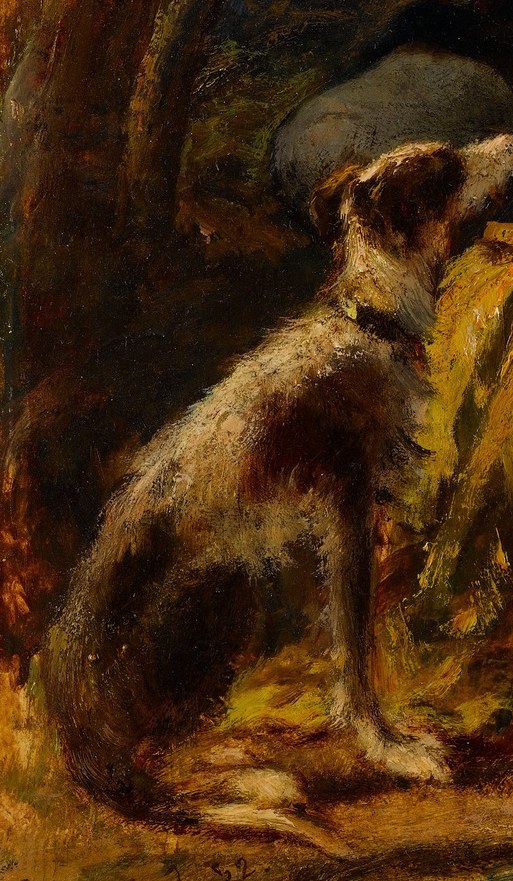
Look at the loose, visible brushwork in the woman's pink dress and the background foliage. Díaz handles paint with a sketch-like freedom that was radical for its time. The texture of the fabric is built from distinct strokes that catch light individually. And look at the dog at the group's feet, a small domestic detail that anchors the scene in everyday reality rather than mythology or aristocratic portraiture.
Díaz was born in 1807 in Bordeaux to Spanish parents. By the 1850s he was a central figure at Barbizon, and his painterly technique would prove enormously influential. The young Impressionists, particularly Renoir, studied how Díaz and his circle applied paint in visible, expressive strokes to capture light and atmosphere rather than hard-edged detail. This painting is a glimpse of Impressionism before it had a name.
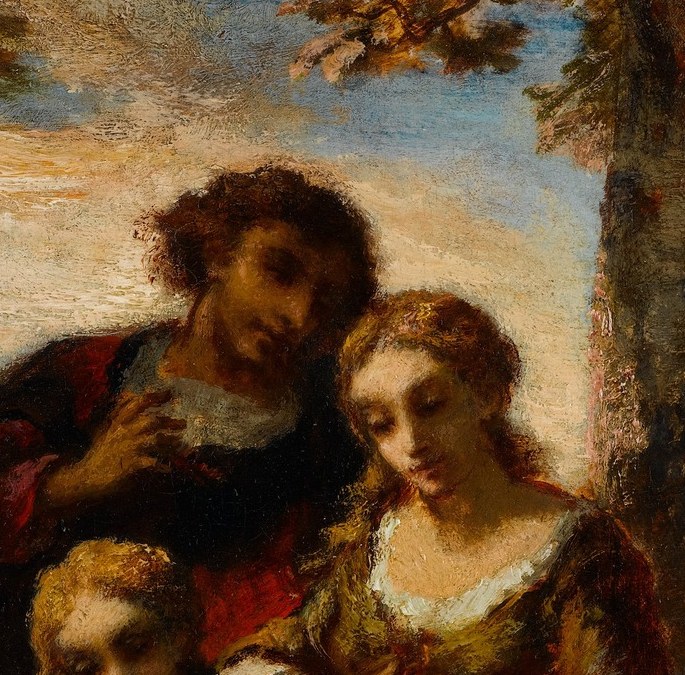
A family rests together in the autumn woods. The father's arm wraps around the mother, who holds their child. It is a quiet, radical image: ordinary people, treated with the seriousness and beauty that academic art reserved for gods and kings.
Details
Transcript
Paris, 1852. The city is tearing itself apart with new industry. But this painter shows us somewhere else entirely. Look at his red jacket. This is a working man, not a lord. He holds his family close. Leisure, not labor. Her dress is painted with fast, visible strokes. Díaz and his circle would teach Renoir how to paint like this. This family was an argument. That rural life was whole.