Neptune and the Winds by Giovanni Battista Tiepolo
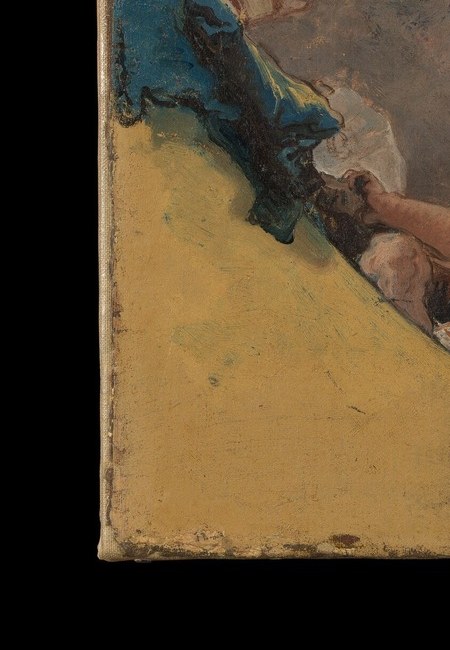
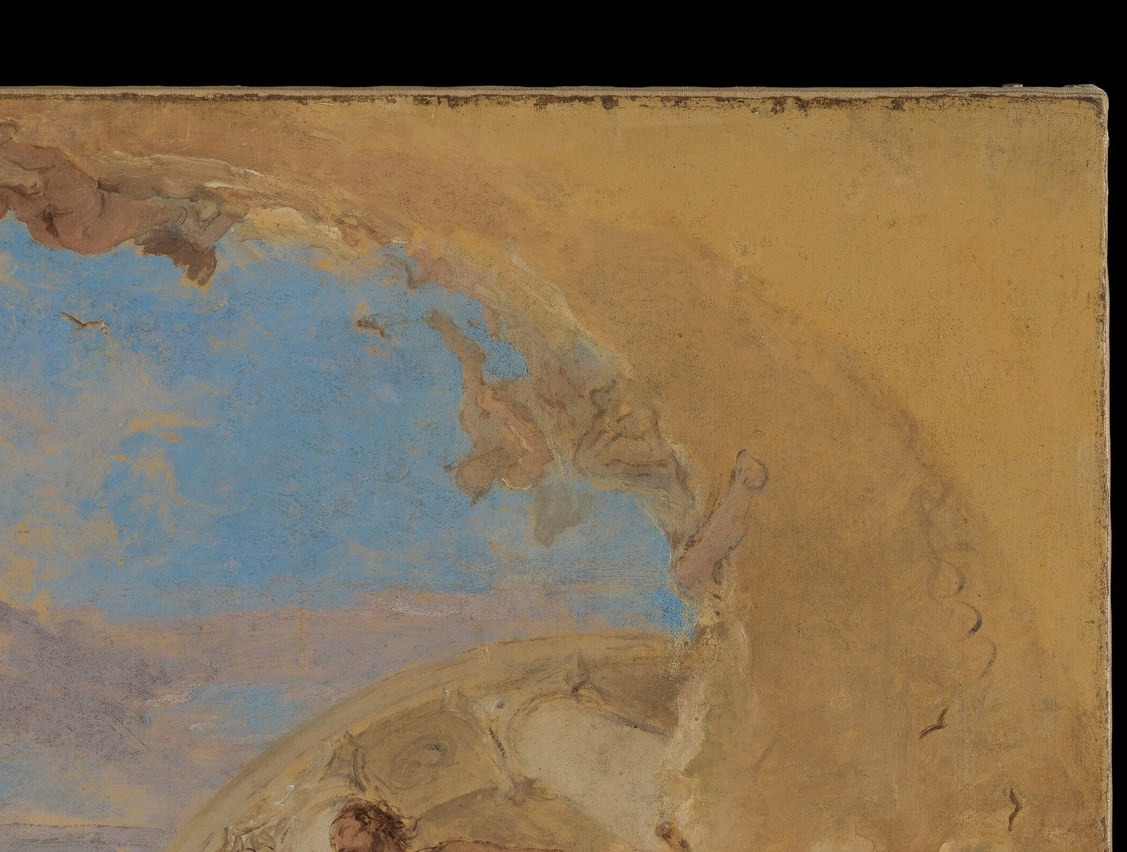
This is Neptune and the Winds, an oil sketch by Giovanni Battista Tiepolo, painted around 1743. It lives at The Metropolitan Museum of Art. What you are looking at is not a finished painting for a wall but an oil modello, a working model for a vast ceiling fresco in a Venetian palace. The bare canvas corners give it away: this was a proposal, an argument for a commission, made to be shown to a patron.
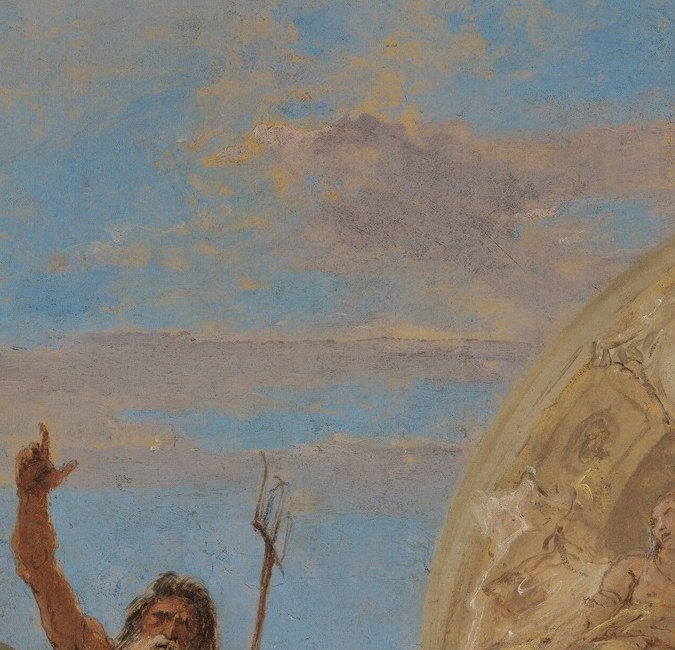
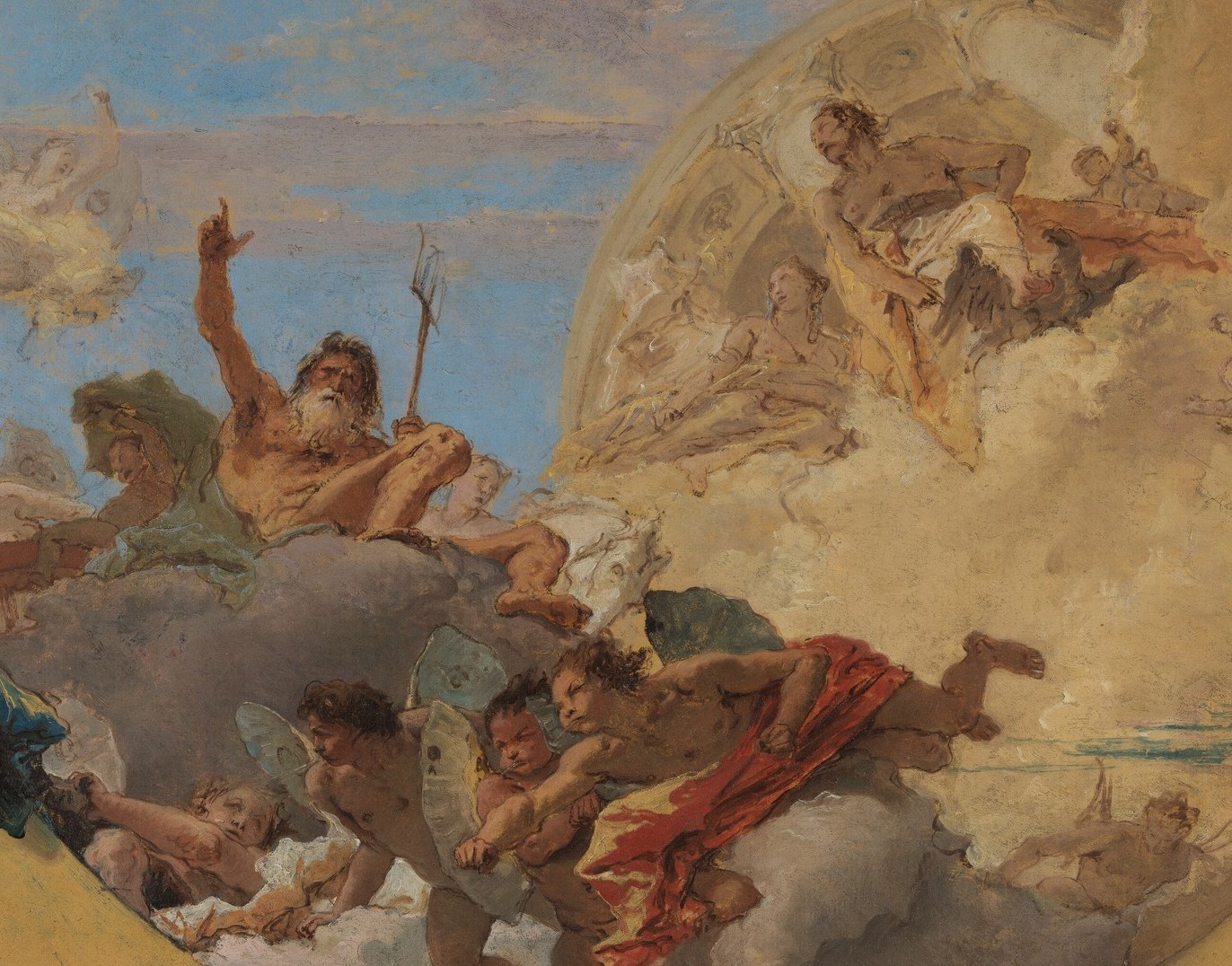
The camera is meant to find Neptune's face. Among the tumbling wind spirits, the theatrical drapery, and the luminous sky opening above, Tiepolo gives the sea god a startling stillness. His brow is raised, his eyes cast up with something heavier than fury. This is not Jupiter, enthroned and triumphant. Neptune is a patriarch in motion, a body weathered by age, holding the center of a storm he commands but seems to feel the weight of.
Tiepolo was the last great master of the Venetian Rococo, wildly prolific across Italy, Germany, and Spain. By 1743 he had perfected the art of illusionistic ceiling painting, the vertigo of looking up into heaven. This sketch is his first thought: quick, loaded brushstrokes telling a patron exactly where the eye would go. The brothers Jupiter, Neptune, and Pluto divided the universe. Tiepolo gives Neptune the sky itself, but makes him the lonely center.
When you see the finished ceiling, the story becomes official and orderly. Here, in the sketch, it is still intimate. An old god, a strip of raw canvas, a painter figuring out how to make paint feel like wind.
Details

Transcript
This is not a finished ceiling. It is a working sketch, an oil modello, for a palace in Venice. In 1743, Tiepolo painted the three brothers of Olympus. But this sketch belongs to one of them. Look at his face. Not a furious god. An old man, weighted by command. His brooding stillness anchors the entire storm.