Pawneepict Chief, Two Daughters, and a Warrior by Catlin, George
George Catlin, a lawyer-turned-artist, dedicated his career to documenting Native American life. This painting, "Pawneepict Chief, Two Daughters, and a Warrior," created in 1865, is a testament to his extensive travels and observations in the American West during the 1830s and later.
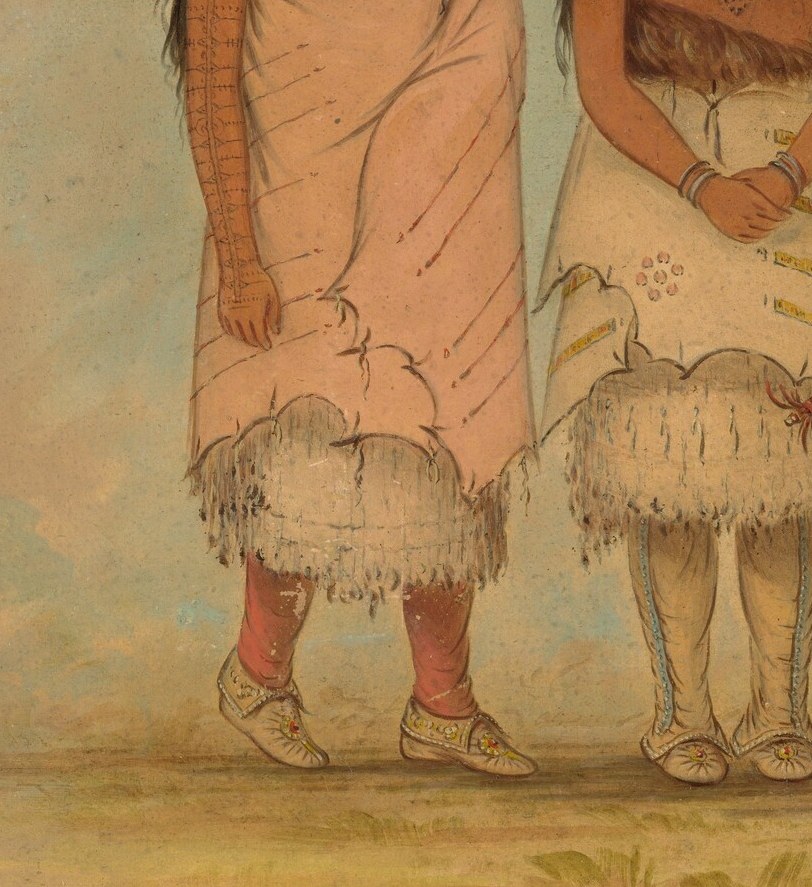
Notice the dignified presentation of the figures, their poised stances, and calm expressions. The women's fringed dresses and beaded necklaces, alongside the men's feathered headdresses and patterned blankets, showcase the rich cultural practices and craftsmanship Catlin sought to record.
Catlin used earthy pigments and fine brushwork to achieve a degree of realism in rendering textures, from fabric to fur. This work is an oil-on-card portrait within the American folk art tradition, serving as a visual record of Pawnee individuals he encountered.
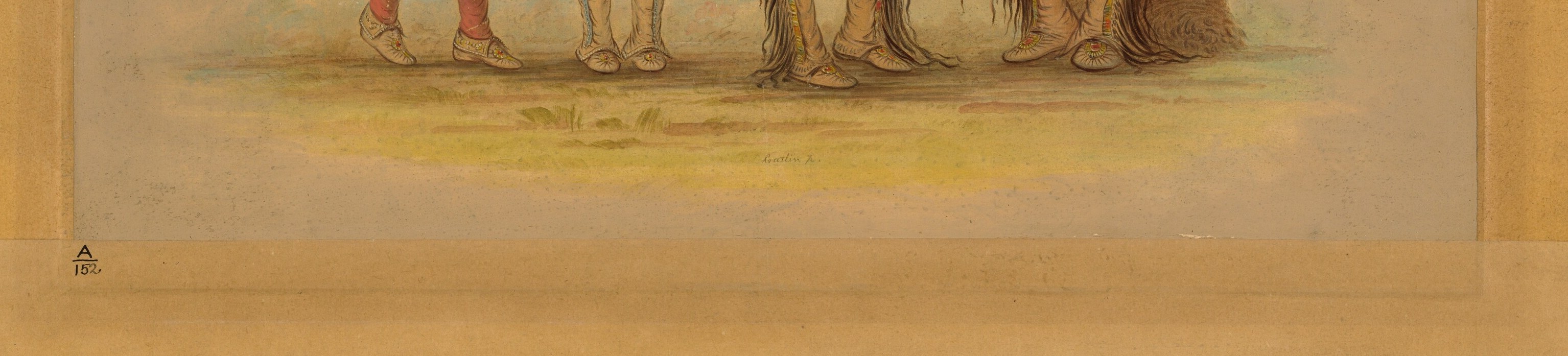
Did you spot his discreet signature and date? It's easy to miss, but it anchors the work in a specific time and place. What details in historical paintings do you find most revealing?
Details
Transcript
This painting records a Pawnee chief and his family. The artist, George Catlin, traveled the American West. He documented Native American life in the 1830s and beyond. Look closely at the delicate fringe on the women's dresses. And the intricate beadwork of their necklaces. Now, look for the artist's subtle mark. Hidden in the grass are his initials and the date, 1865.