A kitchen by Jan Olis
Jan Olis's "A Kitchen," painted in 1645 and held at the Rijksmuseum, is a Dutch Golden Age genre scene that goes beyond a simple depiction of domestic life. What appears to be a cook preparing food in a bustling kitchen holds subtle clues about contemporary social customs and deeper allegorical meanings.
Look closely at the figures and objects. The woman, seemingly a cook, may actually represent a hostess, engaging with a seated man. The distinctive passglass he holds was a common item in 17th-century Dutch society, used for communal toasts and symbolizing shared conviviality.
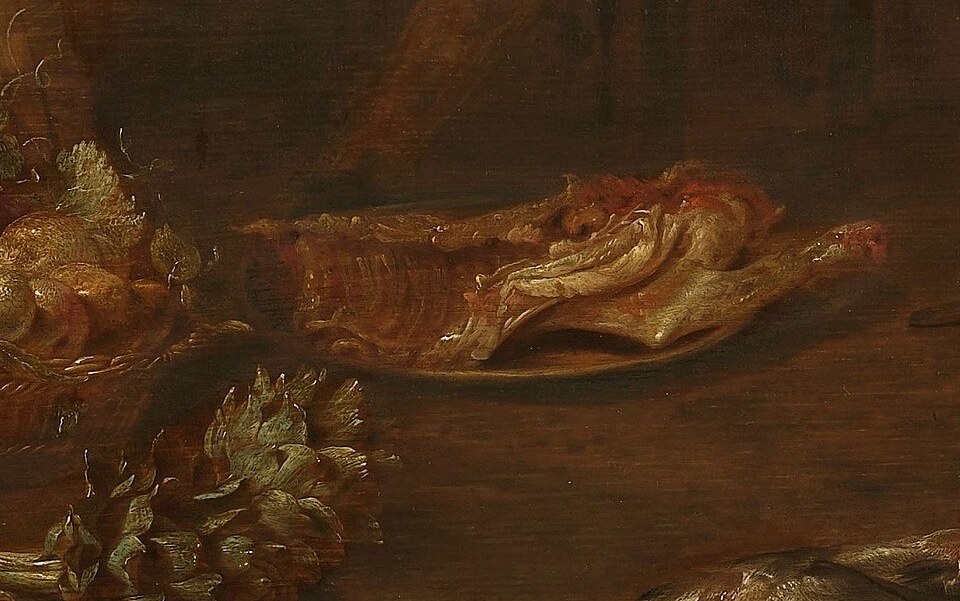
The plucked bird, prominently displayed, is a classic motif in vanitas painting. These symbols served as reminders of the transience of life, wealth, and earthly pleasures. Olis, who also worked as a wine seller and teacher, created works that reflected the nuanced interests of his time, blending everyday scenes with underlying messages.
This painting invites us to look beyond the surface, recognizing how artists embedded rich layers of meaning into seemingly ordinary moments.
Details
Transcript
This kitchen scene by Jan Olis is more than it seems. This isn't just a cook, she is a hostess in disguise. The passglass in his hand signaled social rituals. This ribbed glass was shared by many for toasts. And the plucked bird here carries another message. It is a symbol of fleeting life, known as vanitas. Even a kitchen could hold deeper meaning in 1645.