The Good Samaritan by David Teniers the Younger

This is "The Good Samaritan" by David Teniers the Younger, painted around 1651. It shows the biblical parable where a traveler is beaten, robbed, and left for dead. A priest and a Levite pass him by. The only person who stops is a Samaritan, a man from a community the injured traveler would have considered an enemy.

The painting lives in the Samaritan's hands. He pours oil and wine directly into the wound. These are the scriptural remedies from Luke 10, and Teniers isolates the act so nothing else competes for your attention. The traveler's torso is pale and slack; his eyes are closed. He cannot ask for help.

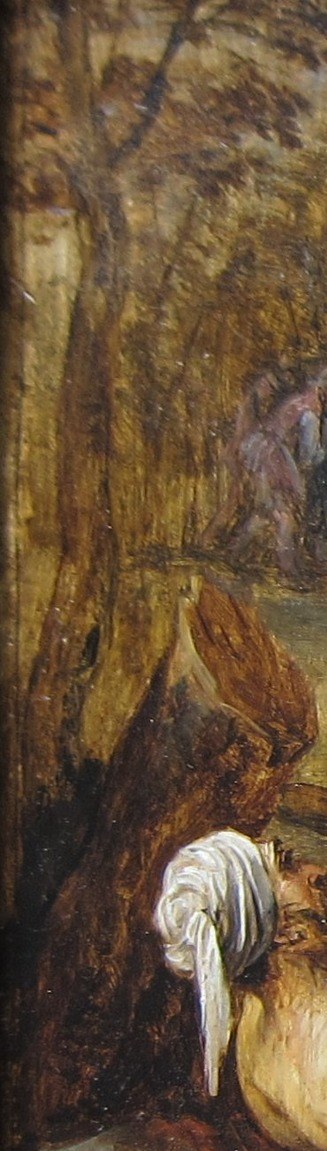
Look into the left distance. Two figures walk away on the road. Those are the priest and the Levite who passed on the other side. Their presence completes the moral architecture of the parable: the question is not who deserves help, but who is willing to give it.

That is what the furrow in the Samaritan's brow says. Not pity. Focus.

#arthistory #davidteniers #flemishbaroque

Details
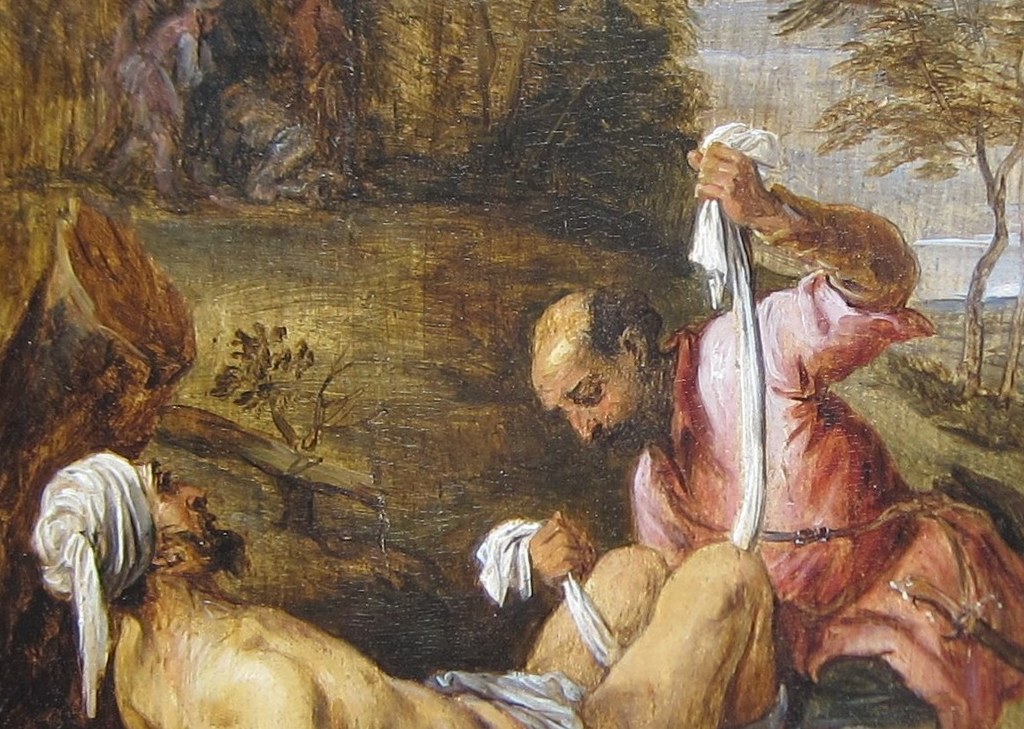
The semi-nudity signals vulnerability; the pale, slack body contrasts with the richly clothed Samaritan, visually encoding the power imbalance reversed by charity.
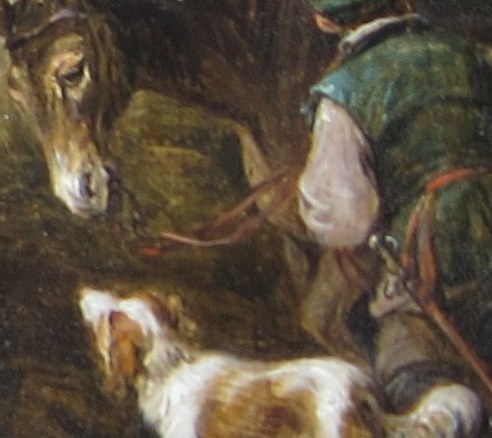
Teniers frequently inserted genre dogs as witnesses; here the animal's alert posture creates a third 'gaze' in the composition and anchors the scene in Flemish genre painting tradition.
The emotional core of the scene , his downward gaze and furrowed brow convey focused compassion rather than pity, the moral distinction the parable hinges on.
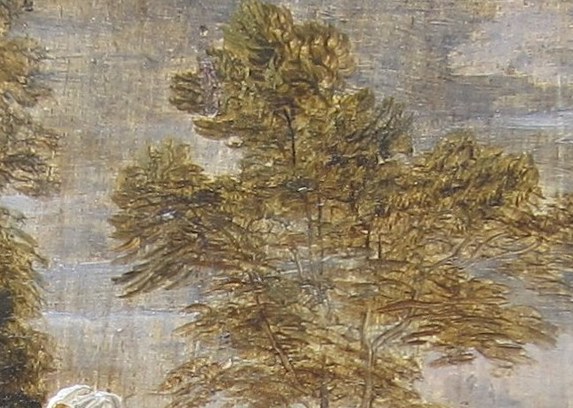
A Flemish compositional device used as a repoussoir to push the eye into the scene; the rough bark texture is one of the few passages where Teniers' brushwork might survive close cropping.
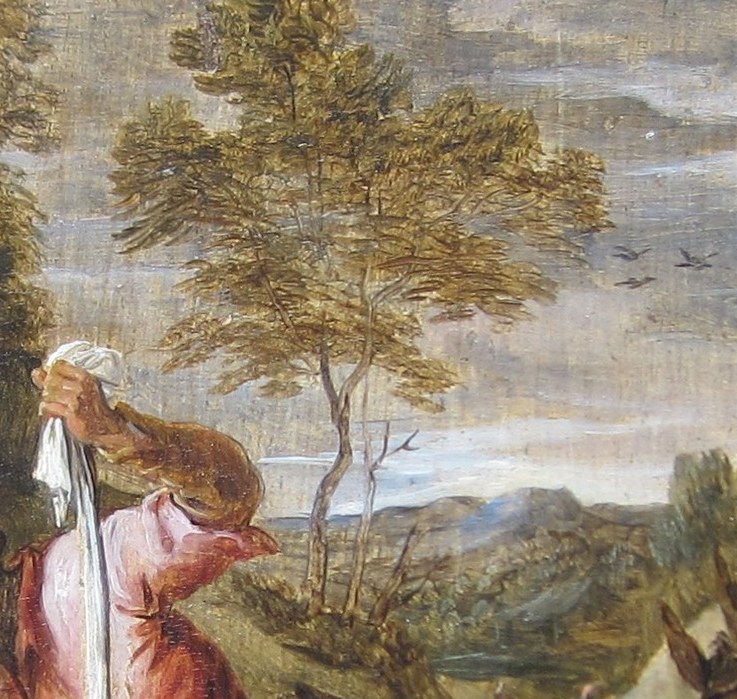
The richest color mass in the painting; red traditionally signals both royalty and sacrifice in Christian iconography, visually elevating the Samaritan's status despite his outsider identity.
Transcript

Two men, alone on a dangerous stretch of road. One is stripped, beaten, barely conscious. The other is the last person expected to stop. Look at his hands. He pours oil and wine directly into the wound. Two others saw this man and crossed to the other side. But a stranger from Samaria climbed down from his horse.