Edmond Cavé (1794–1852) by Jean Auguste Dominique Ingres
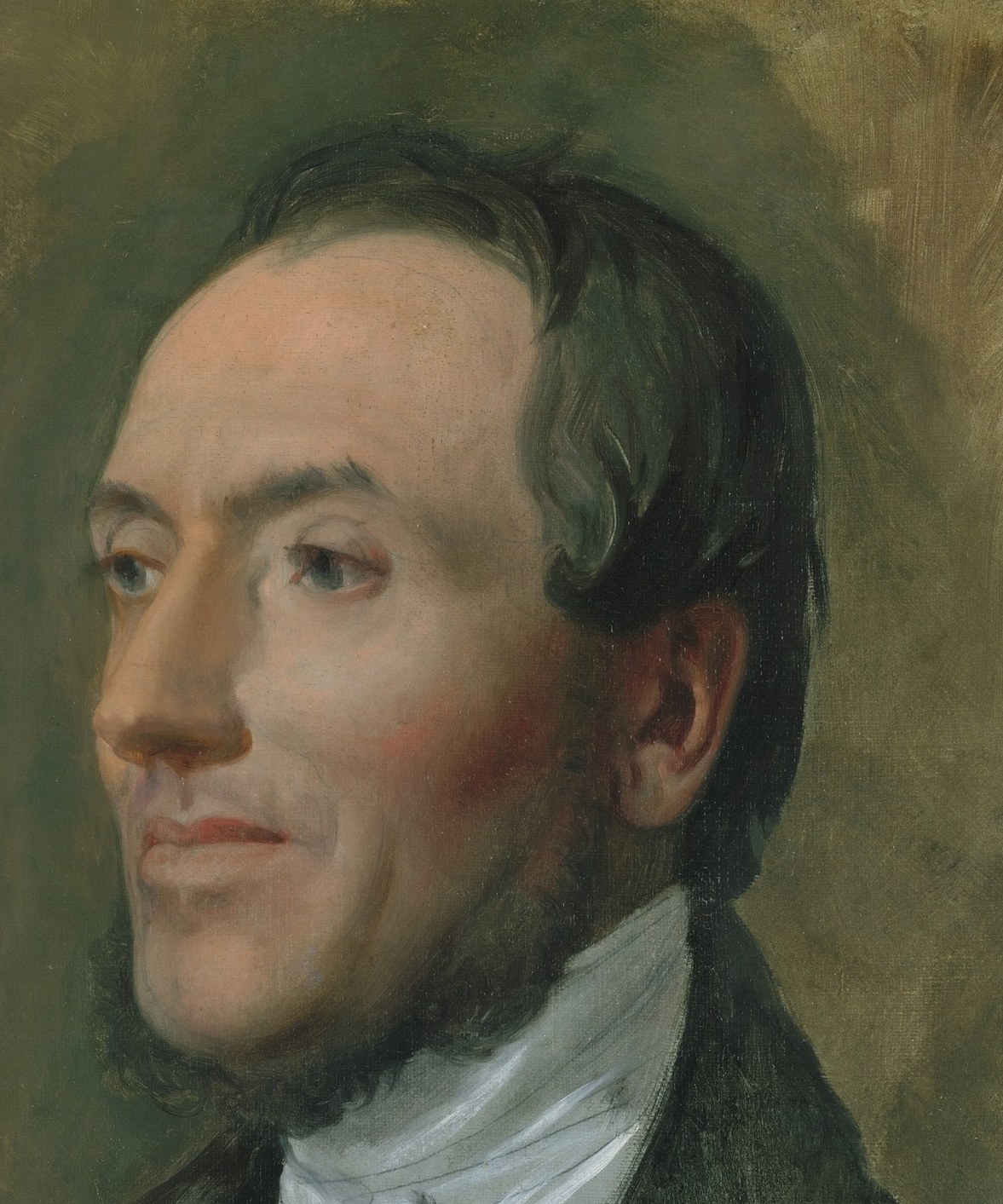
Jean-Auguste-Dominique Ingres painted Edmond Cavé in 1844, and the result feels less like a conventional oil portrait and more like a drawing amplified by paint. Cavé was a French statesman and arts administrator, a bureaucrat of taste, and Ingres gave him exactly the kind of severe, linear dignity the role demanded.
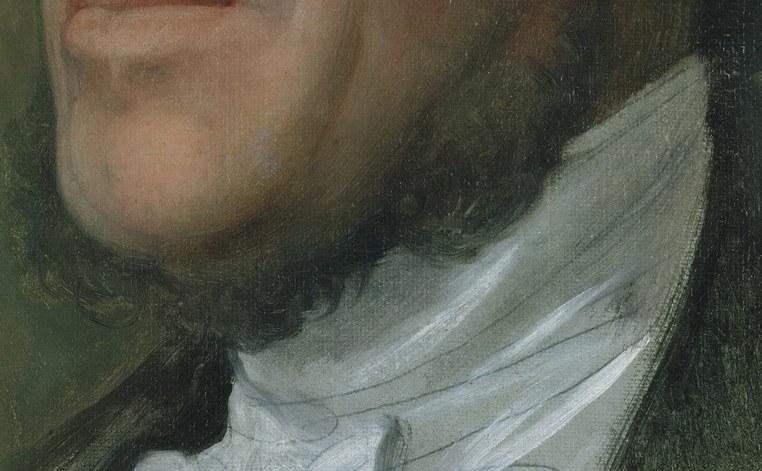
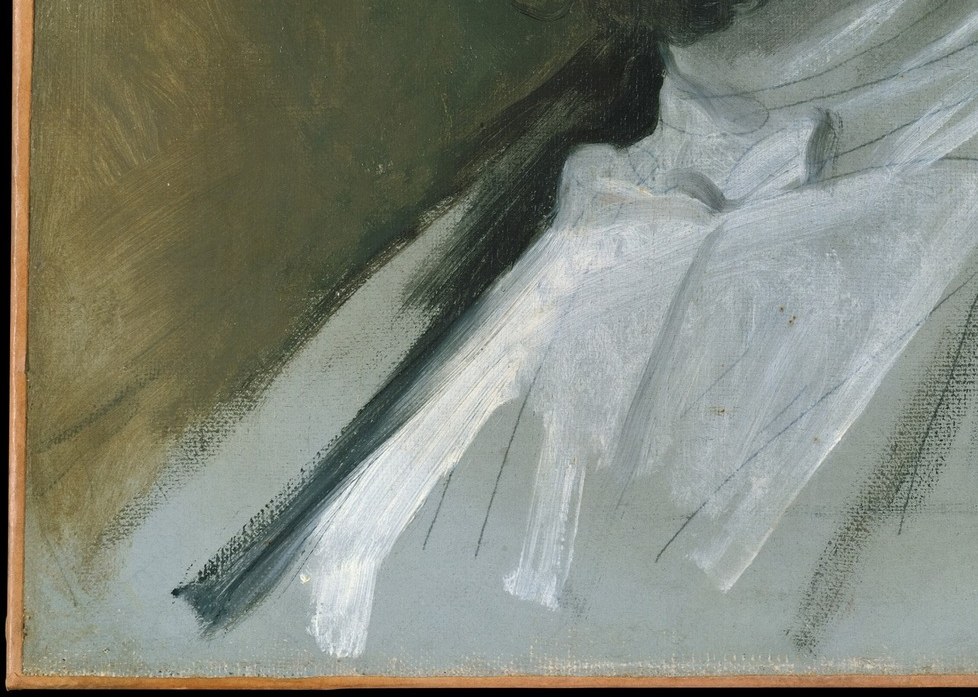
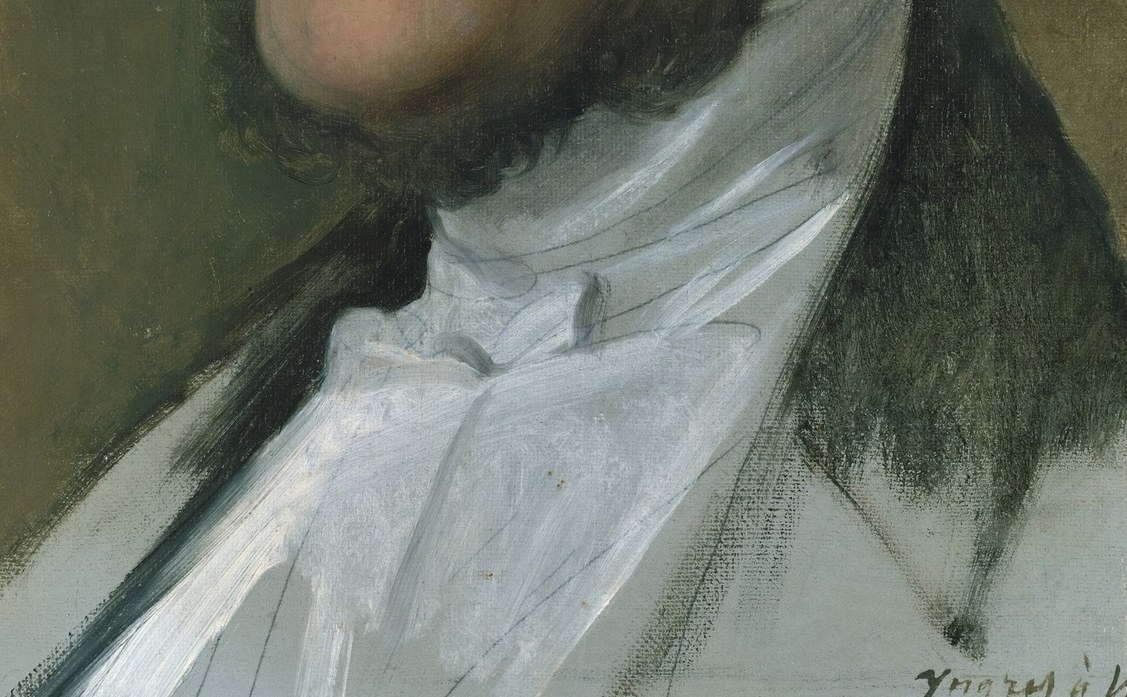
Look at the jaw line. Ingres treats it as one unbroken contour, pulling flesh into the realm of classical sculpture. That line is the whole argument. Then follow it down: the coat is a near-featureless dark mass, a device Ingres used repeatedly so the white cravat would leap forward. The collar is the most luminous passage in the painting, and Ingres achieves it with almost no visible shadow, just a preternatural sense of the exact white tone required.
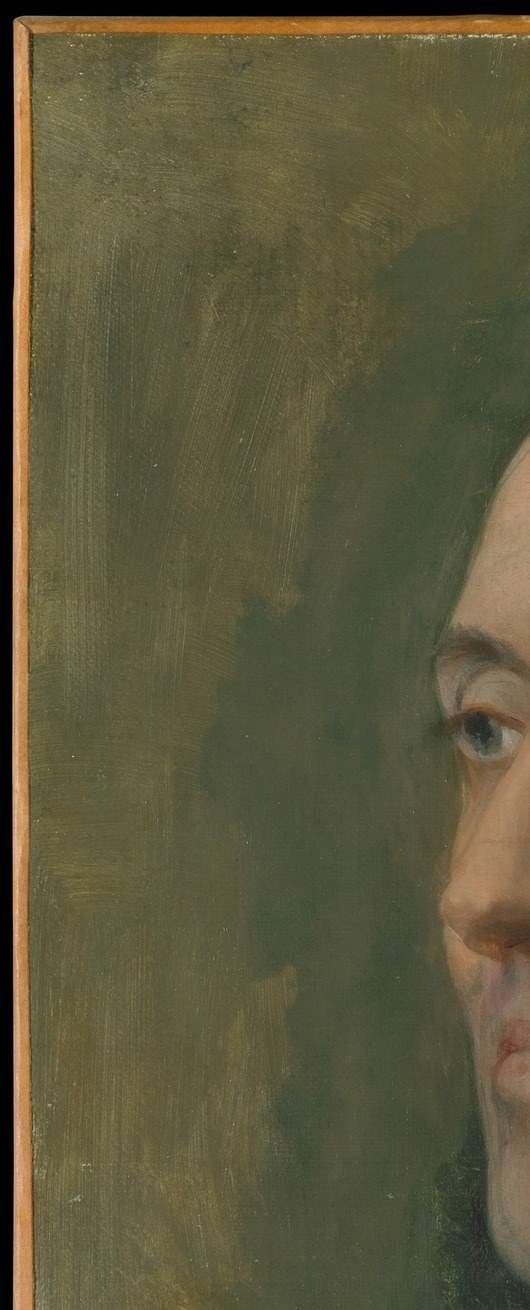
The background is radical. The upper left corner is barely worked at all, a thin wash of muted tone that pushes every ounce of visual energy onto the sitter. This kind of reductive composition, stripping away everything that isn't the person, was unusual for state portraiture in the 1840s and quietly prefigures modernist approaches to the figure.
Hygin-Auguste Cavé was about 50 when he sat for this. He died eight years later. Ingres outlived him by fifteen years, still defending the primacy of line over color, still making portraits that function as psychological documents. This one lives at The Metropolitan Museum of Art. Next time you see an Ingres, ask yourself where he chose to apply almost nothing, those blank passages do as much work as the face.
Details
Transcript
You could mistake it for a drawing. Ingres built his reputation on the purity of line. Here, the jaw is one continuous sculptural contour. Now watch what happens between the black coat and the white collar. The coat is a near-black void. It launches the starched linen forward. Ingres paints white fabric with barely any shadow, he just knows the exact tone. And look at the background. Almost no paint at all. He pushes everything else into silence so the face and collar carry the whole painting.