明 王上宮 忠孝圖 卷|Paragons of Loyalty and Filial Piety by Wang Shanggong
Wang Shanggong's 'Paragons of Loyalty and Filial Piety' (1593) is not a landscape you simply walk into. It is a moral glossary inked onto a handscroll, where every plant, posture, and architectural gate is a legible Confucian symbol.
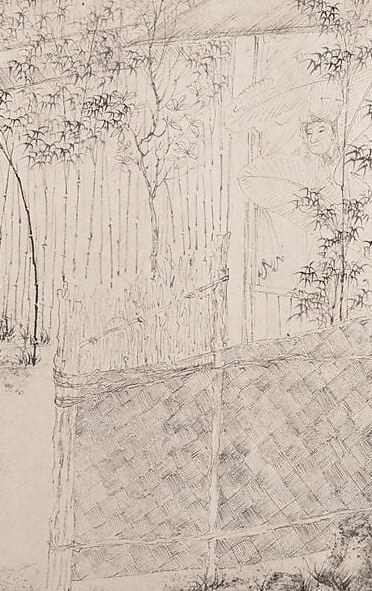
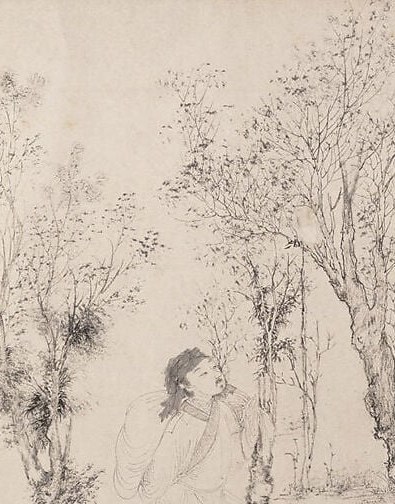
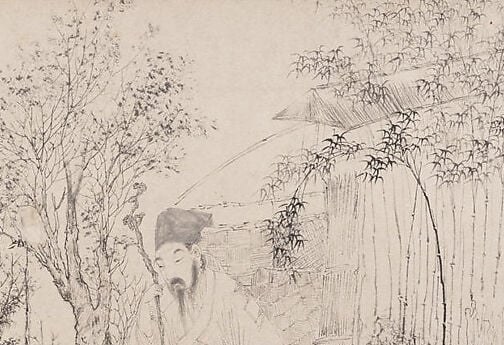
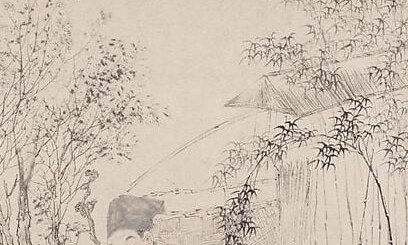
Look at the bamboo grove on the right. In the scholar-official tradition, bamboo is the gentleman: upright, hollow (selfless), and resilient, bending in storms without breaking. Opposite it, the bare deciduous trees on the left signal winter hardship, the season that tests loyalty. The small, bowing figure near those trees enacts the filial piety that titles the scroll, while the tall standing official at center is literally elevated by the ink wash around him, his posture itself a moral argument.
Wang Shanggong worked in the late sixteenth century, when the Ming dynasty's educated class still looked to ancient paragons as models of conduct. The handscroll format was designed for intimate, arm's-length viewing, unrolling right to left so the story unfolds as a journey. The fine branch-endings at the center are brushwork so calligraphic that the same hand wrote and drew them; there was no division between word and image.
The unpainted paper around the figures is not emptiness. It is mist, sky, and a kind of moral silence the officials inhabit. Every object in the frame was placed to teach.
Details
Transcript
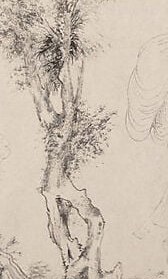
A late-Ming handscroll, ink on paper. The painter built a moral argument out of plants and postures. Bamboo on the right: the gentleman-official, upright and resilient. Bare winter trees: loyalty that holds through hardship. The bowed figure on the left. Filial piety, performed at the scroll's edge. Canopy branches frame the upright official like a natural crown. And the fine branches? They are pure calligraphy from the same hand that drew the figures.