Cider by Pierre Puvis de Chavannes
Pierre Puvis de Chavannes painted 'Cider' in 1864 as a monument to rural labor, now in the Metropolitan Museum of Art.
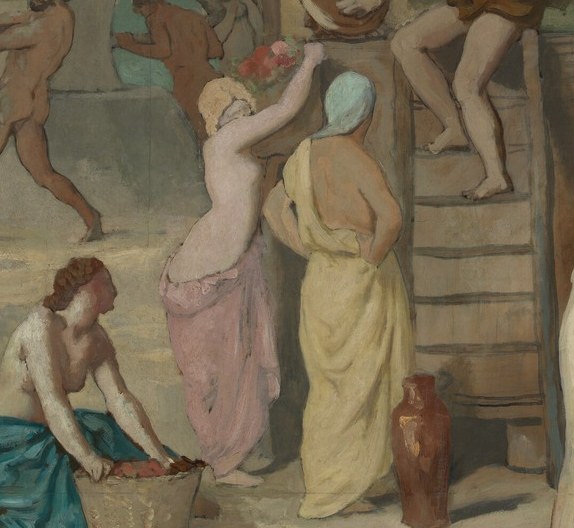
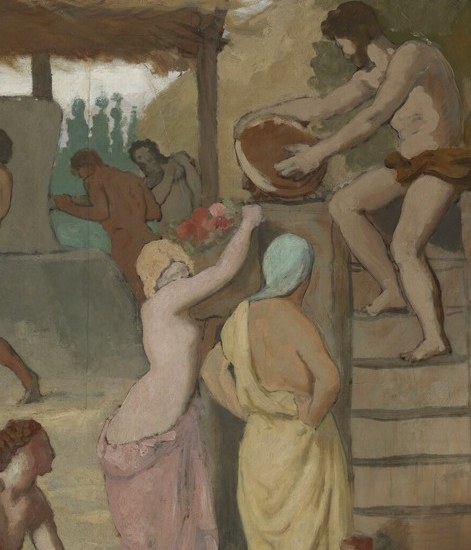
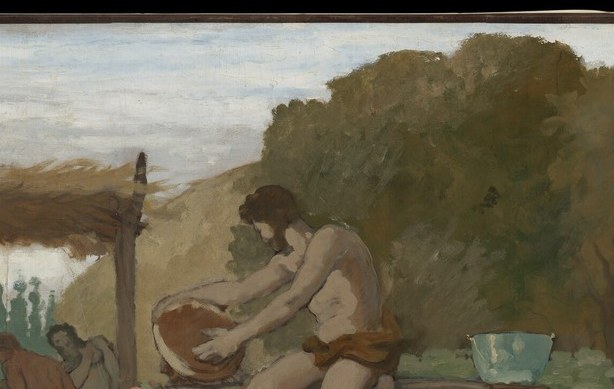
What looks at first like a simple pastoral scene is actually a careful diagram of industrial cider-making. At eye level, a worker presses apples in a large wooden barrel. Figures carry baskets and rest in the shade. But look just above the main action: a wooden scaffold holds two more workers. They are the top of the machine, feeding the press from a height you almost never notice.
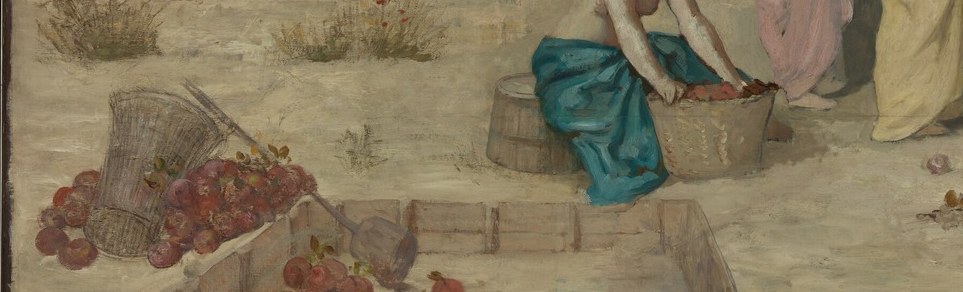
Puvis built his figures like statues. Bodies are simplified, faces blank, clothes reduced to blocks of muted green, brown, and a single shock of teal-blue in the crouching woman at the lower left. He was not after realism. He was after something that would read on a wall. This easel painting already thinks like a mural, flattening the sky into a backdrop and arranging the workers across the canvas like a carved frieze.
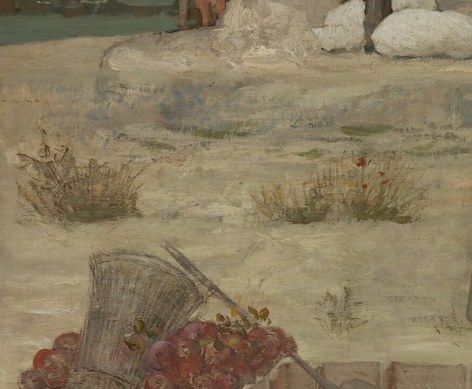
The title is blunt, but the painting is cunning. Every stage of the harvest is here: the apples scattered on the ground, the baskets in transit, the pressing at the center, and the hidden upper tier that makes it all work. Puvis hid the rigging so the scene would feel timeless, but he never erased the labor.
What holds your eye after the surprise fades: the scaffold, or that impossible blue skirt?
Details
Transcript
The painting is called Cider. And everyone looks straight at the big wooden press. The painter wanted you to. But the heart of this machine is not on the ground. Two more workers are up on the scaffolding. They feed the press from above. The entire harvest rises before it falls into the barrel.