Everhard Jabach (1618–1695) and His Family by Charles Le Brun
View the artwork: Everhard Jabach (1618–1695) and His Family →
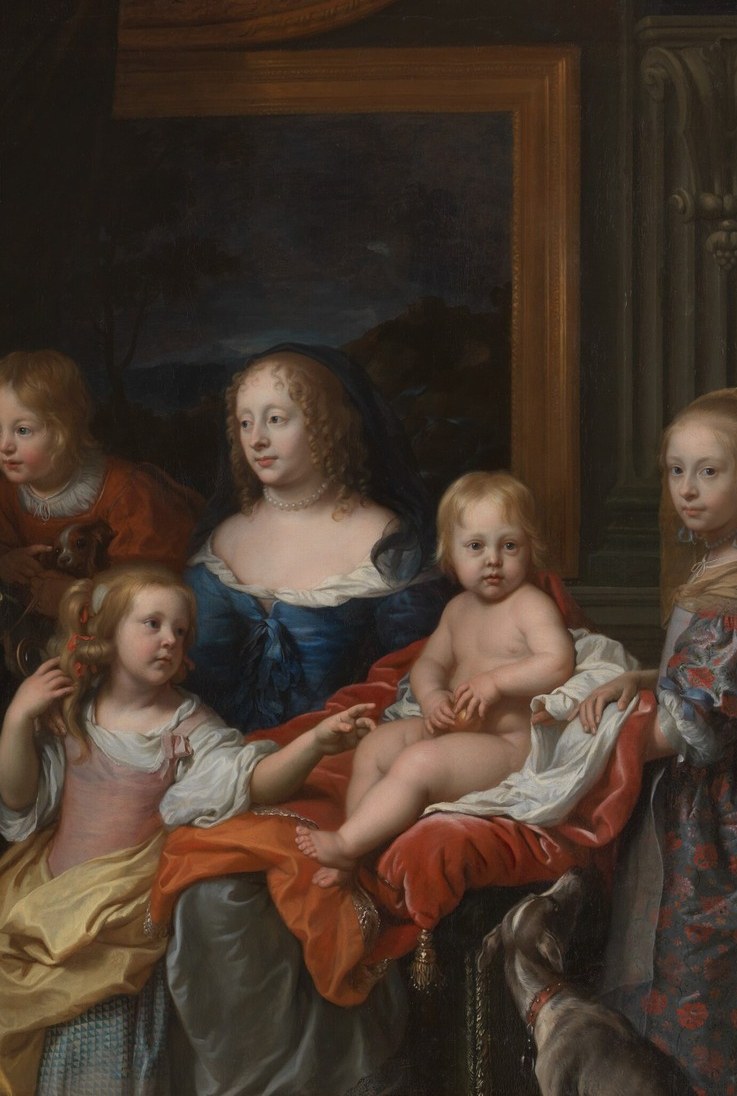
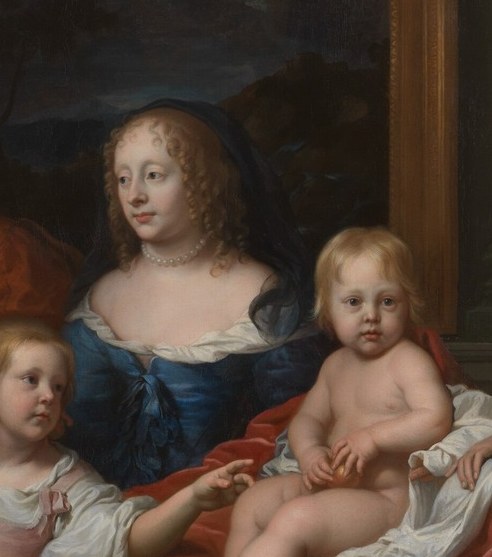
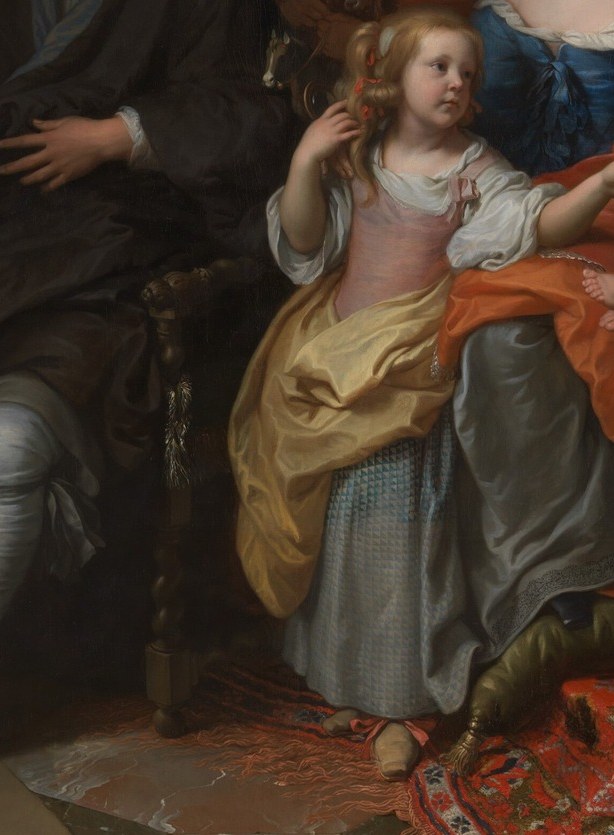
A portrait of a family that is also a portrait of extreme wealth, art collecting, and the quiet drama of self-invention. Charles Le Brun painted "Everhard Jabach and His Family" around 1660, and it lives now at the Metropolitan Museum of Art, which acquired it in 2014 after a long disappearance.
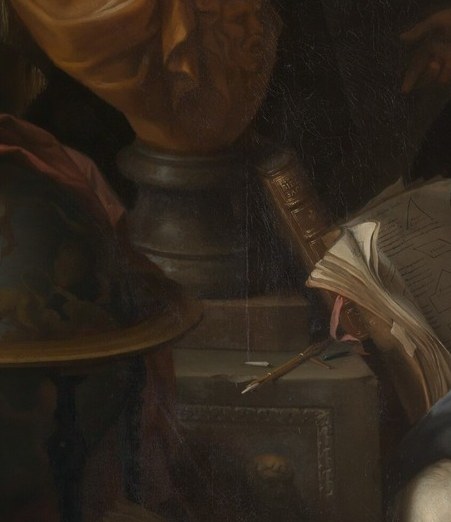
The painting is a cabinet of curiosities in oil paint. Everhard Jabach, a German-born financier who became one of the richest men in Paris, stands surrounded by the trophies of a collector. At his feet lies a broken antique marble head. He bought it from the auction of King Charles I of England's collection after the king's execution, a fact that tells you exactly how the art market worked in the 17th century. A celestial globe, an open treatise on architecture, and a gilded bust of Minerva complete the self-portrait of a man who wants to be seen as a universal intellect, not just a good businessman.
Le Brun was Louis XIV's premier peintre, the man who designed the imagery of absolute monarchy at Versailles. Here, in a private commission, he inserts himself into the story. Look into the dark mirror behind Jabach's shoulder. You'll see the painter's own face staring back, palette in hand. It is a signature, a ghost, and a reminder that every object in this room has been arranged for you to look at.
This canvas was nearly lost. For over a century it sat folded in an English private collection, its top edge creased down to fit a smaller wall. Conservators spent months undoing that damage and removing yellowed varnish, bringing back the brilliant color that once filled Jabach's Paris house. What object in this room would you have wanted on your own shelf?
#arthistory #charleslebrun #metmuseum
Details
Transcript
Everything in this room was placed here to be seen. The man on the left is Everhard Jabach. He had grown so rich as a banker that he bought much of the collection of King Charles I of England after his execution. At his feet, an antique marble head from that royal sale. A celestial globe and architectural treatise make him a man who commands the cosmos and the city. Now look at the mirror behind him. The man holding a palette is Charles Le Brun, principal painter to Louis XIV. He paints himself as a ghost, watching the collector he immortalises.